





DHS Releases 2026/27 Blue Book; RCPA Shares Divisional Analysis



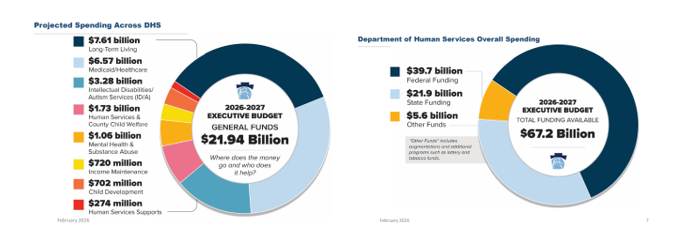
On Friday, February 6, Department of Human Services (DHS) Secretary Val Arkoosh presented an overview of Governor Shapiro’s proposed Fiscal Year (FY) 2026/27 budget and detailed the projected spending across DHS, which totals $21.94 billion in state funding. The Secretary highlighted that all three Medicaid managed care programs, as well as waiver programs for people with intellectual disabilities and autism, are receiving increases, largely driven by patient needs and costs associated with delivering care. The proposed FY 2026/27 budget includes $39.7 billion in federal funding as well as $5.6 billion from augmentations and additional programs, such as lottery and tobacco funds, making the total DHS funding $67.2 billion.
The Secretary expressed how the proposed budget reflects the direct impacts of HR 1, with significant federal funding at risk. The distribution for the 2026/27 budget is based upon the current structure of Medicaid and other federally funded programs, but the Secretary noted that beginning in 2028, changes in Medicaid financing rules will remove $20 billion from Pennsylvania’s Medicaid program over the following decade.
Budget Highlights and Investments
Due to technical difficulties, DHS was unable to record the webinar, but the presentation slides and transcript can both be viewed.
Please contact your RCPA Policy Director with any questions or concerns.

The Office of Mental Health and Substance Abuse Services (OMHSAS) has announced an upcoming learning opportunity from the Youth and Family Training Institute (YFTI) that may be valuable to workforce, providers, educators, and anyone supporting children, youth, and families.
On February 18, 2026, from 12:00 pm – 1:30 pm, YFTI will host Foundations of Family Driven Teaming Approaches, a free webinar designed to strengthen understanding of how to partner with families in meaningful, collaborative, and effective ways.
This session will introduce participants to:
Family Driven Teaming places the family’s voice, culture, and priorities at the center of planning and decision making. This approach strengthens engagement, improves outcomes, and helps families build sustainable skills and relationships beyond formal services.
Register for Foundations of Family Driven Teaming Approaches
Questions and comments can be sent electronically.
The Office of Mental Health and Substance Abuse Services (OMHSAS) has announced that Psychiatric Rehabilitation Services (PRS) has been added to the Medical Assistance Program Fee Schedule, effective January 1, 2026.
On January 30, 2026, the Centers for Medicare & Medicaid Services approved the addition of PRS as a rehabilitative service to the Medicaid State Plan, leading to the issuance of OMHSAS-26-01, “Payment for Psychiatric Rehabilitation Services.” Prior to the inclusion in the Medicaid State Plan, PRS was available only to MA beneficiaries enrolled in Behavioral Health HealthChoices as an in lieu of service. PRS is now available as a state plan service to MA beneficiaries in the Fee-for-Service and Behavioral Health HealthChoices delivery systems.
The published bulletin OMHSAS-26-01 can be found here. Please contact RCPA COO and Mental Health Director Jim Sharp with any questions.

The Office of Mental Health and Substance Abuse Services (OMHSAS) will be hosting their Stakeholder Webinar on Thursday, February 12, 2026, from 3:00 pm – 4:00 pm. Please register for the webinar here. After registering, you will receive a confirmation email containing information about joining the webinar.
For those that want to join via phone:
Call-in Number: +1 (562) 247-8321
Audio Access Code: 385-114-169
The meeting agenda can be found here.

The Independent Regulatory Review Commission (IRRC) has released their comments on the proposed rulemaking for the Mental Health Procedures Act. The IRRC summarized the questions and concerns that were submitted by legislators, providers, and stakeholders during the public comment period and made recommendations for clarity. The Department of Human Services (DHS) must consider and respond to the IRRC’s comments and all comments submitted during the comment period as they prepare their final form regulations.
The majority of the comments were in regard to proposed “Section 5100.33. Patient’s access to records and control over release of records,” where commentors voiced concern of potential conflict with existing statutes. The IRRC also responded to the legislative comments from Rep. Doyle Heffley, Republican Chairman of the House Human Services Committee, who emphasized the importance of resolving the questions asked by providers and stakeholders.
Please contact RCPA Policy Associate Emma Sharp with any questions.
RCPA will reengage with all members, non-members, and systems-wide behavioral health stakeholders to participate in the Mental Health Safety Net Coalition. The Coalition is focused on developing strategies, activities, and engagement opportunities to support behavioral health funding in the Commonwealth.
The Coalition will have its first meeting on Friday, February 13, 2026, from 12:00 pm – 1:00 pm. This meeting will give the group an opportunity to review last year’s budget, Governor Shapiro’s proposed budget, and initial strategies for the Fiscal Year (FY) 2026/27. It will also give us an opportunity to develop questions for legislators for the DHS budget hearings in late February and early March. Register for the meeting by contacting Emma Sharp, RCPA Policy Associate.
As the group continues to meet, we will develop our overall advocacy blueprint to ensure the communication of our message and stakeholder engagement is focused on protecting and preserving our mental health service delivery system.
The meetings will be held via Microsoft Teams; information will be sent to those interested in the Coalition. RCPA invites all to participate. If you would like to join the Coalition or have any questions, please contact Emma Sharp.
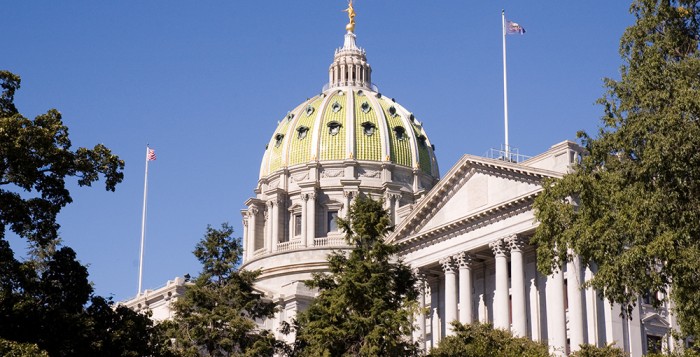
On February 3, 2026, Governor Josh Shapiro delivered his fourth budget address to the Pennsylvania General Assembly. He began the address by commending the significant growth of the Commonwealth over the last three years, highlighting improvements in quality education, agriculture, energy, and becoming the only state in the Northeast with a growing economy.
Shapiro’s 2026/27 proposed budget calls for $53.3 billion in state General Funds expenditures, with Medicaid (32%) and Education (36%) being the largest spend categories. Other expenditures include:
The 2026/27 budget also includes supplemental appropriations of $390.3 million to increase the FY 2025/26 General Fund spend to $51.5 billion. The majority of this increase is attributed towards DHS programs and Education through the end of FY 2025/26, with a $374.5 million increase for human services related to increased projections of utilization, caseloads, and enrollments anticipated through June 2026.
Similar to last year’s address, Shapiro called for the legalization and taxation of adult use cannabis as well as taxing and regulating skill games terminals in order to support the proposed 2026/27 expenditure. The budget would also be funded by transferring $4.6 billion from the Budget Stabilization Reserve Fund (Rainy Day Fund) to the General Fund, which would leave the Rainy Day Fund balance at $3.3 billion.
2026/27 Proposed Budget Highlights:
Behavioral Health
Intellectual and Developmental Disabilities
Community HealthChoices
While this brief overview provides a snapshot of the Governor’s proposed budget, RCPA Policy Staff will be working with our lobbying partners, healthcare experts, and systems’ stakeholders to provide a thorough analysis of the budget to members. We have confirmed that DHS will be hosting a virtual proposed budget briefing on its portion of the State Budget funding this Friday, February 6, 2026. An invitation was distributed to RCPA members earlier this morning. The virtual briefing will provide some additional details, but the DHS “Blue Book” provides the most detail on certain appropriation lines and should be available in the coming weeks in advance of its hearings with the Senate and House Appropriations Committees.
If you have questions, please contact your respective RCPA Policy Director.
Secretary Val Arkoosh and leadership from the Department of Human Services (DHS) will host a webinar to discuss the proposed 2026/27 budget for the department. The briefing will take place at 10:00 am on Friday, February 6. If you are unable to attend, the briefing will be recorded and available for viewing afterwards on DHS’ YouTube channel.
Visit here to register for the briefing. All who plan to attend must register individually. A link for the webinar will be sent Thursday evening. DHS encourages you to submit questions ahead of the briefing so they can prepare as much information as possible. The Department will follow up on any questions that they are unable to answer during the webinar.
If the registration link above does not work, please try copying this link directly into your browser: https://forms.office.com/Pages/ResponsePage.aspx?id=QSiOQSgB1U2bbEf8Wpob3tuk6VNEbjZIvvnDA4XOB-dUN1FXNFUzSjBSUEtEUk9GM1A3WEhMSlBSUC4u
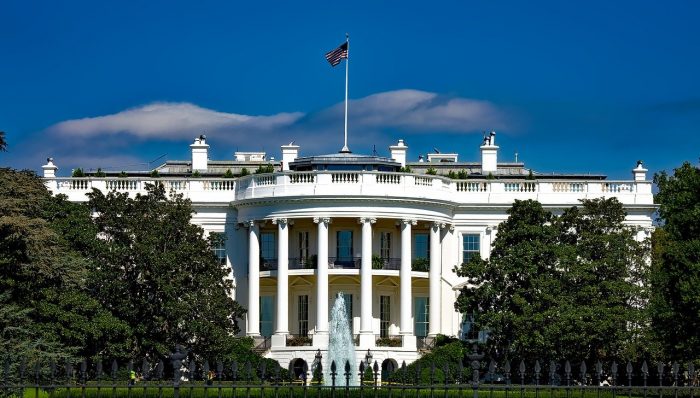
On January 29, 2026, President Trump signed an Executive Order to create the White House Great American Recovery Initiative in an effort to coordinate a federal response to addiction across America and prevent fatal overdoses. This new initiative serves as part of Trump’s commitment to ending the addiction crisis and ensuring Americans have access to the support and care they need.
The Great American Recovery Initiative will be led by Health and Human Services Secretary Robert F. Kennedy Jr., along with Senior Advisor for Addiction Recovery Kathryn Burgum, and will also include the Attorney General, Interior, Labor, Housing and Urban Development, and Veterans Affairs Secretaries.
Primary goals of the initiative include increasing addiction awareness, advising agencies on program implementation, advising agencies on directing appropriate grants to support addiction recovery, and consulting with states and other entities to ensure Americans have access to addiction treatment. The White House also released a fact sheet to detail the goals of the initiative and their current progress in addiction treatment.
Secretary Kennedy is scheduled to appear Monday, February 2, 2026, to discuss more details and announce another initiative related to mental health and addiction. RCPA will continue to update members as information becomes available.
 Prev
Prev