
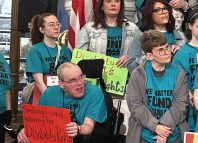





RCPA Shares Federal Medicaid Update From National Council


The Mental Health Safety Net Coalition is a group of stakeholders participating in a joint advocacy effort to protect and preserve our mental health service delivery system. The Coalition’s second advocacy bulletin, which was sent to the General Assembly, discusses the behavioral health workforce shortage and the challenges that they face. The full letter can be read here.
RCPA invites all members, non-members, and systems-wide behavioral health stakeholders to participate in the Mental Health Safety Net Coalition meeting on Monday, June 16, 2025, from 2:30 pm – 3:00 pm. This meeting will serve to update the group on strategy, activities, and engagement opportunities.
Please contact RCPA Policy Analyst Emma Sharp with any questions or if you would like to join the Coalition.

RCPA, in its partnership with the PA Health Access Network (PHAN), is asking organizations to consider signing on to their new letter, which opposes cuts to Medicaid and Pennie. The latest proposal in Congress would take healthcare away from 600,000 Pennsylvanians who receive their coverage through Medicaid or Pennie. This is a separate letter than was previously shared with members in February; we ask your organization to join PHAN and show your opposition to potential cuts. This new communication reflects some of the specific areas that will be impacted.
Enter your information to publicly sign on to the letter on behalf of your organization. Please note: this sign-on page is for organizations only. Please contact Bill England with any questions or if you do not want to be listed publicly.
RCPA continues its state and federal advocacy efforts for state mental health funding and preserving Medicaid funding. If you are interested in joining the Mental Health Safety Net Coalition, please contact RCPA Policy Associate Emma Sharp.
Thank you for all you do in working to preserve Pennsylvania’s healthcare.

The Office of Mental Health and Substance Abuse Services (OMHSAS) issued OMHSAS-25-02 Voluntary and Involuntary Commitment Forms on May 27, 2025. In response to concerns from stakeholders, OMHSAS will be pausing implementation of this bulletin for 90 days, through August 27, 2025. In addition to giving providers the opportunity to update electronic health records and print new forms, OMHSAS will use that time to continue to receive and respond to stakeholder questions and to schedule Q&A sessions. The department thanks stakeholders for the comments that have been provided so far and welcomes additional comments and questions, which can be sent electronically.
OMHSAS-25-02 and all forms can be found at links provided. As OMHSAS continues to work towards standardized Mental Health Procedures Act Forms that work across the Commonwealth, they appreciate your partnership and input.
Contact Emma Sharp with any questions.
The Mental Health Safety Net Coalition is a group of stakeholders participating in a joint advocacy effort to protect and preserve our mental health service delivery system. The Coalition’s first advocacy bulletin discusses the critical areas of funding for the FY 2025/26 budget, including community mental health, school-based services, crisis intervention services, psychiatric centers, and the Behavioral HealthChoices program.
The full letter can be read here.
RCPA invites all members, non-members, and systems-wide behavioral health stakeholders to participate in the Mental Health Safety Net Coalition meeting on Monday, June 9, 2025, from 2:30 pm – 3:00 pm. This meeting will serve to update the group on strategy, activities, and engagement opportunities.
Please contact Emma Sharp with any questions or if you would like to join the Coalition.
The Shapiro Administration has released a response to potential federal Medicaid cuts. This document provides information on the Medicaid and SNAP programs in Pennsylvania and offers a high-level analysis of the potential impacts of HR 1, Congressional Republicans’ budget reconciliation bill, on the commonwealth. As currently proposed, the legislation would kick over 300,000 Pennsylvanians off Medicaid, shift $1B in food assistance costs from the federal government onto our state budget, and strain our hospitals, potentially leading to the closure of as many as 25 rural hospitals across Pennsylvania. The legislation would also add significant new IT and administrative burdens for commonwealth agencies in the form of unfunded mandates from Washington.
Read the full report here. In addition, you can view this infographic for details on the impacts of implementing work requirements to SNAP benefits. Contact Emma Sharp with any questions.
The Trump Administration’s “Big Beautiful Bill” was passed by House Republicans on May 22 and contains significant Medicaid cuts that could leave millions of Americans without coverage as well as severely reduce access to care. The proposed bill also includes cuts to Medicare funding, new restrictions on federal loans for medical students, and provisions to create a permanent, inflation-based mechanism for annual updates to Medicare physician payments. The legislation now heads to the Senate, where it will face further debate by lawmakers.
The proposed legislation seeks to accomplish the following:
Medicaid:
Medicare:
CMS:
Outside of Congress, the Center for Medicaid Services (CMS) has also made announcements that could threaten access to healthcare:
Please contact Emma Sharp with any questions.
The Office of Mental Health and Substance Abuse Services (OMHSAS) has announced the Voluntary and Involuntary Commitment Forms Bulletin, OMHSAS-25-02, effective May 27, 2025, with updated forms for counties to use. For some time, counties have used different customized versions of the MH 783 statewide form. This has resulted in provider confusion, especially when an individual who is the subject of a 302 warrant is transported to a provider across county lines. OMHSAS is updating the MH 783 form and requiring counties to use this form without modifications. OMHSAS is also updating accompanying forms MH 781, MH 783A, MH 783B, MH 785, and MH 788 for use by County Mental Health/Intellectual and Developmental Disabilities (MH/IDD) administrators or their delegates for initiating the involuntary commitment of individuals at risk of harming themselves or others due to behaviors associated with acute mental illness. This bulletin announces that OMHSAS has revised forms for voluntary and involuntary commitment evaluations. Each of the revised forms has updated language, including changes accounting for Act 65 of 2020, references from “DPW” to “DHS,” and general clarification and modernization of the language within the forms.
The non-English versions are still in process, and another announcement will be posted when the links to those versions are available.
MH-783 Bulletin can be found DHS’s Bulletin web page. Additional forms can be found here.
Please contact RCPA Policy Associate Emma Sharp with any questions.
The Office of Mental Health and Substance Abuse Services (OMHSAS) is pleased to announce the OMHSAS Bulletin Series Update, OMHSAS-25-01, effective May 14, 2025. Obsoleted bulletin lists are updated every few years. This listing identifies bulletins that are no longer in effect. Providers should no longer be referring to them for guidance.
Contact RCPA Policy Associate Emma Sharp with any questions.
The Department of Human Services (DHS) Office of Mental Health and Substance Abuse Services (OMHSAS) is conducting an all-stakeholders survey as the first step in the process to develop one proposed chapter of licensing regulations for inpatient psychiatric services in psychiatric units of general hospitals, private psychiatric hospitals, and Extended Acute Care services located within those inpatient settings. The survey provides an opportunity for all stakeholders to submit anonymous input into regulatory development. OMHSAS will review and analyze the responses as part of the process of developing a proposed regulation. This survey is for all stakeholders, including licensed providers. All responses are voluntary.
Please do not include any personally identifying information or contact information in the survey response.
A copy of the survey questionnaire can be found here and is to help you gather the information for the questionnaire. Please do not submit a hard copy or a copy of this document. Use the link provided to respond to the questions. If you have any questions about this survey or any additional feedback to provide on the inpatient regulations work, please send these electronically.
Please submit the completed survey by May 26, 2025.
The All-Stakeholders Survey can be accessed here.
The RCPA Mental Health Division will be convening a steering committee as part of this regulatory process. We have had advanced discussions with OMHSAS, and they will work with RCPA in the regulatory development. Thank you for your interest and participation in this important work. If you have questions or wish to be a part of this steering committee, please contact RCPA Policy Associate Emma Sharp.
 Prev
Prev