';
Authors Posts by Melissa Dehoff

Melissa Dehoff

450 POSTS 0 COMMENTS
Melissa Dehoff is responsible for all medical rehabilitation and brain injury service issues. Ms. Dehoff attends multiple state-level meetings to advocate on behalf of members on brain injury and rehabilitation issues and is a member of the Department of Health Traumatic Brain Injury Advisory Board.

Legislation. Wooden gavel and books in background. Law and justice concept

Representative John Schlegel has introduced a co-sponsorship memo regarding House Bill 2070, Clarifying Dry Needling as an Acceptable Practice within Physical Therapy (PT).

The American Physical Therapy Association (APTA) recognizes dry needling as being within the physical therapist scope of practice. However, Pennsylvania’s Physical Therapy Practice Act (Act 110 of 1975) does not explicitly allow or deny the performance of this type of therapy. This creates a legal gray area and causes uncertainty among licensed physical therapists. Due to the current law’s silence on this treatment technique, legislative clarification is needed.

Dry needling (sometimes referred to as “trigger point dry needling” or “intramuscular manual therapy”) is a treatment method used to relieve muscle pain and stiffness and to improve range of motion. It is important to note that dry needling and acupuncture are not the same, though both are considered needle-based therapies. These procedures have different medical origins, needle placement and application techniques, and serve different purposes.

HB 2070 clarifies that licensed physical therapists may perform dry needling therapy given certain education and training requirements are met and will further specify that dry needling does not include the practice of acupuncture.

A majority of states acknowledge that dry needling is within the scope of practice for physical therapists, including our neighboring states of Delaware, Maryland, New Jersey, Ohio, and West Virginia.

The bill was referred to the House professional licensure committee on December 3, 2025.

0 1342

The Centers for Medicare and Medicaid Services (CMS) released the calendar year (CY) 2026 Outpatient Prospective Payment System (OPPS) and Ambulatory Surgical Center (ASC) final payment system rule. The final rule not only includes policies and payment rates for CY 2026 but also updates CMS’ existing Hospital Price Transparency requirements. Hospitals and ASCs that meet their quality reporting requirements will see a 2.6% increase in their OPPS rates. CMS also finalized proposals to eliminate the Inpatient Only list over a three-year period, beginning with the removal of nearly 300 musculoskeletal procedures from the list in CY 2026.

For additional information, members are encouraged to review CMS’ press release on the rule as well as the fact sheet.

0 438

The Centers for Medicare and Medicaid Services (CMS) has published the draft inpatient rehabilitation facility patient assessment instrument (IRF-PAI) version 4.4. This version of the IRF-PAI becomes effective on October 1, 2026.

This draft version has the following modifications from the current IRF-PAI Version 4.2:

  • IRF-PAI Item 8. Gender – has been moved to IRF-PAI Item A0810. Sex.
  • IRF-PAI Item 14. Admission Class – has been removed.
  • Transportation Item A1250 – has been modified into Transportation Item A1255 with new item verbiage and response options and is only to be collected at admission. Transportation item A1250 has been removed from the discharge assessment.
  • Item O0350. Patient’s COVID-19 vaccination is up to date – has been removed from the discharge assessment.

As finalized in the fiscal year (FY) 2026 Final Rule, draft version 4.4 also removes the Section R Social Needs items. The four items removed were social determinants of health (SDoH) data elements related to living situation, food, and utilities, which were previously scheduled to be implemented October 1, 2026.

The final agenda for the Long-Term Services and Supports (LTSS) Subcommittee meeting on December 3, 2025, has been released. As a reminder, this meeting will be conducted via webinar and remote streaming only and will take place from 10:00 am – 1:00 pm. Register here to attend. The conference line for the meeting: 1 (415) 655-0052 PIN: 883-556-407#

Comments and questions may be sent electronically.

Remote streaming is available here.

The Long-Term Services and Supports (LTSS) Subcommittee meeting was recently held on November 12, 2025. During the meeting, a number of presentations were provided. In addition to the presentations, the agenda and a document that provided follow-up items from the LTSS Subcommittee meeting on October 1, 2025, were provided.

Members should take time to review the PowerPoint presentations from the meeting below:

The next LTSS Subcommittee meeting is scheduled for Wednesday, December 3, 2025. The meeting will be held virtually only from 10:00 am – 1:00 pm. Register here to participate. Participants also have the option to call in by dialing (415) 655-0052; Access code: 883-556-407#.

Harrisburg, USA - May 24, 2017: Pennsylvania capitol interior dome colorful ceiling in city with American Flags

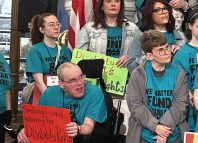
On November 17, 2025, from 10:30 am – 3:00 pm, a Brain Injury Awareness Day will be held in Harrisburg at the State Capitol Rotunda. The day is dedicated to advocacy for survivors, caregivers, and professionals. Discussion topics will focus on the lack of a rate increase for brain injury residential providers and key brain injury legislation. The schedule for the day is below:

Main Rotunda

  • 10:00 am: Arrive at Main Rotunda
    • Visit vendor tables, take literature, conversations
  • 10:15 am: Group Picture
  • 10:30 – 11:30 am: Briefing

Legislative Offices

  • 11:40 am – 12:50 pm: Legislative Meetings
    • Attendees — Please schedule your own meetings.

Senate Room 8E-B

  • 1:00 pm – 2:00 pm: Reception
  • 2:00 pm – 3:00 pm: Survivors of brain injury share their experiences

Download the 2025 BI Awareness Day flyer for further details.

0 997

Novitas Solutions has released the Cycle 2 results for the inpatient rehabilitation facility (IRF) review choice demonstration (RCD). The Cycle 2 results letters were issued on September 10, 2025, and are available in Novitasphere.

IRFs will have a 2-week choice selection period for Cycle 3 from October 7, 2025 – October 20, 2025, using the Novitasphere portal.

Cycle 3 Choice Selection Options

If the approval rate meets or exceeds target affirmation rate of 85% for Cycle 2 (based on a minimum of 10 submitted pre-claim review requests or claims), the IRF may select 1 of the 3 subsequent review choices:

  • Choice 1: Pre-claim review (PCR)
  • Choice 3: Selective post-payment review (default if no review choice is made)
  • Choice 4: Spot check prepayment review

If the IRF’s affirmation or claim approval rate is less than the target affirmation rate or they have not submitted at least 10 requests/claims, the IRF must again choose from 1 of the initial 2 options:

  • Choice 1: Pre-claim review (PCR)
  • Choice 2: Post-payment review (default if no review choice is made)

Cycle Stats Reminder

IRFs can access information about their affirmation/approval rate at any given time during the current or previous review cycle through the Cycle Stats option in Novitasphere. Visit here for more information on cycle stats.

IRF RCD Questions

Questions or concerns regarding the IRF RCD should be directed to the IRF Customer Service line at 855-340-5975, Monday – Friday, 8:00 am – 6:00 pm.

IRF RCD Resources and Educational Opportunities

Visit the Inpatient Rehabilitation Facility (IRF) Review Choice Demonstration (RCD) web page for important information about the IRF RCD and upcoming educational events, including a recording of the September 24, 2025, webinar on IRF RCD: Cycle 2 Results and Transitioning to Cycle 3.

Important Deadlines

  • October 7, 2025 – October 20, 2025, Cycle 3 Choice Selection
  • November 1, 2025 – April 30, 2026, Cycle 3 Review Dates
  • On or before May 30, 2026, Cycle 3 Affirmation/Approval Rate Communication