


';
Featured
Featured posts

Last March, the Departments of Drug and Alcohol Programs (DDAP) and Community & Economic Development (DCED) announced the availability of more than $1 million in grant funding for recovery houses to provide safe housing for individuals in recovery from a substance use disorder (SUD). The grants, funded through the $1.2 million awarded to Pennsylvania through the SUPPORT Act from the U.S. Department of Housing and Urban Development (HUD), are designed to assist existing recovery house facilities with physical upgrades to comply with all federal, state, and local laws and ordinances, including the Americans With Disabilities Act of 1990, which is needed to receive a recovery house license through DDAP.

The federal government requires DCED to annually report on the performance of the state’s Recovery Housing Program. The annual report can be found on the DDAP website.

Comments on the Recovery Housing Program Annual Performance Report may be emailed to David Grey, Chief of Compliance, Center for Community and Housing Development. Comments will also be accepted by telephone by calling 717-787-5327 or through written comments submitted to:

David Grey
Center for Community and Housing Development, Department of Community and Economic Development
400 North Street, 4th Floor, Commonwealth Keystone Building
Harrisburg, PA 17120-0225

All comments must be received by 12:00 pm October 30, 2022.

For more information about this comment period, email David Grey or call 717-787-5327. For more information on this funding opportunity and to apply visit Funding Opportunities.

Image by Shotkitimages from Pixabay

AAC Essentials

Take a FREE online course to learn about AAC with TechOWL. A certificate of completion will be provided. Go to the AAC Community AAC Essentials web page and enroll in the course that best meets your needs:

  • AAC User;
  • Supports Coordinators;
  • Family, Friends, and Supporters; and
  • Administrators and Leaders.

Each course is designed to value your time and give you practical information. The lessons are short, and you can do them whenever you like. Plan to spend 2–3 hours on the course. You can also choose individual lessons to meet your needs.

Please share with your networks, teams, and families that use, support, or work with AAC.

Photo by Michael Schofield on Unsplash

Up to $20,000 in debt relief is available to those who received a Federal Pell Grant in college and meet the income requirements. Up to $10,000 in debt relief is available to those who received a Federal Pell Grant in college and meet the income requirements.

The U.S. Department of Education is providing this one-time debt relief as part of the Biden-Harris Administration student debt relief plan.

Apply for student debt relief, or get more information at Federal Student Aid.

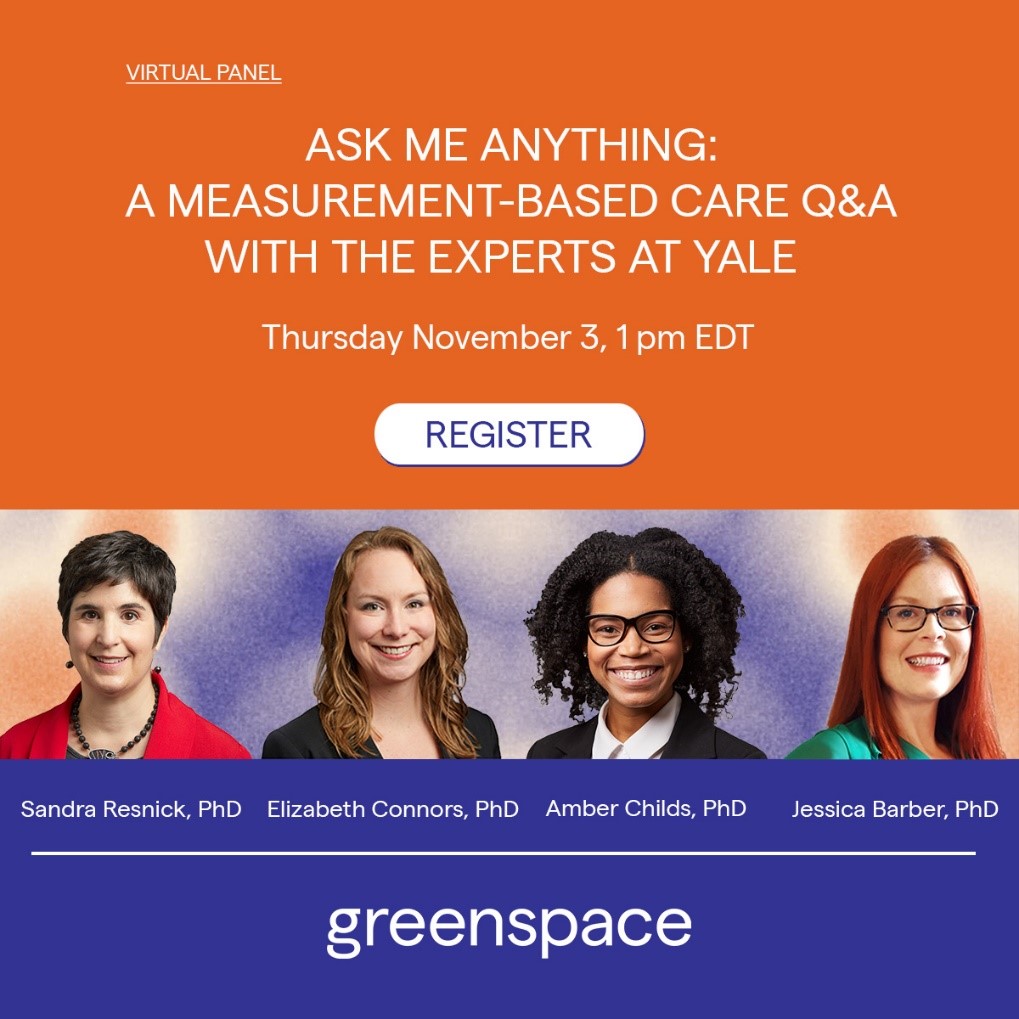
The team at Greenspace Health is hosting their third and final educational panel with the researchers and renowned psychologists at the Yale Measurement-Based Care Collaborative. You won’t want to miss this session with The Collaborative— it’s your chance to build on your knowledge of MBC and learn from the researchers driving its momentum.

Greenspace is excited to invite you to this live Q&A session with the Yale MBC experts to build on your knowledge of MBC and learn from those driving its momentum. Over 650 clinicians and clinical leaders attended the first two sessions. You won’t want to miss this event!

ASK ME ANYTHING: A Measurement-Based Care Q&A With the Experts at Yale is coming up on November 3 at 1:00 pm EDT. Visit here to register now! Greenspace hopes you can make it, and please feel free to share the event with anyone on your team.

Watch this short video for highlights from the last panel!

Today, the Senate Health and Human Services Committee unanimously voted HB 2530, which focused on the elimination of prudent pay for IDD providers, out of committee. The bill will be placed on the Senate voting calendar and is expected to have a final vote next week, which is the final fall session week for the Senate. Once the bill is approved, it will go to the Governor for his signature.

RCPA is grateful for all the technical assistance Bill Harriger, President and CEO of Verland, provided throughout the legislative process, and to all RCPA members who contacted their state legislators.

If you have questions, please contact Jack Phillips, Director of Government Affairs.

Photo by Chris Montgomery on Unsplash

Registration is open for the fourth annual virtual psychostimulant symposium, “Overcoming Barriers & Making a Difference.” The symposium will be held Wednesday and Thursday, December 7–8, 2022.

Pennsylvania continues to see a rise in stimulant misuse. However, data continues to show that polysubstance use has increased among individuals with a substance use disorder (SUD), as well. The symposium will use data to tell the story of what is happening across the state and nationwide. In addition, it will focus on addressing current issues that prevent individuals from seeking treatment or maintaining their recovery, barriers to treatment, and strategies to help them while making a difference in Pennsylvania’s communities. The goal of the symposium is to educate and provide resources to attendees to assist in their work to help Pennsylvanians suffering from SUD.

Attendance is free, but registration is required. Register today.

Call 610-494-8044 or email registration with questions.