







';
Govt. Affairs

0 1971

There’s been a lot of talk — and a lot of concern — about the federal budget and what it could mean for Medicaid. We’re all hearing it from you, too: “What’s actually happening?” “What does this mean for our funding?” “Are these changes final?”

This guide will help answer those questions. It lays out what’s in the current House bill, what’s at stake for providers, and what we’re watching next as the Senate and CMS weigh in.

Inside, you’ll find:

  • What changes are being proposed, like new work requirements and copays
  • What it could mean for your clients and funding
  • What we know, what we don’t, and what comes next

These updates aren’t always easy to follow, so we’re breaking them down in plain language, and we’ll keep doing so as things evolve. Stay up to date with our Medicaid Intel here.

The Rehabilitation and Community Providers Association Political Action Committee (RCPA PAC) is asking members to consider making a personal contribution to the PAC. With these donations, we have been successful in supporting legislative leadership who understand the severe challenges facing many of our providers. These representatives are willing to stand up for our issues as we fight to move Pennsylvania forward.

We urge you to view our 2025 Legislative & Administrative Priorities to see how RCPA is working, and will continue to work, for you. We are able to achieve these goals thanks to our members’ dedication and contributions.

Make an online contribution and advocate for yourself today. While the request is voluntary, we encourage you to make a contribution of $100, $250, $350, $500, or more to the RCPA PAC. If you are interested, you can also consider making a recurring monthly donation.

If you have any questions regarding the RCPA PAC or making a donation, please contact Jack Phillips, Director, Government Affairs.

The Mental Health Safety Net Coalition is a group of stakeholders participating in a joint advocacy effort to protect and preserve our mental health service delivery system. The Coalition’s first advocacy bulletin discusses the critical areas of funding for the FY 2025/26 budget, including community mental health, school-based services, crisis intervention services, psychiatric centers, and the Behavioral HealthChoices program.

The full letter can be read here.

RCPA invites all members, non-members, and systems-wide behavioral health stakeholders to participate in the Mental Health Safety Net Coalition meeting on Monday, June 9, 2025, from 2:30 pm – 3:00 pm. This meeting will serve to update the group on strategy, activities, and engagement opportunities.

Please contact Emma Sharp with any questions or if you would like to join the Coalition.

The Shapiro Administration has released a response to potential federal Medicaid cuts. This document provides information on the Medicaid and SNAP programs in Pennsylvania and offers a high-level analysis of the potential impacts of HR 1, Congressional Republicans’ budget reconciliation bill, on the commonwealth. As currently proposed, the legislation would kick over 300,000 Pennsylvanians off Medicaid, shift $1B in food assistance costs from the federal government onto our state budget, and strain our hospitals, potentially leading to the closure of as many as 25 rural hospitals across Pennsylvania. The legislation would also add significant new IT and administrative burdens for commonwealth agencies in the form of unfunded mandates from Washington.

Read the full report here. In addition, you can view this infographic for details on the impacts of implementing work requirements to SNAP benefits. Contact Emma Sharp with any questions.

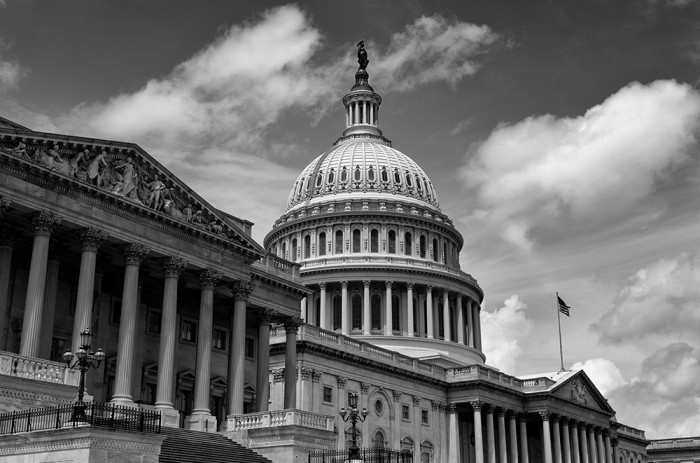
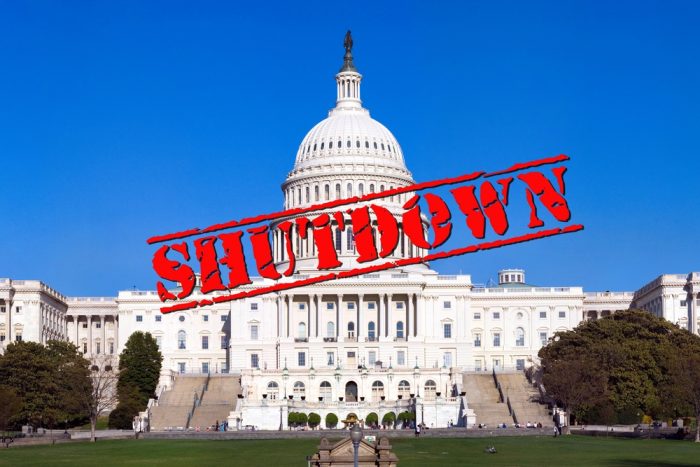
Capitol hill building in the morning with colorful cloud , Washington DC.

The Trump Administration’s “Big Beautiful Bill” was passed by House Republicans on May 22 and contains significant Medicaid cuts that could leave millions of Americans without coverage as well as severely reduce access to care. The proposed bill also includes cuts to Medicare funding, new restrictions on federal loans for medical students, and provisions to create a permanent, inflation-based mechanism for annual updates to Medicare physician payments. The legislation now heads to the Senate, where it will face further debate by lawmakers.

The proposed legislation seeks to accomplish the following:

Medicaid: 

  • The bill introduces a two-year acceleration of Medicaid work requirements for able-bodied adults ages 18 to 64, which is slated to take effect no later than December 31, 2026, instead of 2029. States have the ability to implement these requirements earlier to secure quicker savings.
  • Beginning October 21, 2027, states will be mandated to determine Medicaid eligibility every six months for people in the expansion population.
  • Medicaid and CHIP federal financial participation is prohibited under the bill revisions for people who fail to verify immigration status, citizenship, or nationality in the designated “reasonable opportunity” window.
  • States will also be required to cross-check their Death Master File quarterly to confirm deceased individuals are disenrolled. Should errors occur, there will be reinstatement provisions.
  • The Social Security Act is amended to cut retroactive Medicaid coverage from three months to one month before the application date.
  • Federal Medicaid and CHIP funding is prohibited for “specific gender transition procedures” provided to people under 18 years of age.
  • Eligibility for increased federal medical assistance percentage for states that are newly expanding Medicaid will be wound down. To qualify, states must start expansion by January 1, 2026, to restrict late expansion states from receiving an elevated match rate.
  • New rules for waiving the uniform tax requirement for Medicaid provider taxes will be imposed, which tightens conditions for states to use the financial tools.

Medicare:

  • A proposed staffing mandate is halted under the bill for long-term care facilities that receive Medicaid and Medicare funds.
  • The bill promotes the use of artificial intelligence to recover and reduce improper Medicare payments.
  • A May 20 report from the nonpartisan Congressional Budget Office found that the bill could cut nearly $500 billion over the next decade in Medicare funding.
  • The budget bill includes provisions to increase Medicare physician payments by an estimated 2.25% in 2026. This would be achieved by tying payments to 75% of the Medicare Economic Index. Starting in 2027, annual payments would be adjusted by 10% of the index, establishing a permanent, inflation-based update mechanism.
  • Under current law, physician pay is set to increase by just 0.25% in 2026 and 2.5% by 2035. The proposed changes would boost payments to 4.3% by 2035 instead. Physician groups, including the American Medical Association, strongly support the provision, calling it a critical step toward restoring stability after years of payment cuts.
  • The bill also adjusts the Medicare Physician Fee Schedule’s conversion factor, a key formula used to calculate final physician reimbursement. While the legislation introduces inflation-based updates, changes to the conversion factor could offset those increases and slow long-term payment growth. Physician groups have welcomed the update mechanism as a step in the right direction, though they say further reforms are needed to ensure physician payments fully reflect inflation and keep pace with rising practice costs over time.

CMS:

Outside of Congress, the Center for Medicaid Services (CMS) has also made announcements that could threaten access to healthcare:

  • On May 27, CMS announced increased federal oversight to prevent states from using federal Medicaid dollars to cover healthcare for undocumented immigrants for anything beyond emergency services, which violates federal law.
  • CMS outlined plans to increase audits of state Medicaid spending, eligibility systems, and financial controls, with recoupment of funds if misuse is found.

Please contact Emma Sharp with any questions.

The Rehabilitation and Community Providers Association Political Action Committee (RCPA PAC) is asking members to consider making a personal contribution to the PAC. With these donations, we have been successful in supporting legislative leadership who understand the severe challenges facing many of our providers. These representatives are willing to stand up for our issues as we fight to move Pennsylvania forward.

We urge you to view our 2025 Legislative & Administrative Priorities to see how RCPA is and will continue to work for you. We are able to achieve these goals thanks to our members’ dedication and contributions.

Make an online contribution and advocate for yourself today. While the request is voluntary, we encourage you to make a contribution of $100, $250, $350, $500, or more to the RCPA PAC. If you are interested, you can also consider making a recurring monthly donation.

If you have any questions regarding the RCPA PAC or making a donation, please contact Jack Phillips, Director, Government Affairs.