





ANCOR Capitol Correspondence: Congress Averts Government Shutdown



The sustained funding of community-based mental health services, such as community residential programs, family-based support, outpatient care, and crisis intervention, are critical to the wellbeing of our constituents and our communities. Funding levels for county mental health services have direct impacts on whether these important community and family supports will be available. Yet for too many years, state funding for mental health services has lagged far behind its needs. Counties find themselves advocating to prevent funds from being cut instead of achieving the increases that are needed to catch up from years of underfunding.
This year, RCPA and other system stakeholders have teamed with the County Commissioner Association of Pennsylvania (CCAP) through the Mental Health Safety Net Coalition. We join this campaign to bring awareness of the critical funding needs of mental health services for vulnerable Pennsylvanians. We ask our members, stakeholders, and partners to join us in this collaborative effort by engaging with your legislators. “County mental health services provide a critical piece to the public safety net for people in need,” notes Richard S. Edley, PhD, President and CEO of RCPA. “The system sustained cuts over a decade ago with little relief since then. It is time to restore those dollars and further enhance the system. Not only will it provide critical funding for the individuals receiving services, but there are positive benefits — both financially and clinically — to the entire community.”
The time to act is now for engaging with your representative, as local communities and providers have come together to sustain the safety net and serve those who need it most. The reality is that the demand for service far outweighs capacity and rate structures to serve this population. CCAP has created the following materials to assist in providing strategic talking points for our outreach:
If you have further thoughts or questions, please contact your RCPA Policy Director.


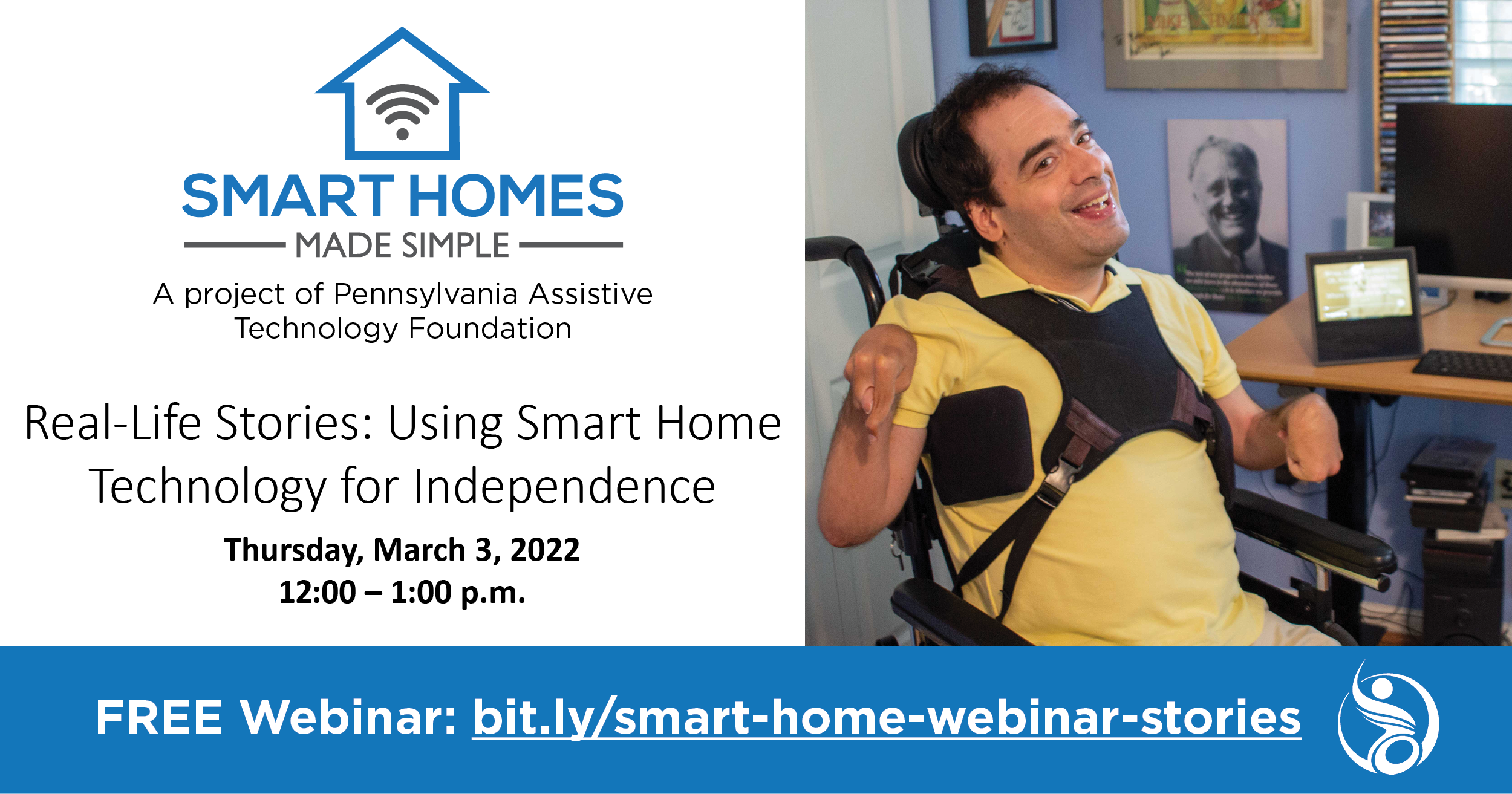
When: March 3, 2022 12:00 pm Eastern Time (US and Canada)
Topic: Real-Life Stories: Using Smart Home Technology For Independence.
Register in advance for this webinar. After registering, you will receive a confirmation email containing information about joining the webinar.
Webinar Speakers
Michael Anderson (Legislative Advocate @The ARC of Philadelphia)
Michael Anderson has been a legislative advocate for The ARC of Philadelphia since 2015. He meets with lawmakers from the Philadelphia area at local, state, and federal levels to make the case for legislative changes that will improve the lives of people with disabilities. Mr. Anderson is also a member of Pennsylvania Assistive Technology Foundation’s (PATF’s) Smart Home advisory committee. In a previous life, Mr. Anderson worked for three years as a statistician for the Philadelphia 76ers. He has also worked on a number of political campaigns. Mr. Anderson is a proud graduate of Lower Merion High School and received an associate’s degree with a concentration in journalism from Edinboro University. Currently, he is co-owner of a home in Merion Station, PA. Mr. Anderson has cerebral palsy and is a wheelchair user.
Alexa Brill (Social Media and Website Manager @The Arc of Pennsylvania)
Alexa Brill graduated with a Bachelor’s Degree in Sociology from Edinboro University of Pennsylvania in 2013. She has worked for The Arc of Pennsylvania since 2014 as their Social Media and Website Manager. Alexa also serves as the President on the Board of Self Advocates United As 1 (SAU1). She also serves on the Smart Home Advisory Committee through the Pennsylvania Assistive Technology Foundation (PATF). Alexa is very passionate about advocating for the rights of people with disabilities, as well as helping to make sure they have access to the right technology. She wants to help as many people learn about and access the technology they need to be as independent as possible.
George Russo (Assistive Technology Assistant @Easterseals)
I’m George Russo. I’ve been working as an assistive technology assistant at Easterseals for fifteen years. Easterseal has been a part of my adult life since 1996 as a client, a volunteer, an ambassador for PRC, and now as an employee. I have an Associate Degree in Computer Science from Miami Dade Community College. I’ve been a member of the Smart home Committee for about a year.
Laura Slotkoff (Occupational Therapist and Assistive Technology Specialist @Easterseals of Southern Pennsylvania)
Laura Slotkoff, MS, OTR/L, ATP is an Occupational Therapist and Assistive Technology Specialist for Easterseals of Southeastern Pennsylvania. Through her role as AT Specialist on an interdisciplinary AT team, Laura works to provide innovative solutions to individuals with disabilities across the lifespan. Over the past 2 years, she has worked collaboratively with teachers, therapists and the AT team to design 3D printed assistive technology and utilize the tools within maker spaces to benefit students with special needs. Laura is excited about the ever-evolving potential of Smart Home Technology to improve her clients’ independence and quality of life.



The Department of Human Services’ (DHS) Division of Adult Protective Services (APS) developed a media toolkit designed for facilities, mandatory reporters, and community members to assist in the awareness of abuse, neglect, exploitation, and abandonment of adults ages 18 to 59 living with a disability within the Commonwealth. Learn more about APS and use these resources to help promote APS to your clients, constituents, and network at the Adult Protective Services Media Toolkit web page.
Additionally, there are several dates (that are subject to change) where DHS will be publishing different social media posts that everyone is encouraged to share. These are available at the Adult Protective Services Media Toolkit web page on:
Questions regarding the materials found in the APS Media Toolkit or suggestions of additional resources that might be helpful in promoting the program should be directed to the APS Division.



 Prev
Prev