


Pennsylvania Nears Finish to Enter Counseling Interstate Compact



From Data to Decisions: Optimizing EHR Success Through Data Governance and Change Management
Free RCPA Members-Only Webinar
Thursday, August 21, 2025
10:00 am – 11:00 am
Register Here
Effective data governance and organizational change management (OCM) are critical for the long-term success and maintenance of your EHR system. These processes ensure data integrity, streamline system changes, and enhance overall project outcomes. In this session, we will detail how agencies can leverage OCM to assure these positive outcomes for your agency as well as overall effectiveness of your EHR initiative.
Presenters:
Objectives: Following this course, the learner will:
Certificates of attendance are available to RCPA members who attend this webinar; anyone interested in a certificate should contact Cathy Barrick. To apply for CEs, you will need to register for the RCPA Annual Conference Strive to Thrive and indicate you attended the webinar in your CE packet, which will be made available on the mobile app.
Contact Carol Ferenz, Conference Coordinator, for details, or visit the RCPA Conference website for information on workshops, sponsors, exhibitors, and more!

On July 14, the National MLTSS Health Plan Association submitted comments on the “Preserving Medicaid Funding for Vulnerable Population – Closing a Health Care-Related Tax Loophole” proposed rule. Per the Association:
This rule proposes to refine how CMS evaluates whether a health care-related tax is considered “generally redistributive.”
In our comments, we noted that we appreciate CMS’ efforts to strengthen the oversight and quality of Medicaid programs but raised concerns about the timelines and administrative burden on states, as well as the potential impact on individuals receiving long term-services and supports (LTSS).
The recommendations included:
Read the full letter here.
In Pennsylvania, this rule would impact participants’ funding of approximately $1B in federal matching funds for HealthChoices, Community HealthChoices, and Behavioral HealthChoices. No immediate action is required. If you have any questions, contact Fady Sahhar.

The Office of Developmental Programs (ODP) is proud to partner with the Office of Long-Term Living (OLTL), the Office of Mental Health and Substance Abuse Services (OMHSAS), and the Office of Medical Assistance Programs (OMAP) to announce the launch of the DHS Choking Prevention web page, a dedicated online resource hub aimed at preventing choking events among all Pennsylvanians. This new platform provides all interested stakeholders with a myriad of practical tools and educational materials to promote safer mealtime environments as well as how to recognize and respond to the potential safety risks for someone who has swallowing issues. This new website is a crucial step in ODP’s continued efforts to ensure safety, dignity, and health for individuals with intellectual disability and autism.
The DHS Choking Prevention web page is now available. ODP encourages all interested stakeholders to visit the site and access the available resources to implement into daily use as needed. Questions about this communication should be directed to your ODP Regional Office.


Christopher Boyle has been named President and CEO of Children’s Service Center of Wyoming Valley, effective July 1. He succeeds Mike Hopkins who led the organization since 2008. The two leaders have worked closely over 17 years, facilitating unprecedented growth to now serve 15,000 people of all ages annually. Boyle previously served as Chief Operating Officer overseeing mental health and primary care operations, and as Chief Human Resources Officer since 2008. Prior to CSC, Boyle worked in progressive leadership roles in human resources and financial management at American Asphalt and Pride Mobility Products Corporation. He graduated from Delaware Valley College with a bachelor’s degree in business administration and a focus in accounting.
The passage of the “One Big Beautiful Bill Act” has made significant changes to Medicaid, the Children’s Health Insurance Program, and Medicare, with strict requirements to maintain Federal support and criteria to qualify and maintain enrollment in Federal healthcare programs. There are several key provisions that will result in hundreds of thousands of Pennsylvanians losing access to healthcare:
Additional Resources:

The Department of Health and Human Services (HHS), through the Substance Abuse and Mental Health Services Administration (SAMHSA), is announcing the notice of a funding opportunity (NOFO) for a new Hepatitis C Elimination Initiative Pilot. SAMHSA estimates awarding between 13 to 40 grants. This grant will be up to three years, and the amount funded will be based on a tiered system explained in the NOFO. Applications are due no later than August 1, 2025.
The purpose of the Hepatitis C Elimination Initiative Pilot is to leverage existing health care institutions’ capacity to prevent, test for, treat, and cure Hepatitis C (HCV) in individuals with substance use disorder (SUD) and/or severe mental illness (SMI), particularly in communities severely affected by homelessness, as well as to gain insights on effective ways to identify patients, complete treatment, and reduce reinfection. Recipients of this program are expected to implement a holistic approach that integrates HCV and HIV testing, comprehensive prevention treatment, and recovery support services for SUD, SMI, hepatitis C, and HIV as needed. Through this initiative, SAMHSA aims to increase the number of individuals who are cured of HCV, reduce the incidence of HCV and HIV in grant-funded communities, and help address the intersection of SUD, SMI, infectious disease, and homelessness in high-need populations across the nation.
The NOFO and application details can be found at the following websites:
This is a unique opportunity for Certified Community Behavioral Health Centers (CCBHC), as many CCBHCs may have the infrastructure to support this grant and may find this pilot to be aligned with their CCBHC programming.
To prepare and submit an application for the Hepatitis C Elimination Initiative Pilot, it is essential to refer to the specific NOFO and the FY 2025 NOFO Application Guide. The Application Guide provides detailed instructions on the application process, including registration requirements, attachment completion, budget preparation, and adherence to federal policies and regulations.
SAMHSA requires applicants to download application forms from the Grants.gov website and may need additional forms from the SAMHSA website. It is crucial to ensure that all required forms are completed and included in the application. Incomplete applications without all the necessary forms may be deemed ineligible for review.
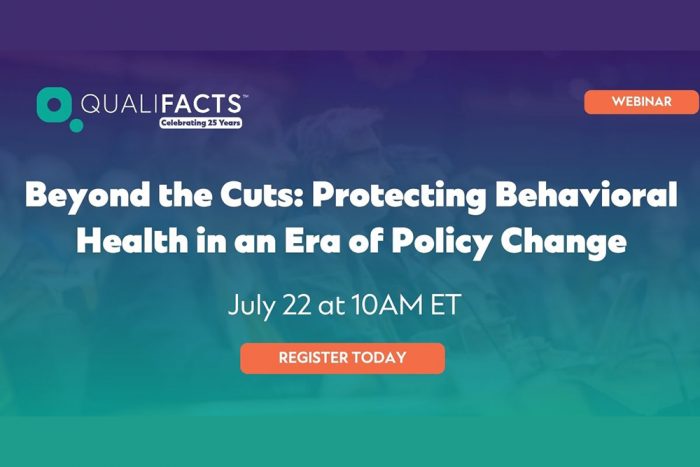
Beyond the Cuts: Protecting Behavioral Health in an Era of Policy Change (webinar)
Presented by Qualifacts, National Council for Mental Wellbeing, and OPEN MINDS
Tuesday, July 22, 2025 | 10:00 AM – 11:00 AM ET
Presenters include Josh Schoeller, CEO of Qualifacts; Chuck Ingoglia, President and CEO of the National Council for Mental Wellbeing; and Monica E. Oss, Founder and CEO of OPEN MINDS.
The behavioral health system is being reshaped at an unprecedented pace. In just weeks, the federal government has terminated over $12 billion in public health grants, dissolved SAMHSA under a sweeping HHS reorganization, and passed legislation that will transform Medicaid through work requirements, cost-sharing, and reduced provider tax caps. These changes are already leading to funding cuts, stalled infrastructure projects, and increased pressure on providers to prepare for reduced support and stricter eligibility. To help organizations navigate this evolving landscape, the National Council for Mental Wellbeing, OPEN MINDS, and Qualifacts are joining forces for a timely webinar. The session will focus on how behavioral health leaders can adapt service models, protect financial stability, and continue meeting community needs.

McAuley Ministries, the grant-making foundation of Pittsburgh Mercy, has awarded over $2.8 million in grants to 14 local nonprofit organizations and appointed Sister Barbara Anne Quinn, RSM to its Board of Directors. These grants support education, empowerment, essential needs & social services, and peacemaking initiatives in Pittsburgh’s Hill District, Uptown, and West Oakland neighborhoods.
View full release here.
 Prev
Prev