





';
Mental Health

Providers who hold a license to operate a facility licensed by the Pennsylvania Department of Human Services (DHS) are being notified of a change to the Civil Rights Compliance process. There is a new Civil Rights Compliance form when submitting a new licensing application as well as a new Civil Rights Compliance Renewal form when submitting a licensing renewal application.

Entities seeking a new license will utilize a Civil Rights Compliance (CRC) form (HS2126). The prior Civil Rights Compliance (CRC) form is now obsolete and will be returned back to providers. This form must be included in the packet submitted as part of any new license request. The new application, supporting documents, and CRC form must be emailed to the DHS office that issues your license; the email address can be found in the chart below.

Entities licensed by OCDEL or ODP who use CLS or PELICAN to submit new applications must submit the form by email. The CRC forms are not part of the electronic CLS/PELICAN new application process. The updated CRC form for new applications can be found on the DHS website under the “Application for License” page.

For licensing renewals, a licensee will now submit a CRC Renewal form (HS 2125). The prior Attestation form is now obsolete and will be returned back to providers. The renewal form must be submitted as part of a renewal licensing application, and the renewal notice will still be sent out 130 days prior to expiration. The renewal application must be emailed to the DHS office that issues your license; the email address can be found in the chart below.

Entities licensed by OCDEL or ODP who use CLS or PELICAN to submit renewal applications must submit the renewal by email. The renewal is not part of the electronic CLS/PELICAN renewal application process. The CRC form for can be found on the DHS website under the “Application for License” page.

Previously, the DHS Bureau of Equal Opportunity (BEO) would issue you a letter verifying that you are compliant with applicable civil rights laws. With the new process, a letter from BEO will no longer be sent out to licensed entities. Instead, the issuance of the new license or renewal license will indicate that your CRC form or renewal form submission was approved. If there are issues or questions on the submitted CRC or renewal form, a staff member from BEO or DHS will contact you.

If your license is issued by… Submit your application AND your CRC form (if new license)
or  CRC Renewal (if license renewal) to:
The Bureau of Human Services Licensing (Renewals) – PCH & ALR [email protected]
For NEW applications for Personal Care Homes or Assisted Living Residences Send the application, supporting documents, Civil Rights Compliance Form (HS2126) and the application fee, check or money order payable to DHS to:

Via USPS:                              Or via courier:

DHS/BHSL                                 DHS/BHSL

Room 623                                  Health & Human Services Bldg.

PO Box 2675                              Rm 623

Harrisburg, PA 17105-2675        625 Forster Street

Harrisburg, PA 17120

The Office of Children, Youth, and Families [email protected]
The Office of Mental Health and Substance Abuse Services [email protected]
The Office of Developmental Programs* [email protected]
The Office of Child Development and Early Learning* Child care providers should include their MPI number in the subject line and email the appropriate regional office:  

Northeast Region:

[email protected]

Central Region:

[email protected]

Counties: Dauphin, Cumberland,

Lancaster, York, Adams, Lebanon and York

[email protected]

Counties: Snyder, Perry, Juniata, Centre, Mifflin, Tioga, Lycoming, Northumberland, Union and Clinton

South Region:

[email protected]

Western Region:

[email protected]

Counties: Allegheny, Armstrong, Beaver, Butler, Cameron, Clarion, Clearfield, Crawford, Elk, Erie, Fayette, Forest, Greene, Indiana, Jefferson, Lawrence, McKean, Mercer, Potter, Venango, Warren, Washington and Westmoreland

[email protected]

Counties: Bedford, Blair, Cambria, Franklin, Fulton, Huntingdon and Somerset

*Licensees who use CLS or PELICAN to submit renewal applications must submit the renewal by email. The renewal is not part of the electronic CLS/PELICAN renewal application process.

The new process is effective on Tuesday, October 1, 2024. Existing licensees and applicants must begin following the new process on or before that date.

If you have any questions about the new process, please contact the applicable DHS office, DHS Human Services Licensing Office at 717-705-0383, or, if your facility is a childcare facility, please reach the Office of Development and Early Learning (OCDEL) at Western Region 1-800-222-2149, Central Region (Harrisburg) at 1-800-222-2117, Northeast Region (Scranton) at 1-800-222-2108, or Southeast Region (North & South) at 1-800-346-2929.

If you have any questions or need assistance with the completion of your civil rights compliance application, please contact Bureau of Equal Opportunity Licensing office at 717-787-1579 or electronically.

Thank you for your commitment to protecting the rights of Pennsylvania’s most vulnerable citizens. If you have any additional questions, please contact your respective RCPA Policy Director.

The Pennsylvania Independent Regulatory Review Commission (IRRC) has completed their review of existing Intensive Behavioral Health Services (IBHS) regulations codified at 55PA. Code chapters 1155 and 5240, as requested by the RCPA IBHS Steering Committee.

The RCPA IBHS Regulatory Reform Recommendations, submitted on November 29, 2022, requested the commission to review the IBHS regulations under section 8.1 of the Regulatory Review Act, which provides that the commission may review any existing regulation which has been an effect for at least three years.

The commission has noted the burden placed on providers by the Department of Human Services regulation, but while they appreciated our concerns, the commission’s role is to determine whether existing regulations, as a whole, remain in the public interest. In the commission review letter, they determined that further action by the commission is not warranted in this matter.

We have been in contact with OMHSAS throughout this two-year period, and the commission provided the department with guidance as part of the review process. Despite the ruling from the IRRC, OMHSAS has agreed that they will reopen the IBHS for review as announced by OMHSAS Deputy Secretary Jennifer Smith at the RCPA Conference last week. RCPA will be reviewing the recommendations to calibrate those areas that continue to create barriers to access that have arisen since the recommendations created in the Fall of 2022.

If you have any questions, please contact RCPA COO and Policy Director Jim Sharp.

The process to route cell phone calls to the 988 Suicide & Crisis Lifeline based on the caller’s approximate location, versus by area code, has started; FCC to vote next month on a final rule that would require all U.S. wireless carriers to implement geo-routing with specific timelines

The 988 Suicide & Crisis Lifeline announced that the process to start routing cellular phone calls to 988 contact centers based on the caller’s approximate location, versus by area code — known as “geo-routing” — began last week with two major U.S. wireless carriers that combined make up about half of all wireless calls to 988. The U.S. Department of Health and Human Services’ (HHS) Substance Abuse and Mental Health Services Administration (SAMHSA) and the 988 Network Administrator, Vibrant Emotional Health, have been working with all of the major U.S. cell phone carriers for more than a year to improve call routing to 988 so that callers on a cell phone can be connected more locally to centers that are better equipped to provide nearby resources and services.

These new rules, if adopted by a vote from the full commission next month, would require all U.S. wireless carriers to implement geo-routing. In addition, the rules will also establish an implementation timeline for geo-routing calls to the 988 Lifeline of 30 days following the effective date of the rule for nationwide wireless providers and 24 months after the effective date of the rule for smaller, non-nationwide providers.

More than 200 contact centers across the country provide support through the 988 Lifeline network. Geo-routing connects cell phone callers to the closest 988 contact center to the caller’s physical location. Geo-routing differs from geolocation in that it does not provide a precise location of the caller, allowing callers to maintain their location privacy. Studies have shown that after speaking with a trained crisis counselor, most callers feel more hopeful and less depressed, suicidal, and overwhelmed.

If you have additional questions, please contact RCPA COO and Mental Health Director Jim Sharp.

The Office of Developmental Programs (ODP) and the Office of Mental Health and Substance Abuse Services (OMHSAS) are pleased to announce that the latest edition of the Positive Approaches Journal is now available!

Understanding Trauma: Expressive Therapies

In this issue of the Positive Approaches Journal, we see that there have been important strides in identifying the prevalence of trauma and the complex consequences of trauma from multiple sources, including social adversity, abuse, and neglect. The focus is on the importance of taking this into consideration on every level, from systems collaboration, to how we assess, diagnose, treat, and offer restorative environmental supports to individuals with intellectual disability and autism (ID/A).

This issue of Positive Approaches Journal is in digital form, available for viewing online or for downloading at MyODP. To print a copy of the PDF, online journal, or a specific article, you will find these options within your left navigation bar on any Positive Approaches Journal page. A new window will open with your selected document. In your browser, you may click the Print button in the top left corner of the page, or by using the Print capability within your browser.

Please submit feedback regarding your experience with the Positive Approaches Journal on MyODP.

The Positive Approaches Journal is published quarterly. For additional information, please contact ODP Training’s inbox.

The Collaborative Family Healthcare Association (CFHA) and the Value-Based Care Work Group have created a value-based survey that is being distributed across the US to seek insights into the current state of value-based care, identify existing gaps, and explore opportunities for better alignment between payment models and clinical practice.

The target audience includes health systems, quality and administration professionals, primary and specialist care providers, and funding sources such as payers, policymakers, foundations, and grants.

The results of the 5-minute survey, which you can view here, will be shared with members as accompanying review is completed. If you have any questions, please contact RCPA COO and MH Policy Director Jim Sharp.

[Official Devereux Press Release]


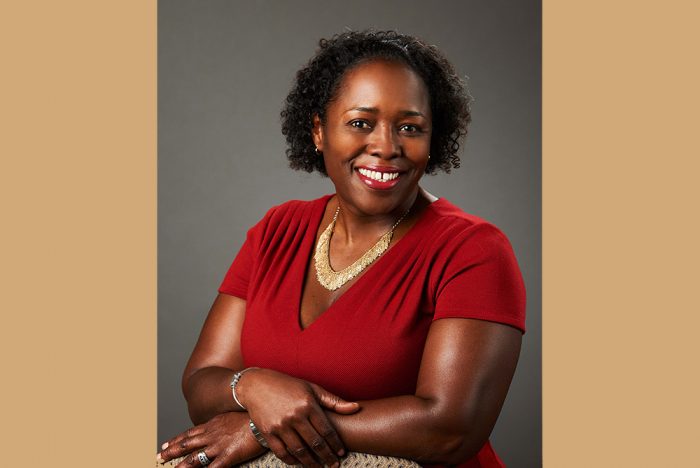
Congratulations to Devereux Advanced Behavioral Health Senior Vice President and Chief Clinical/Medical Officer Yolanda Graham, M.D., FAPA, DFAACAP, who was recently elected president of the American Academy of Child and Adolescent Psychiatry’s (AACAP) Regional Council of Child and Adolescent Psychiatry (RCCAP) of Eastern Pennsylvania and Southern New Jersey.

Graham, who joined RCCAP in 2020, previously served as secretary (2021-23) and president-elect (2023-24), before being elected president in June 2024.

The mission of AACAP and its regional councils is to “promote the healthy development of children, adolescents and families through advocacy, education and research, and to meet the professional needs of child and adolescent psychiatrists throughout their careers.”

“I am honored to be elected president of RCCAP of Eastern Pennsylvania and Southern New Jersey,” said Graham. “Taking on this esteemed leadership role will allow me to serve as a representative of our regional council at AACAP’s general assembly meetings where I can elevate issues that impact our field to a national level. This includes recommending policy changes, best practice guidelines and system of care reforms that will ultimately benefit Devereux and the individuals and families we serve.”

Strengthening outreach; increasing advocacy
In her new position, Graham hopes to further the critical mission of RCCAP and AACAP to make a meaningful difference in the lives of children and adolescents throughout the region.

“Chief among my goals is to provide greater outreach to early career psychiatrists, encouraging their active participation in RCCAP and AACAP, and strengthen engagement with medical students to cultivate the next generation of child and adolescent psychiatrists,” explained Graham. “I also hope to increase advocacy for children and adolescents by partnering with other child-serving trade organizations. Finally, recognizing the importance of a strong and cohesive leadership team, I want to develop a comprehensive onboarding training program for all new RCCAP board members.”

Engaging youth, families
Prior to taking on her role as president of RCCAP of Eastern Pennsylvania and Southern New Jersey, Graham was invited by AACAP President Tammy Benton, M.D., to serve as lead author for a chapter in a compendium, titled “Bringing the village to the child: Addressing the crisis of children’s mental health.” The compendium was published in July 2024 in the journal, Child and Adolescent Psychiatric Clinics of North America.

Graham’s chapter – “Engaging youth voice and family partnerships to improve children’s mental health outcomes” – focuses on promoting active participation of families and youth in mental health systems of care.

“Youth and families are the true experts on their own strengths, needs and preferences. By elevating their perspectives, we can ensure our interventions and support systems are meeting them where they are now,” Graham noted. “This collaborative approach fosters a heightened sense of investment and engagement with youth and parent peer supports, and can lead to improved outcomes and sustainable change. Prioritizing the inclusion of families and young people is an essential component of building a mental health system that works for everyone.”

Learn more about Devereux Advanced Behavioral Health.

The 2024 RCPA Conference Embracing Challenges, Empowering Success kicks off in just a few days, and it’s your very last chance to contact RCPA and register to gain access to speakers who work on the cutting edge of health and human services.

In addition to keynote and plenary speakers as well as educational and interactive workshops, RCPA is hosting a variety of events throughout each day that will only be available to those onsite at the Hershey Lodge!

Tuesday, Sept. 24:

  • During the afternoon, the Oral Health + Disability Exhibit will highlight the urgent need for inclusive dental care for people with disabilities.
  • Attendees will join RCPA staff, Conference Committee members, and colleagues at the Welcome Reception for hors d’oeuvres, beverages, and plenty of networking opportunities!
Wednesday, Sept. 25:
  • The Association Awards Luncheon will recognize Rep. Eric Nelson, Kim Sonafelt, and Mike Hopkins for their dedication, commitment, and leadership in health and human services.
  • Throughout the day, the Bodhana Group, a 501(c)3 nonprofit based in York, will be on hand to discuss their mission of using tabletop games for education, skill building, and therapy.
Thursday, Sept. 26:
  • With Connections Hall open, attendees will have the day between sessions to explore exhibit booths, participate in the mobile app game, and enjoy both breakfast and lunch with RCPA staff and colleagues.
  • Silent Auction items will be distributed this day. Attendees will have a chance to earn prizes while supporting the RCPA PAC, which provides financial support to state legislators who have demonstrated a strong, consistent, and positive interest in our issues and priorities.

All of these and more will only be available onsite for in-person attendees. If you haven’t registered yet, registrations with credit card information included may be faxed to the office until September 20 at 5:00 pm, fax number 717-364-3287. Registration and payment for the RCPA conference is accepted on-site at the Hershey Lodge and Conference Center, provided space and materials remain available. Questions regarding registration should be directed to Allison Brognia, Conference Registrar.

Contact Carol Ferenz, Conference Coordinator, or RCPA with any additional questions. We look forward to seeing you at the Hershey Lodge!

Image by Werner Moser from Pixabay

The Pennsylvania Department of Drug and Alcohol Programs (DDAP), through RCPA, is seeking input on its plan to license telehealth-only outpatient SUD treatment providers.

In an effort to regulate unlicensed, out-of-state telehealth providers marketing themselves as addiction treatment providers as well as expand access, DDAP plans to license telehealth-only outpatient SUD treatment providers. These DDAP-licensed telehealth-only providers may provide intake, evaluation, and referral, as well as outpatient, intensive outpatient, or partial hospitalization services via telehealth only, without a physical plant location in Pennsylvania, to individuals who are located in the Commonwealth as long as the provider complies with all applicable federal, state, and local laws.

DDAP will not require the provider to maintain a physical location in Pennsylvania. DDAP also will grant all telehealth-only providers an exception to §709.11(b) regarding the requirement to conduct an onsite inspection for the renewal of a license as part of licensure.

DDAP has also said licensure is no guarantee of payment. Providers that are considering applying for a telehealth-only license should consult their public and private insurance payers to confirm whether they will meet conditions for network enrollment and payment, as DDAP cannot guarantee a DDAP-licensed telehealth-only provider funding or a contract.

Some providers have raised concerns about:

  • The effectiveness and quality of tele-only treatment without an ability for in-person counseling and how it could harm patients;
  • The siphoning of commercial patients from community-based providers and how it would negatively affect their financial situation;
  • The long-term sustainability of community-based providers who understand their community as large national players enter Pennsylvania; and
  • Maximizing existing outpatient capacity in Pennsylvania.

Comments may be emailed directly to DDAP Deputy Secretary Kelly Primus. Or, by the close of business this Friday, Sept. 20, please submit to RCPA SUD Treatment Services Provider Policy Director Jason Snyder any comments about this plan. RCPA will then share the comments with DDAP. In addition to any concerns you may have about this new license category, please include in your comments any proposed solutions you have about preventing unlicensed telehealth-only outpatient organizations from providing SUD treatment counseling via telehealth in Pennsylvania.