';
Policy Areas

0 2136

For members’ convenience, please find below the links to the House and Senate Department of Human Services (DHS) budget hearings. The House hearing is tomorrow, March 4, and will be starting at 10:00 am; the Senate hearing is on Wednesday, March 5, and will be starting at 9:30 am. Both hearings will be held the entire day, with a break scheduled for lunch.

If you have any questions, please contact Jack Phillips.

Tuesday, March 11, 2025, 10:00 am – 3:00 pm, break from 2:00 pm – 1:00 pm

This meeting will be virtual via Zoom, with onsite access at The Western Pennsylvania School for the Deaf – Auditorium | 300 East Swissvale Ave | Pittsburgh, PA 15218. The public is invited to attend in person or log into this meeting using the following information:

Zoom for March State Board Meeting

Please Note: The public Zoom link requires webinar registration prior to meeting access.

CART and sign language interpreters will be available during this meeting. Those using a screen reader can connect via this link. The agenda for this meeting is here and can also be found on the State Board’s web page. Anyone who would like to make public comment prior to the meeting may submit their comments via email. Additional auxiliary aids and services are available upon request to individuals with disabilities. Please send your requests via email.

The Office of Developmental Programs (ODP) has shared an important training announcement from StationMD, a physician service that is dedicated to individuals with Intellectual and/or Developmental Disabilities (I/DD) and other vulnerable populations.


StationMD is inviting people to participate in a webinar on
“Managing Agitation for People With I/DD.”

The webinar will include:

  • General information about the Specialty Telehealth and Assessment Team (STAT) Waiver service in Pennsylvania;
  • A presentation from StationMD’s Co-Founder, Dr. Maulik Trivedi on the topic, “Managing Agitation for People with I/DD;” and
  • Additional time for questions and answers.

Date:
Thursday, March 13, 2025, from 1:00 pm – 2:00 pm

This webinar qualifies for one training hour. To receive a certificate for the training hour after the webinar, please register in the link below.

Register Now!

Questions about this training may be sent electronically.


Presented by Beth Bitler, this training provides information on how enabling behaviors develop as family members search for a way to cope with active substance use and fears of relapse in recovery. It will help participants understand the relationship between substance use disorder, recovery, and enabling behaviors. It will also touch on how stigmatizing language affects families of individuals with SUD.
Learning Objectives:
  • Understand how enabling behaviors develop;
  • Identify the relationship between substance use, recovery, and enabling behaviors; and
  • Identify coping mechanisms of family members.

The Office of Developmental Programs (ODP) is currently seeking individuals that would like to record and share their physical activity participation and providers that would like to have their physical activity programs featured with ODP’s stakeholders across the Commonwealth. Your activities can be an inspiration to others to get healthier! If interested, or if you would like more information, please respond via email with “Move Your Way” in the subject line.
Benefits of Being Physically Active

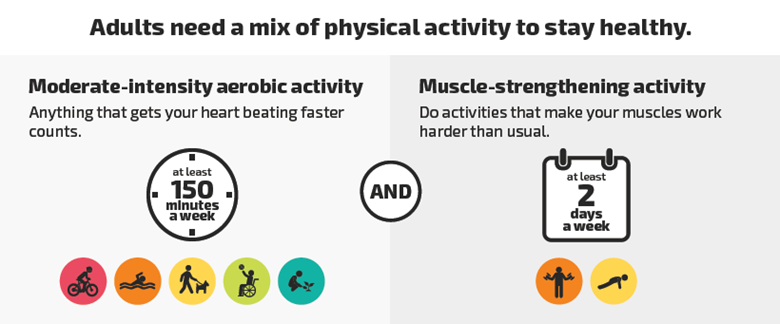
Adults should aim for at least 150 minutes of aerobic activity that gets your heart beating faster, like taking a walk or going for a bike ride. Adults also need at least 2 days of muscle-strengthening activity each week. Anything that makes your muscles work harder than usual, like yard work, chores around the house, or lifting weights, counts! Regular physical activity during the week and throughout your lifetime can help lower the risk of health conditions, such as Type 2 diabetes and heart disease. Regular physical activity also provides many immediate benefits such as: improved sleep and improved ability to fight infections, reduced symptoms of depression, and strengthened social connections while also sharpening your focus and reducing stress.

Outdoors Cold Safety

  • Wear layers: Pants, jacket, gloves, and headwear are all important for staying protected from the cold and wind. Multiple layers of clothes can keep your warmer than a single thick layer — and you can shed layers as the body warms up.
  • Stay hydrated: In cold conditions, you may not feel as thirsty. Drink water before heading out and take water with you for longer activities.
  • Pace yourself: Some activities, like shoveling snow, can be more strenuous than they seem. Start at a comfortable intensity and gradually increase over time. Use the talk test to assess your intensity level.
  • Watch out for ice: Ice can be difficult to spot, especially under fresh snow. Consider shoes with rubber soles and grooved treads to help prevent falls.
  • Stay visible: With fewer daylight hours, you may choose to be active when it’s dark outside. Carry a flashlight and wear reflective attire to stay safe.

*If you have questions about how you or someone you support can get active safely during cold weather, you can contact a healthcare provider to discuss.