




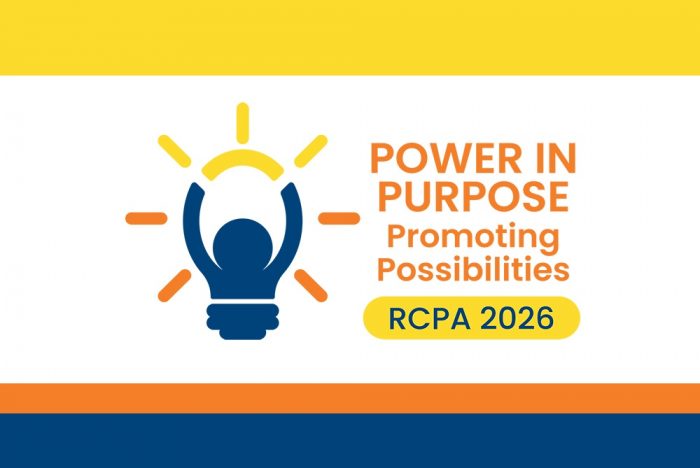
RCPA continues to seek proposals for the 2026 Annual Conference Power in Purpose: Promoting Possibilities, which will be held September 29 – October 2 at the Hershey Lodge for a statewide audience. RCPA’s Conference Committee is looking for workshop proposals in every area for possible inclusion, particularly those that assist providers in developing and maintaining high-quality, stable, and effective treatments, services, and agencies in an industry where change is constant. The committee looks for presentations that:
- Discuss strategies for C-Suite
 leadership to advance their organization with adapting to challenges and opportunities;
 - Provide guidance on building a culture of a committed workforce, including recruitment and employee development as well as effective remote workforce strategies;
- Highlight new policy, research, and treatment initiatives, such as the use of artificial intelligence and technology in service provision;
- Provide specific skills and information related to individual and organizational leadership development and enhancement;
- Discuss advanced ethics practices and suicide prevention; and/or
- Address system changes that affect business practices, including integrated care strategies, value-based purchasing, performance-based contracting, acquisitions and mergers, and alternative payment models.
The committee welcomes any proposal that addresses these and other topics essential to brain injury, medical rehabilitation, mental health, substance use disorder treatment, children’s health, aging, physical disabilities, autism, and/or intellectual/developmental disabilities. Members are encouraged to consider submitting, and we highly encourage you to forward this opportunity to those who are exceptionally good speakers and have state-of-the-art information to share.
The Call for Proposals (featuring a complete listing of focus tracks) and accompanying Guidelines for Developing Educational Objectives detail requirements for submissions. The deadline for submissions is COB Monday, March 23, 2026. Proposals must be submitted electronically with the form provided; confirmation of receipt will be sent. Proposals submitted after the deadline may not be considered.
 If the proposal is accepted, individuals must be prepared to present on any day of the conference. Workshops are 90 minutes in length. If the topic requires an in-depth presentation, a double session can be scheduled for a total of 180 minutes. At the time of acceptance, presenters will be asked to confirm the ability to submit workshop slides and handouts electronically two weeks prior to the conference. Individuals unable to meet this expectation may not have their materials available to participants during the conference.
Individuals are welcome to submit more than one proposal; however, we ask that you submit no more than three total. Notification of inclusion for the conference will be made via email by Monday, May 11, 2026. Questions may be directed to Carol Ferenz, Conference Coordinator.




 Prev
Prev