






';
Physical Disabilities & Aging

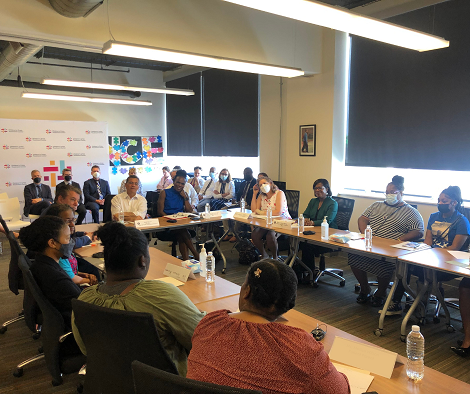
RCPA member Children’s Crisis Treatment Center (CCTC) hosted the U.S. Secretary of the Department of Health and Human Services (HHS) Xavier Becerra for a roundtable discussion on children’s mental health and the impact of community violence on the afternoon of Friday, July 15, 2022. The roundtable was moderated by Dr. Ala Stanford, who is the Regional Director for HSS, responsible for all of Pennsylvania, Delaware, the District of Columbia, Maryland, Virginia, and West Virginia. Dr. Stanford is a practicing physician and the founder of the Black Doctors COVID-19 Consortium, which focuses on testing and vaccinating Philadelphia residents against COVID-19.

Xavier Becerra is the 25th Secretary of the Department of Health and Human Services and the first Latino to hold the office in the history of the United States. Secretary Becerra was in Philadelphia to promote the launch of the 988 Suicide & Crisis Lifeline (formerly known as the National Suicide Prevention Lifeline), which is a network of more than 200 state and local call centers.
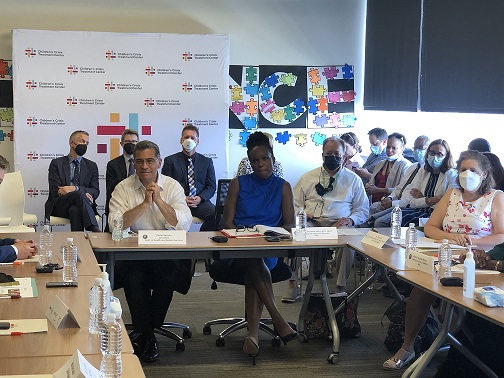
“CCTC was proud to be chosen as the organization the Secretary visited. It was wonderful to share with him the work that is being done in Philadelphia around children’s mental health services and highlight the impactful work CCTC provides in our centers, community, and schools,” said Antonio Valdés, Chief Executive Officer at CCTC.

Date: Thursday, July 28, 2022
Time: 2:00 pm ET
Duration: 1 hour

Training programs are one of the most effective ways to retain staff members and help them grow within your organization. While most organizations create some kind of internal training on a regular basis, crafting effective, engaging content for adult learners can prove challenging.

Cognota, a global software company specializing in improving productivity for learning and development teams, is excited to share best practices for incorporating adult learning principles into your training development.

Visit here for more information or to register for this webinar.

Date: Tuesday, July 19, 2022
Time: 11:30 am – 12:45 pm EDT

Sponsor: The College for Behavioral Health Leadership
Offered in partnership with the American Association for Community Psychiatrists

This webinar is open to all.

This webinar will introduce participants to the Self-Assessment for Modification of Anti-Racism Tool (SMART), an innovative self-directed quality improvement tool developed by the American Association for Community Psychiatry (AACP) to assist community mental health organizations in addressing structural racism. The presenters will describe the process by which SMART was developed, including its grounding in input from community mental health providers and existing health inequity frameworks. The domains and items of SMART, as well as its application process, will be outlined. Presenters will also provide lessons from on-the-ground applications of SMART in diverse community mental health settings.

Learning Objectives:
At the end of this webinar, participants will be able to:

  • Describe the relevance of and importance of addressing structural racism in the community mental health setting;
  • Understand the 5 domains of the Self-Assessment for Modification of Anti-Racism Tool (SMART), including literature evidence supporting the selection of SMART’s domains and items; and
  • Understand the on-the-ground experience of applying SMART in diverse community mental health settings.

Register
More information

The Biden administration on Friday, July 15, 2022, extended the COVID-19 public health emergency (PHE) for another three months. US Department of Health and Human Services Secretary Xavier Becerra officially renewed the declaration, extending it through October 13, 2022. The extensions include the Centers for Medicare & Medicaid Services (CMS) standards governing the delivery of services via telehealth.

If you have additional questions, please contact your RCPA Policy Director.

Except from Morning Times
July 15, 2022

Mental health services are now more easily accessible for Pennsylvania residents under a bill sponsored by Rep. Tina Pickett (R-Bradford/Sullivan/Susquehanna) that has been signed into law by Gov. Tom Wolf. Act 76 of 2022, formerly House Bill (HB) 2419, allows for the expanded use of telehealth technology in the treatment of mental health patients. The new law removes the statutory requirement of 50% of onsite psychiatric time, giving the Department of Human Services more flexibility in issuing waivers to accommodate individual clinics in providing mental health services virtually.


RCPA thanks our General Assembly members for their partnership and support in ensuring these critical services remain in place for those in need of care. If you have questions, please contact RCPA Policy Director Jim Sharp.

Thank you. Your advocacy made all the difference this year.

Pennsylvania’s 2022/23 General Fund budget is finally in the books, having been enacted one week after the official June 30 deadline. The $45.2 billion spending plan represents a 2.9% increase in state spending over the previous fiscal year. The wide-ranging budget, made possible by higher-than-expected revenues that led to a multibillion-dollar surplus, includes some extra funding for human services providers who assist individuals with intellectual disabilities and their families as well as more money for mental health services.

Despite record surpluses, the administration and lawmakers still negotiated a spending plan that keeps many other broader budget initiatives flat-lined. Although some of our line-item increases were less than requested, and even though direct payments for workforce issues are limited, the funding boosts we did receive will help human service providers that have faced chronic underfunding for years.

This much is clear: none of the modest success we achieved would have been possible without you.

Over the last five months, you helped our coalition deliver 8,296 messages directly to members of the General Assembly and the administration, plus another 706 social media hits tagging representatives and senators. Your engagement was evident from the start, as our social media platforms exploded and continue to grow. All of this is on top of the phone calls you made to legislative offices, the letters you wrote to your local papers, and the events you attended in your community and even at the Capitol Building in Harrisburg.

The people we serve, their families, and their providers of care were seen and heard.

Lawmakers are more informed than ever. They know who we are, and they are coming to understand our issues and appreciate how important they are to our communities. That education process will continue because our advocacy doesn’t end when the budget bill is signed. It’s a sustained effort that we undertake each and every day on behalf of those who rely on us — individuals with disabilities and mental health needs and their families.

You can view the specifics related to our budget priorities here. And make no mistake about it. This small success is a sign of bigger things to come.

Thank you for all you did, for all you continue to do, and for your continued support and engagement. Your support made the difference.