







';
Tags Posts tagged with "Exercise"

Exercise

The Office of Developmental Programs (ODP) and Governor Josh Shapiro’s office invite you to Move Your Way! To acknowledge the National Day of Exercise and ODP’s campaign to encourage physical activity, Governor Josh Shapiro has signed a proclamation, which recognizes April 18, 2025, as Move Your Way Day.

What is Move Your Way?

Move Your Way is the physical activity campaign based on the second edition of the Physical Activity Guidelines for Americans. It offers tools and resources for individuals and professionals to learn about the Physical Activity Guidelines, shares its key messages and encourages individuals to become more active. Recognizing the health disparities and coexisting medical conditions experienced by many individuals with intellectual disabilities, developmental disabilities, and autism, ODP is promoting Move Your Way in cooperation with the Office of Disease Prevention and Health Promotion of the U.S. Department of Health and Human Services. Becoming more physically active can help lead to happier, healthier lives. Please share widely!

How can you Move Your Way?

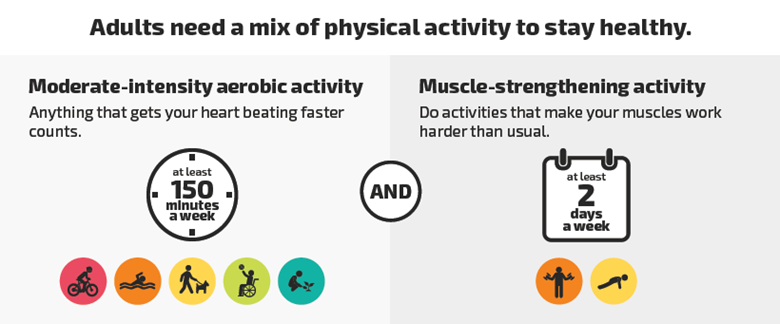
Anything that gets your heart beating faster counts. And it all adds up. Find what works for you! Walking, dancing, gardening, swimming, and stretching are just a few suggestions for weekly movement. Adults need a mix of physical activity to stay healthy. Moderate-intensity aerobic activity at least 150 minutes a week, and muscle-strengthening activity at least 2 days a week. Do activities that make your muscles work harder than usual.
Kids and teens ages 6 to 17 need at least 60 minutes every day. Most of it can be moderate-intensity aerobic activity. At least 3 days a week, encourage them to step it up to vigorous intensity. As a part of their 60 minutes, they also need muscle-strengthening at least 3 days a week and bone-strengthening 3 days a week.

Whats Your Move?

Do you have a weekly movement routine or are you just getting started? Share your story with us!

Email with a subject line of Move Your Way, and ODP may feature your story on MyODP News Online!

Please be sure to fill out the Department of Human Services (DHS) Media Release Form to send with your story!
The Office of Developmental Programs (ODP) is currently seeking individuals that would like to record and share their physical activity participation and providers that would like to have their physical activity programs featured with ODP’s stakeholders across the Commonwealth. Your activities can be an inspiration to others to get healthier! If interested, or if you would like more information, please respond via email with “Move Your Way” in the subject line.

Benefits of Being Physically Active

Adults should aim for at least 150 minutes of aerobic activity that gets your heart beating faster, like taking a walk or going for a bike ride. Adults also need at least 2 days of muscle-strengthening activity each week. Anything that makes your muscles work harder than usual, like yard work, chores around the house, or lifting weights, counts! Regular physical activity during the week and throughout your lifetime can help lower the risk of health conditions, such as Type 2 diabetes and heart disease. Regular physical activity also provides many immediate benefits such as: improved sleep and improved ability to fight infections, reduced symptoms of depression, and strengthened social connections while also sharpening your focus and reducing stress.

Outdoors Cold Safety

  • Wear layers: Pants, jacket, gloves, and headwear are all important for staying protected from the cold and wind. Multiple layers of clothes can keep your warmer than a single thick layer — and you can shed layers as the body warms up.
  • Stay hydrated: In cold conditions, you may not feel as thirsty. Drink water before heading out and take water with you for longer activities.
  • Pace yourself: Some activities, like shoveling snow, can be more strenuous than they seem. Start at a comfortable intensity and gradually increase over time. Use the talk test to assess your intensity level.
  • Watch out for ice: Ice can be difficult to spot, especially under fresh snow. Consider shoes with rubber soles and grooved treads to help prevent falls.
  • Stay visible: With fewer daylight hours, you may choose to be active when it’s dark outside. Carry a flashlight and wear reflective attire to stay safe.

*If you have questions about how you or someone you support can get active safely during cold weather, you can contact a healthcare provider to discuss.