







';
Tags Posts tagged with "Physical Therapy"

Physical Therapy

Legislation. Wooden gavel and books in background. Law and justice concept

Representative John Schlegel has introduced a co-sponsorship memo regarding House Bill 2070, Clarifying Dry Needling as an Acceptable Practice within Physical Therapy (PT).

The American Physical Therapy Association (APTA) recognizes dry needling as being within the physical therapist scope of practice. However, Pennsylvania’s Physical Therapy Practice Act (Act 110 of 1975) does not explicitly allow or deny the performance of this type of therapy. This creates a legal gray area and causes uncertainty among licensed physical therapists. Due to the current law’s silence on this treatment technique, legislative clarification is needed.

Dry needling (sometimes referred to as “trigger point dry needling” or “intramuscular manual therapy”) is a treatment method used to relieve muscle pain and stiffness and to improve range of motion. It is important to note that dry needling and acupuncture are not the same, though both are considered needle-based therapies. These procedures have different medical origins, needle placement and application techniques, and serve different purposes.

HB 2070 clarifies that licensed physical therapists may perform dry needling therapy given certain education and training requirements are met and will further specify that dry needling does not include the practice of acupuncture.

A majority of states acknowledge that dry needling is within the scope of practice for physical therapists, including our neighboring states of Delaware, Maryland, New Jersey, Ohio, and West Virginia.

The bill was referred to the House professional licensure committee on December 3, 2025.
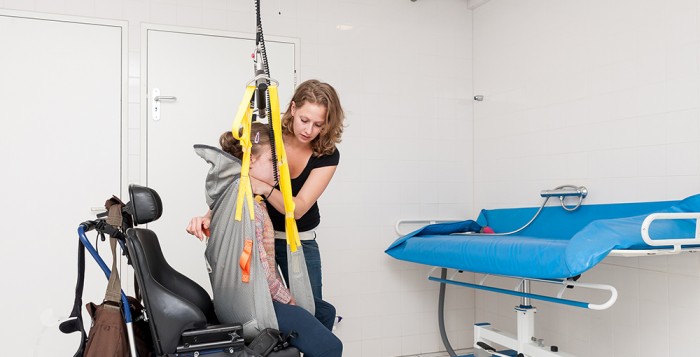
The Intensive Model of Therapy for Children With Neurological or Movement Disorders

Thursday, September 4, 2025
12:00 pm – 1:00 pm EDT; 11:00 am – 12:00 pm CDT;
10:00 am – 11:00 am MDT; 9:00 am – 10:00 am PDT
Register Here

Presenter Bio: Amy O’Donnell
Amy O’Donnell is a pediatric physical therapist at The Children’s Institute in Pittsburgh, Pennsylvania. She earned her bachelor’s degree from Washington & Jefferson College and her Doctorate in Physical Therapy from the University of Pittsburgh. Amy joined The Children’s Institute in 2012 and has since specialized in pediatric physical therapy care.

Her first exposure to the intensive therapy model came during her student training, and she became actively involved in the program following its expansion to her clinic location in 2014. In 2019, she was named the program coordinator. Amy has co-authored both qualitative and quantitative research articles on the Intensity Program at The Children’s Institute, with both publications appearing in Pediatric Physical Therapy journal.

Objectives: Following this course, the learner will:

  • Define and discuss benefits of episodic care and family centered care;
  • Define and discuss benefits of intensive therapy model; and
  • Discuss different types of intensive therapy models and strategies to implement into your clinic.

Audience: This webinar is intended for all interested members of the rehabilitation team.

Level: Beginner/Intermediate

Certificate of Attendance: Certificates of attendance are available for all attendees. No CEs are provided for this course.

Complimentary webinars are a benefit of membership in IPRC/RCPA. Registration fee for non-members is $179. Not a member yet? Consider joining today.

Included in the July 7, 2025, Pennsylvania Bulletin was a notice from the State Board of Physical Therapy (PT) regarding the final-form rulemaking that allows physical therapist students and physical therapist assistant (PTA) students to sit for requisite examinations up to 90 days prior to graduation from their respective programs. It also allows PTs and PTAs to receive a limited amount of continuing education credit for providing clinical instruction to student PTs and student PTAs at clinical facilities affiliated with accredited programs.

In addition, this final-form regulation allows applicants to directly register for the national examination with the examination provider by removing the requirement that the applicant first seek the Board’s permission, and it allows applicants to sit for a third or successive examination, after two failures, without first seeking the Board’s permission.

This final-form regulation became effective on July 7, 2025.

The Intensive Model of Therapy for Children With Neurological or Movement Disorders

Thursday, September 4, 2025
12:00 pm – 1:00 pm EDT; 11:00 am – 12:00 pm CDT;
10:00 am – 11:00 am MDT; 9:00 am – 10:00 am PDT
Register Here

Presenter Bio: Amy O’Donnell
Amy O’Donnell is a pediatric physical therapist at The Children’s Institute in Pittsburgh, Pennsylvania. She earned her bachelor’s degree from Washington & Jefferson College and her Doctorate in Physical Therapy from the University of Pittsburgh. Amy joined The Children’s Institute in 2012 and has since specialized in pediatric physical therapy care.

Her first exposure to the intensive therapy model came during her student training, and she became actively involved in the program following its expansion to her clinic location in 2014. In 2019, she was named the program coordinator. Amy has co-authored both qualitative and quantitative research articles on the Intensity Program at The Children’s Institute, with both publications appearing in Pediatric Physical Therapy journal.

Objectives: Following this course, the learner will:

  • Define and discuss benefits of episodic care and family centered care;
  • Define and discuss benefits of intensive therapy model; and
  • Discuss different types of intensive therapy models and strategies to implement into your clinic.

Audience: This webinar is intended for all interested members of the rehabilitation team.

Level: Beginner/Intermediate

Certificate of Attendance: Certificates of attendance are available for all attendees. No CEs are provided for this course.

Complimentary webinars are a benefit of membership in IPRC/RCPA. Registration fee for non-members is $179. Not a member yet? Consider joining today.

Monday, June 23, 2025
12:00 pm – 1:00 pm EDT; 11:00 am – 12:00 pm CDT;
10:00 am – 11:00 am MDT; 9:00 am – 10:00 am PDT
Register Here

Presenter Bios:

Katherine Bentley, MD
Dr. Bentley is a pediatric physiatrist at Children’s Specialized Hospital. She is the Section Chief of Physiatry, past President of the Medical Staff, Director of the Chronic Pain Program, Director of the Continuing Medical Education Department, and Assistant Director of the Pediatric Rehabilitation Medicine Fellowship.

Dr. Bentley is an associate professor at Rutgers New Jersey Medical School. Dr. Bentley graduated from the Lawrenceville School in 1998 and Middlebury College in 2003. In college, she became an adaptive skiing instructor, which sparked her interest in rehabilitation medicine. Dr. Bentley graduated from New Jersey Medical School in 2007, completed an internship at Morristown Medical Center, and completed both a residency in rehabilitation medicine and fellowship in pediatric rehabilitation medicine at Rutgers New Jersey Medical School. She is also a member of the Women’s Leadership Alliance at RWJBarnabas Health.

Kate Vieni, PT, DPT
Kate Vieni is a pediatric physical therapist at Children’s Specialized Hospital. She works as the supervisor of the inpatient physical therapy department and is the program lead for physical therapy within the chronic pain management program. Kate graduated from Ithaca College with her doctorate in physical therapy in 2006. She received her therapeutic pain specialist certification in 2022 and her fellowship of pain sciences in 2024 through Evidence of Motion.

Kate Hottinger, PhD
Kate Hottinger is a licensed pediatric psychologist and works as the inpatient therapy supervisor for the psychology department at Children’s Specialized Hospital in New Brunswick, NJ. She obtained her graduate training from Ferkauf Graduate School of Psychology. She completed fellowship training in Pediatric Pain Medicine and internship training in Child Clinical Psychology at Children’s National Medical Center in Washington, DC.

Objectives: Following this course, the learner will:

  • Define amplified pain syndromes and identify key characteristics specific to pediatric populations;
  • Describe the foundational principles and considerations of rehabilitative treatment approaches for amplified pain; and
  • Review core concepts of pain neuroscience education to support treatment of patients with amplified pain syndromes.

Audience: This webinar is intended for all interested members of the rehabilitation team.

Level: Beginner – Intermediate

Certificate of Attendance: Certificates of attendance are available for all attendees. No CEs are provided for this course.

Complimentary webinars are a benefit of membership in IPRC/RCPA. Registration fee for non-members is $179. Not a member yet? Consider joining today.

Monday, March 24, 2025
12:00 pm – 1:00 pm EDT; 11:00 am – 12:00 pm CDT;
10:00 am – 11:00 am MDT; 9:00 am – 10:00 am PDT
Register Here

Sara Kerrick, PT, C/NDT 

Presenter Bio:

Sara Kerrick brings over 40 years of clinical experience in physical therapy. She is a Board-Certified Clinical Specialist in Pediatric Physical Therapy and is also Certified in Neurodevelopmental Treatment (C/NDT). Sara joined the Mary Bridge Children’s Therapy Services Team (Puyallup, Washington) nearly 37 years ago and currently serves as the Clinical Education Coordinator.

Sara received her Physical Therapy degree from Northern Arizona University and her Masters in Pediatric Rehabilitation with an emphasis on pediatrics from the University of Washington. She has a strong interest in education and has taught courses related to neurodevelopmental treatment and the use of pediatric outcome measures. Sara has a vested interest in evidence- based practices, combining her experience as a clinician and her love of research.

Objectives: At the end of this session, the learner will:

  • Identify the key elements regarding evidence-based practice (EBP);
  • Discuss the responsibility of the frontline clinician regarding EBP; and
  • List examples of how to integrate the best scientific evidence into clinical practice.

Audience: This webinar is intended for all interested members of the rehabilitation team.

Level: Beginner

Certificate of Attendance: Certificates of attendance are available for all attendees. No CEs are provided for this course.

Complimentary webinars are a benefit of membership in IPRC/RCPA. Registration fee for non-members is $179. Not a member yet? Consider joining today.

Monday, March 24, 2025
12:00 pm – 1:00 pm EDT; 11:00 am – 12:00 pm CDT;
10:00 am – 11:00 am MDT; 9:00 am – 10:00 am PDT
Register Here

Sara Kerrick, PT, C/NDT 

Presenter Bio:

Sara Kerrick brings over 40 years of clinical experience in physical therapy. She is a Board-Certified Clinical Specialist in Pediatric Physical Therapy and is also Certified in Neurodevelopmental Treatment (C/NDT). Sara joined the Mary Bridge Children’s Therapy Services Team (Puyallup, Washington) nearly 37 years ago and currently serves as the Clinical Education Coordinator.

Sara received her Physical Therapy degree from Northern Arizona University and her Masters in Pediatric Rehabilitation with an emphasis on pediatrics from the University of Washington. She has a strong interest in education and has taught courses related to neurodevelopmental treatment and the use of pediatric outcome measures. Sara has a vested interest in evidence- based practices, combining her experience as a clinician and her love of research.

Objectives: At the end of this session, the learner will:

  • Identify the key elements regarding evidence-based practice (EBP);
  • Discuss the responsibility of the frontline clinician regarding EBP; and
  • List examples of how to integrate the best scientific evidence into clinical practice.

Audience: This webinar is intended for all interested members of the rehabilitation team.

Level: Beginner

Certificate of Attendance: Certificates of attendance are available for all attendees. No CEs are provided for this course.

Complimentary webinars are a benefit of membership in IPRC/RCPA. Registration fee for non-members is $179. Not a member yet? Consider joining today.

The Independent Regulatory Review Commission (IRRC) recently posted a proposed regulation from the Pennsylvania Department of State on behalf of the State Board of Physical Therapy (PT) for consideration.

The State Board of Physical Therapy (Board) proposes to amend §§ 40.1, 40.14, 40.15, 40.61, 40.63, 40.67, 40.163, 40.164, and 40.192. The proposed rulemaking will allow physical therapist (PT) students and physical therapist assistant (PTA) students to sit for the requisite examinations up to 90 days prior to graduation from their respective programs, and it will allow PTs and PTAs to receive a limited amount of continuing education credit for providing clinical instruction to student PTs and student PTAs at clinical facilities affiliated with accredited programs. Additionally, the proposed rulemaking will allow applicants to directly register for the national examination with the examination provider, by removing the requirement that the applicant first seek the Board’s permission. Lastly, it will allow applicants to sit for a third or successive examination, after two failures, without first seeking the Board’s permission.

The amendments will be effective upon notice or publication of the final-form rulemaking in the Pennsylvania Bulletin scheduled for January 27, 2024. The proposed regulation will be open for public comment upon publication, and comments will be accepted through February 26, 2024. Written comments, recommendations, or objections regarding this proposed rulemaking should be sent to Thomas M. Davis, Board Counsel, at P.O. Box 69523, Harrisburg, PA 17106-9523 or by email within 30 days of publication of this proposed rulemaking in the Pennsylvania Bulletin. Please reference “Regulation No. 16A-6522 (Early Exam, CE for Clinical Instruction, and AAP)” when submitting comments. IRRC comments on the proposed regulation will be due by March 27, 2024.

Last week, H.R.8746 — Access to Inpatient Rehabilitation Therapy Act of 2022 was introduced to ensure Medicare beneficiaries in inpatient rehabilitation facilities (IRFs) are able to access all skilled, medically necessary rehabilitation therapies that are most appropriate for their condition. This bill, also known as the “three hour rule bill,” would expand the current three hour rule in which Medicare requires IRF patients to be able to participate in, and benefit from, three hours of rehabilitation therapy per day, five days a week (or 15 hours over a seven day period). The current regulation only allows physical therapy (PT), occupational therapy (OT), speech therapy, and orthotics and prosthetics care to count towards the three hour requirement. As a result, many patients have difficulty accessing additional forms of therapy that may be more appropriate.

During the COVID-19 public health emergency (PHE), the three hour rule has been waived in its entirety. If the Access to Inpatient Rehabilitation Therapy Act is enacted, it would ensure that IRFs maintain flexibility after the expiration of the PHE. Most importantly, the legislation would allow certain therapies, including recreational therapy, cognitive therapy, and respiratory therapy, to count towards the three hour rule after the patient’s admission. These additional therapies and skilled modalities would be identified by the Secretary of Health and Human Services (HHS). At the time of admission, the existing three hour rule would still apply, ensuring that IRF admissions do not increase (and thus add to underlying costs for the Medicare program) due to the new flexibility.

This legislative solution has been developed over several years with Members of Congress and a group of stakeholders, including the American Medical Rehabilitation Providers Association (AMRPA), the American Academy of Physical Medicine & Rehabilitation (AAPM&R), the Brain Injury Association of America (BIAA), and the American Therapeutic Recreation Association (ATRA).

For additional information, please refer to Congressman Courtney’s press release.