
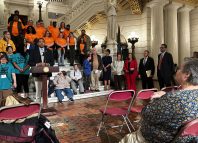
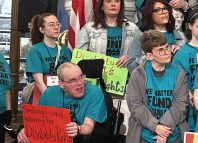



Disability Pride Pittsburgh to Celebrate 32nd Anniversary of the Americans With Disabilities Act — July 23




Date: Tuesday, July 19, 2022
Time: 11:30 am – 12:45 pm EDT
Sponsor: The College for Behavioral Health Leadership
Offered in partnership with the American Association for Community Psychiatrists
This webinar is open to all.
This webinar will introduce participants to the Self-Assessment for Modification of Anti-Racism Tool (SMART), an innovative self-directed quality improvement tool developed by the American Association for Community Psychiatry (AACP) to assist community mental health organizations in addressing structural racism. The presenters will describe the process by which SMART was developed, including its grounding in input from community mental health providers and existing health inequity frameworks. The domains and items of SMART, as well as its application process, will be outlined. Presenters will also provide lessons from on-the-ground applications of SMART in diverse community mental health settings.
Learning Objectives:
At the end of this webinar, participants will be able to:


IPRC Webinar Series: Seizure Management in Pediatrics
PART I: Seizures and Epilepsy in the Pediatric Patient
Thursday, August 11, 2022
12:00 pm – 1:00 pm EDT; 11:00 am – 12:00 pm CDT;
10:00 am – 11:00 am MDT; 9:00 am – 10:00 am PDT
Christina Patterson, MD
Speaker Bio:
Christina Patterson, MD, is an Associate Professor of Pediatrics in the Division of Child Neurology at the University of Pittsburgh. She is also the Director of Epilepsy Services, the Medical Director of the Pediatric Epilepsy Surgery Program, and the Director of the Epilepsy Monitoring Unit at UPMC Children’s Hospital of Pittsburgh. Dr. Patterson has clinical and research interests in the fields of Child Neurology, Epilepsy, and Clinical Neurophysiology and is board-certified in Clinical Neurophysiology, Epilepsy, and Neurology, with Special Qualification in Child Neurology.
Objectives:
At the end of the session, the learner will:
Audience: This webinar is intended for all members of the rehabilitation team, including medical staff, physical therapists, occupational therapists, speech language pathologists, licensed psychologists, mental health professionals, and other interested professionals.
Level: Intermediate
Certificate of Attendance: Certificates of attendance are available for all attendees. No CEs are provided for this course.
Registration: Registration is complimentary for members of IPRC/RCPA. Registration fee for non-members is $179. Not a member yet? Consider joining today. Multiple registrations per organization are permitted.

Thursday, June 16, 2022, 11:00 am EDT
REGISTER
This multi-part conversation includes perspectives from the disability community, medical doctors, as well as Allegheny and Philadelphia county health departments. This event is sponsored by the Institute on Disabilities at Temple University, the LEND Center of Pittsburgh Department of Physical Medicine & Rehabilitation, University of Pittsburgh School of Medicine, Mayor’s Commission for People with Disabilities in the Office of the Mayor, and the Department of Public Health City of Philadelphia, as well as the Allegheny County Health Department.
AGENDA
11:00 am — Welcome
11:10 am — People in the disability community will share their lived experience with COVID and specific challenges of these times.
11:30 am — Medical doctors will discuss current information about COVID and specific impacts to individuals with disabilities. They will also share new information about something called “Long COVID,” which is COVID symptoms that last beyond a few weeks.
12:00 pm — Department of Health professionals from Philadelphia and Allegheny Counties will give us status/statistics of COVID, what the counties are doing now, how they are assuring accessibility of resources, and how people can stay safe during a surge.
12:30 pm — Home and Community-Based Service (HCBS) policy gaps revealed by COVID will be discussed, including what we can do to close the gaps.
Visit here for more information.


What is Juneteenth?
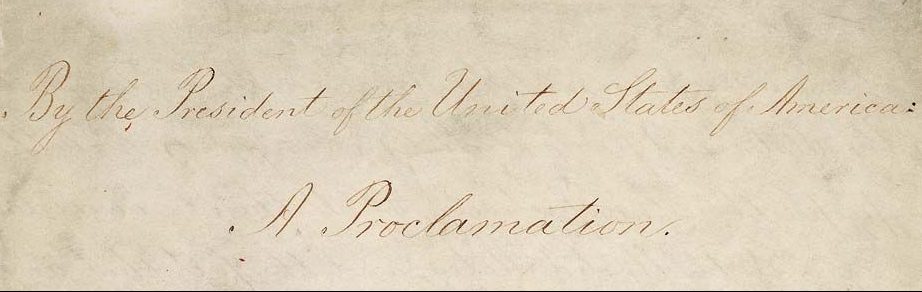
Juneteenth is a federal holiday celebrated on the nineteenth day of June to commemorate the emancipation of African-Americans who were enslaved in the United States. It memorializes the end of slavery and has been observed annually since 1865. On June 17, 2021, President Biden signed into law Senate Bill 475, making Juneteenth a federally-recognized holiday.
Juneteenth may be celebrated under several names, including National Independence Day, Emancipation Day, Freedom Day, Jubilee Day, Black Independence Day, and Juneteenth Independence Day.
Background and History
In early 1863, during the American Civil War, President Abraham Lincoln issued the Emancipation Proclamation, which declared the freedom of more than three million slaves living in the Confederate states. More than two years later, on June 19, 1865, this news finally reached people living in Texas with the arrival of Union soldiers. When African-Americans living in Texas learned that slavery had been abolished, they immediately began to celebrate with prayer, feasting, song, and dance – the foundation of Juneteenth.
The following year, on June 19, the first official Juneteenth celebrations took place in Texas. Original observances included prayer meetings and the singing of spirituals. Celebrants wore new clothes as a way of representing their newfound freedom. Juneteenth became a state holiday in Texas in 1980, and several other states followed suit. Within a few years, African Americans in many other states were celebrating the day as well, making it an annual tradition.
Ways to Celebrate
Today, many Juneteenth celebrations include prayer and religious services, speeches, educational events, family gatherings and picnics, and festivals with music, food, and dancing. In some places, demonstrations and parades commemorate the day. These celebrations often include ways to honor aspects of African-American culture.
Is Celebrating Juneteenth Only for African-Americans?
While Juneteenth has immense meaning for the African-American community, there is value for every person — regardless of race, culture or background — to observe this holiday. A celebration of freedom for any group is a celebration of the ideals that we value as a nation.
Juneteenth is a day for African-Americans to celebrate liberty, resilience, and strength. While participating and commemorating, all should pause to acknowledge the historical and somber importance of the day.
Why Should We Celebrate Juneteenth in the Workplace?
Celebrating Juneteenth in the workplace sends a strong message to African-American employees, clients, and community members that the black experience, black history, and the struggles endured are worth acknowledging.
Ideas for planning a Juneteenth celebration:
Learn More

In February, RCPA members joined organizations across the nation in celebrating Black History Month. There are countless ways to celebrate Black History – the sky is the limit! Below are several highlights to acknowledge these efforts and inspire more opportunities to celebrate and learn!
Step by Step, Inc. used an established internal communication mechanism, “TRE-Bits” (Trauma-Informed, Resilience-Oriented, Equity-Focused), to share articles with all staff. They shared information about the history of black history month, why history matters, and intergenerational trauma. Read one shared article here: TREbit HISTORY MATTERS.
Apis Services, Inc. hosted a panel conversation “What’s It Mean to Lean Into DEI?” based on the work of Dr. Robert Livingston, author of The Conversation: How Seeking and Speaking the Truth About Racism Can Radically Transform Individuals and Organizations. They also shared targeted ways to celebrate – encouraging staff to read Black literature, volunteer, support Black artists and black-owned businesses, organize events, and learn about Black History. View the infographic for 13 unique and exciting ways to get involved; you can also celebrate through the five actions of volunteering, reading, donating, supporting, and learning.
The AmeriHealth Caritas BAND (Black Associate Network for Diversity) shared inspirational images and quotes by Black Americans on their internal website. See examples in their BAND Associate Campaign. AmeriHealth also hosted a panel discussion with senior leaders in the company to reflect on the poem “Still I Rise” by Maya Angelou. Participants shared their stories and experiences of strength, perseverance, and ambition.
The Mary Free Bed Rehabilitation Hospital (an IPRC Member) Pediatrics Department hosted a 1,248 foot march commemorating the 1965 march from Selma to Montgomery, Alabama, recruiting hospital staff and patients to join along the way. When the honorary march concluded, patients and families discussed the importance of Black history and the civil rights movement, and they held an age-appropriate discussion of what transpired after the 1965 march. Learn more here.
Have you heard of “Beyond28?” More than just the title of a popular podcast, Beyond28 has become synonymous with the campaign encouraging the celebration of black history all year round, as 28 days just isn’t enough time to celebrate the rich history of Black Americans.
The Diversity, Equity, & Inclusion Committee encourages all RCPA members to consider new ways to celebrate Black history next February and all throughout the year!

 Prev
Prev