National Council to Hold “Pride at the Intersections” Webinar on June 27

';

To honor the history of Juneteenth and celebrate the contributions of Black Americans, the RCPA Diversity, Equity, and Inclusion Committee encourages you to learn about some exceptional individuals and their accomplishments. Did You Know…
John Mercer Langston
John Mercer Langston became the first Black man to become an attorney in the United States when he passed the bar in Ohio in 1854. The following year, he became one of the first African Americans ever elected to public office in America when he was elected to the post of Town Clerk for Brownhelm, Ohio. John Mercer Langston was also the great-uncle of Langston Hughes, famed poet of the Harlem Renaissance.
Claudette Colvin
Claudette Colvin was arrested at the age of 15 for her refusal to give up her seat to a white woman, nine months before Rosa Parks’ more famous protest. Because of her age, the NAACP chose not to use her case to challenge segregation laws. Despite a number of personal challenges, Colvin became one of the four plaintiffs in the Browder v. Gayle case. The decision in the 1956 case ruled that Montgomery’s segregated bus system was unconstitutional.
Hiram Rhodes Revels
Hiram Rhodes Revels was the first ever African American elected to the US Senate. He represented the state of Mississippi from February 1870 – March 1871.
Robert Johnson
Robert Johnson became the first African American billionaire when he sold the cable station he founded, Black Entertainment Television (BET), in 2001.
Lewis Latimer
While Thomas Edison is credited with the invention of the lightbulb, it was Lewis Latimer, the son of formerly enslaved people, who guaranteed its success. Latimer patented a new filament that extended the lifespan of lightbulbs to extend beyond a few days. In 1882, Latimer was granted a patent for his invention, a feat countless Black innovators in the generations before were unable to achieve.
William Wells Brown
William Wells Brown, author of novel Clotel; or The President’s Daughter that was published in 1853, became the first published African American novelist.
Ketanji Brown Jackson
Ketanji Brown Jackson became the first Black woman to serve on the Unites States Supreme Court after nomination by the president and confirmation by the Senate in 2022.
Gladys West
Gladys West was the second Black woman ever to be employed by the Naval Surface Warfare Center Dahlgren Division and was inducted into the United States Air Force Hall of Fame — one of the highest honors awarded by the Air Force. She leveraged her mathematical and programming expertise to invent an accurate model of the Earth, which was used as the foundation for the creation of the Global Positioning System (GPS).

What is PRIDE Month?
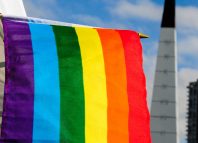
June 1 marks the beginning of (LGBTQIA+) PRIDE Month, a time to recognize and celebrate LGBTQIA+ individuals in our communities. Pride Month commemorates the 1969 Stonewall Uprising in New York and celebrates the LGBTQ+ community and the fight for equal rights. The Stonewall Uprising began on June 28, 1969, when police raided the Stonewall Inn, a prominent gay bar in Manhattan’s Greenwich Village. The protests that followed are credited with a shift in LGBTQ+ activism in the US and is why PRIDE week is celebrated in June. In many cities across the nation, the celebration is now a month-long series of events. The purpose of the commemorative month is to recognize the impact that lesbian, gay, bisexual and transgender individuals have had on history locally, nationally, and internationally.
Today, celebrations include pride parades, picnics, parties, workshops, symposia, and concerts. LGBTQ+ Pride Month events attract millions of participants around the world. Memorials are also held during this month for those members of the community who have been lost to hate crimes or HIV/AIDS.
What does PRIDE Stand for?
“Pride” is not an acronym, but the LGBTQIA+ community comprises several identities related to sexual orientation and gender identity. Here are the definitions to know:
Why Recognize PRIDE Month?
According to a recent Gallup poll, over 20% of Gen Z adults in the US identify as LGBTQ+. This has more than doubled in the last twelve years. This growing population is represented in both the current workforce and the client populations we serve.
Visit here for ideas on how to recognize and celebrate LGBTQIA+ individuals this month.
Treating Facial Motion Disorders
Wednesday, June 5, 2024
12:00 pm – 1:00 pm EDT; 11:00 am – 12:00 pm CDT;
10:00 am – 11:00 am MDT; 9:00 am – 10:00 am PDT
Register
Tami Konieczny, MS, OTR/L, BCP
Speaker Bio:
Tami Konieczny is an occupational therapist, board certified in pediatrics, and a clinical supervisor for the past 25 years at Children’s Hospital of Philadelphia. She specializes in the treatment of children with brain injury, facial motion disorders, amplified pain, burns, limb deficiency, and scar management. She has presented nationally and internationally on a variety of topics, including facial motion disorders. She co-authored a book chapter on pediatric upper extremity limb deficiency and has research publications related to facial motion disorders, amplified pain, and quality improvement.
Objectives: At the end of this session, the learner will:
Audience: This webinar is intended for all interested members of the rehabilitation team.
Level: Intermediate
Certificate of Attendance: Certificates of attendance are available for all attendees. No CEs are provided for this course.
Complimentary webinars are a benefit of membership in IPRC/RCPA. Registration fee for non-members is $179. Not a member yet? Consider joining today.
Thursday, May 30, 2024
12:00 pm – 1:00 pm EDT; 11:00 am – 12:00 pm CDT;
10:00 am – 11:00 am MDT; 9:00 am – 10:00 am PDT
Register
Laura Malone, MD, PhD
Dr. Laura Malone is the director of the Pediatric Post-COVID-19 Rehabilitation Clinic at Kennedy Krieger Institute. She is also a physician scientist in Kennedy Krieger’s Center for Movement Studies and an assistant professor of Neurology and Physical Medicine and Rehabilitation at the Johns Hopkins University School of Medicine.
Dr. Malone has a PhD in Biomedical Engineering from Johns Hopkins University and her medical degree from the University of North Carolina. She completed her pediatric neurology residency at Johns Hopkins School of Medicine. Dr. Malone’s clinical practice focuses on the neurological care of children with perinatal stroke, other brain injuries, and long COVID. Her research focuses on understanding complex pediatric disorders and on improving outcomes using mechanistic neurorehabilitation approaches. Regarding COVID-19, Dr. Malone investigates clinical phenotypes of children with persistent symptoms after COVID-19 infection and investigates factors and mechanisms that promote good recovery.
Objectives: At the end of this session, the learner will:
Audience: This webinar is intended for all interested members of the rehabilitation team.
Level: Intermediate
Certificate of Attendance: Certificates of attendance are available for all attendees. No CEs are provided for this course.
Complimentary webinars are a benefit of membership in IPRC/RCPA. Registration fee for non-members is $179. Not a member yet? Consider joining today.

Juneteenth is Wednesday, June 19, 2024, just four weeks away, meaning it’s time to start planning for your organization’s celebration! Recognizing and acknowledging the day and its significance goes a long way to creating a culture of belonging within your organization. There are many ways to celebrate, and we have listed below some suggestions and ideas for your agency.
First, understand the background and history. What is Juneteenth?
Juneteenth is a federal holiday celebrated on the nineteenth day of June to commemorate the emancipation of African-Americans who were enslaved in the United States. It memorializes the end of slavery and has been observed annually since 1865. On June 17, 2021, President Biden signed into law Senate Bill 475, making Juneteenth a federally recognized holiday.
Juneteenth is often celebrated under several names, including National Independence Day, Emancipation Day, Freedom Day, Jubilee Day, Black Independence Day, and Juneteenth Independence Day.
In early 1863, during the American Civil War, President Abraham Lincoln issued the Emancipation Proclamation, which declared the freedom of more than three million slaves living in the Confederate states. More than two years later, on June 19, 1865, this news finally reached people living in Texas with the arrival of Union soldiers. When African Americans living in Texas learned that slavery had been abolished, they immediately began to celebrate with prayer, feasting, song, and dance — the foundation of Juneteenth.
The following year, on June 19, the first official Juneteenth celebrations took place in Texas. Original observances included prayer meetings and the singing of spirituals. Celebrants wore new clothes as a way of representing their newfound freedom. Juneteenth became a state holiday in Texas in 1980, and several other states followed suit. Within a few years, African Americans in many other states were celebrating the day as well, making it an annual tradition.
How is Juneteenth celebrated?
Today, many Juneteenth celebrations include prayer and religious services, speeches, educational events, family gatherings and picnics, and festivals with music, food, and dancing. In some places, demonstrations and parades commemorate the day. These celebrations often include ways to honor aspects of African-American culture.
While Juneteenth has immense meaning for the African-American community, there is value for every person — regardless of race, culture, or background — to observe this holiday. A celebration of freedom for any group is a celebration of the ideals that we value as a nation.
Juneteenth is a day for all Americans to celebrate liberty, resilience, and strength. While participating and commemorating, all should pause to acknowledge the historical and somber importance of the day.
Why should we celebrate Juneteenth in the workplace?
Celebrating Juneteenth in the workplace sends a strong message to African-American employees, clients, and community members that the black experience, black history, and the struggles endured are worth acknowledging.
What are some ideas for planning a Juneteenth celebration at work?
Monday, June 3, 2024
1:00 pm – 2:00 pm EDT; 12:00 pm – 1:00 pm CDT;
11:00 am – 12:00 pm MDT; 10:00 am – 11:00 am PDT
In response to member interest, the IPRC is launching an additional Multi-disciplinary Clinical Work Group on treating infants with medical complexity.
The group will:
The introductory meeting is Monday, June 3, 2024. Additional meeting dates and future schedule is to be determined.
Are you interested in joining this work group?
Contact IPRC Director, Cindi Hobbes, for meeting information.
Wednesday, June 5, 2024
12:00 pm – 1:00 pm EDT; 11:00 am – 12:00 pm CDT;
10:00 am – 11:00 am MDT; 9:00 am – 10:00 am PDT
Register
Tami Konieczny, MS, OTR/L, BCP
Speaker Bio:
Tami Konieczny is an occupational therapist, board certified in pediatrics, and a clinical supervisor for the past 25 years at Children’s Hospital of Philadelphia. She specializes in the treatment of children with brain injury, facial motion disorders, amplified pain, burns, limb deficiency, and scar management. She has presented nationally and internationally on a variety of topics, including facial motion disorders. She co-authored a book chapter on pediatric upper extremity limb deficiency and has research publications related to facial motion disorders, amplified pain, and quality improvement.
Objectives: At the end of this session, the learner will:
Audience: This webinar is intended for all interested members of the rehabilitation team.
Level: Intermediate
Certificate of Attendance: Certificates of attendance are available for all attendees. No CEs are provided for this course.
Complimentary webinars are a benefit of membership in IPRC/RCPA. Registration fee for non-members is $179. Not a member yet? Consider joining today.
Thursday, May 30, 2024
12:00 pm – 1:00 pm EDT; 11:00 am – 12:00 pm CDT;
10:00 am – 11:00 am MDT; 9:00 am – 10:00 am PDT
Register
Laura Malone, MD, PhD
Dr. Laura Malone is the director of the Pediatric Post-COVID-19 Rehabilitation Clinic at Kennedy Krieger Institute. She is also a physician scientist in Kennedy Krieger’s Center for Movement Studies and an assistant professor of Neurology and Physical Medicine and Rehabilitation at the Johns Hopkins University School of Medicine.
Dr. Malone has a PhD in Biomedical Engineering from Johns Hopkins University and her medical degree from the University of North Carolina. She completed her pediatric neurology residency at Johns Hopkins School of Medicine. Dr. Malone’s clinical practice focuses on the neurological care of children with perinatal stroke, other brain injuries, and long COVID. Her research focuses on understanding complex pediatric disorders and on improving outcomes using mechanistic neurorehabilitation approaches. Regarding COVID-19, Dr. Malone investigates clinical phenotypes of children with persistent symptoms after COVID-19 infection and investigates factors and mechanisms that promote good recovery.
Objectives: At the end of this session, the learner will:
Audience: This webinar is intended for all interested members of the rehabilitation team.
Level: Intermediate
Certificate of Attendance: Certificates of attendance are available for all attendees. No CEs are provided for this course.
Complimentary webinars are a benefit of membership in IPRC/RCPA. Registration fee for non-members is $179. Not a member yet? Consider joining today.