






PCHC to Host Skin Integrity Training, Review Basic Skin Anatomy on February 5



Good afternoon OMHSAS Stakeholders,
The Office of Mental Health and Substance Abuse Services (OMHSAS) January 2025 Stakeholder Webinar is currently scheduled for Thursday, January 30, from 3:00 pm to 4:00 pm.
Register here for the webinar. After registering, you will receive a confirmation email containing information about joining the webinar.
For those that want to join via phone:
Call-in Number: 631-992-3221
Access Code: 892-053-544
Please reach out to RCPA COO and Mental Health Services Director Jim Sharp or RCPA Policy Associate Emma Sharp with any questions.

As the behavioral health system struggles to find in-clinic psychiatric services, the Office of Mental Health and Substance Abuse Services (OMHSAS) has been issuing waivers to providers to address this barrier, while legislative remedies are pursued. There have been some waivers granted in the past year that included conditional language requiring the presence of a psychiatrist in the clinic a minimum of two days per month.
RCPA began discussions with OMHSAS that this condition was difficult to meet and it represents the actual reason for the waiver. OMHSAS has reconsidered this positon and will eliminate that language and requirement for future waivers. In the interim, providers with approved waivers with the above referenced psychiatrist requirements will need to submit a revised waiver request. RCPA thanks OMHSAS for their partnership and consideration on this matter.
If this impacts your organization, please contact RCPA COO & Mental Health Services Director Jim Sharp, who will provide guidance in the resubmission process.
This is to notify you that the 2025 Act 150 Sliding Fee Scale Bulletin (54-25-01, 59-25-01) has been posted to the Bulletins web page on the Department of Human Services (DHS) website. This bulletin has an issue date of January 1, 2025, and an effective date of January 1, 2025.
The purpose of this bulletin is to provide the most recent sliding fee scale to all Office of Long-Term Living (OLTL) Service Coordination Entities (SCEs) working with Act 150 Program participants. This bulletin applies to any SCEs that provide service coordination services to participants in the Act 150 Program.
This bulletin rescinds OLTL Bulletin 54-24-01, 59-24-01 issued on January 16, 2024, and all other communications, bulletins, and/or directives distributing previous sliding fee scales for the Act 150 Program.

This meeting was held on January 8, 2025. Key areas addressed included a review of the Data Dashboard and the use of Assisted Living Facilities as an In Lieu of Service (ILOS) in Community HealthChoices. The next meeting on February 5, 2025 will be remote only. Meeting materials were shared, as listed below.


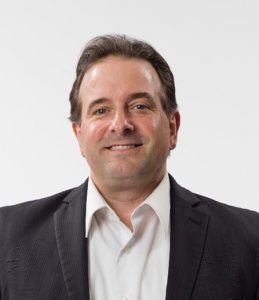 David DeMatteo, JD, PhD, ABPP (Forensic), will present “A Legal Primer for Mental Health Professionals,” a live webinar that is a part of the Behavioral Health Education’s (BHE) Speaker Series, on Thursday, January 30, 2025, from 10:00 am – 12:00 pm ET. Attendees can earn 2 CE hours for $18. Register for the webinar here.
Mental health professionals often work with justice-involved individuals, yet most mental health professionals do not have any formal legal training. As a result, it can be intimidating for some mental health professionals to interact with the legal system. This talk will provide an overview of the legal terms, principles, cases, and rules most often encountered by mental health professionals who work with justice-involved individuals.
After providing an overview of the U.S. legal system, this talk will examine several relevant legal concepts, including admissibility standards for expert evidence, the legal foundation of expert testimony, fact witnesses versus expert witnesses, discovery, reliance on inadmissible evidence (e.g., hearsay), responding to subpoenas, protecting confidentiality and test security, and ethics/professionalism.
Having knowledge of the legal system and relevant laws can lead to several benefits for mental health professionals, including increased competence in (a) providing services to justice-involved individuals, (b) offering consultation to the legal system and (c) communicating with legal professionals (attorneys, judges).
About David DeMatteo, JD, PhD, ABPP (Forensic):
David DeMatteo, JD, PhD, ABPP (Forensic), is a professor of psychology and professor of law at Drexel University, and director of Drexel’s JD/PhD program in Law and Clinical Psychology. He has published more than 100 peer-reviewed articles, more than 50 book chapters and 12 books in his areas of interest, which include mental health law, psychopathic personality, forensic mental health assessment and diversion of justice-involved individuals. He is a former president of the American Psychology-Law Society and the American Board of Forensic Psychology. He consults with city agencies, state agencies, policymakers, correctional facilities and law enforcement. Dr. DeMatteo is a licensed psychologist in Pennsylvania, where he provides forensic mental health assessments and consultation, and he is board certified in forensic psychology by the American Board of Professional Psychology. He has testified as an expert witness in several state and federal courts. He is chair of the Committee to Revise the American Psychological Association’s Specialty Guidelines for Forensic Psychology, and he is the editor-in-chief of Law and Human Behavior.


The 2025 RCPA Annual Conference Striving to Thrive will be held September 9 – 12 at the Hershey Lodge for a statewide audience. The Conference Committee is seeking workshop proposals in every area for possible inclusion, particularly those that assist providers in developing and maintaining high-quality, stable, and effective treatments, services, and agencies in an industry where change is constant. The committee looks for presentations that:
The committee welcomes any proposal that addresses these and other topics essential to rehabilitation, mental health, substance use disorder, children’s health, aging, physical disabilities, and intellectual/developmental disabilities & autism.
Members are encouraged to consider submitting, and we highly encourage you to forward this opportunity to those who are exceptionally good speakers and have state-of-the-art information to share.
The Call for Proposals (featuring a complete listing of focus tracks) and accompanying Guidelines for Developing Educational Objectives detail requirements for submissions. The deadline for submissions is Friday, March 14, 2025, at 5:00 pm. Proposals must be submitted electronically on the form provided; confirmation of receipt will be sent. Proposals submitted after the deadline may not be considered.
If the proposal is accepted, individuals must be prepared to present on any day of the conference. Workshops are 90 or 180 minutes in length. At the time of acceptance, presenters will be required to confirm the ability to submit workshop handouts electronically two weeks prior to the conference. Individuals unable to meet this expectation should not submit proposals for consideration.
Individuals are welcome to submit multiple proposals. Notification of inclusion for the conference will be made via email by Friday, May 9, 2025. Questions may be directed to Carol Ferenz, Conference Coordinator.

 Prev
Prev