



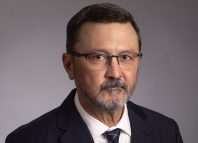
Lisa McCann Elected Chair of RCPA Member Devereux Board of Trustees
The Pennsylvania Department of Human Services (DHS) Office of Long-Term Living (OLTL) has announced an upcoming webinar on the PA Achieving a Better Life Experience (ABLE) Savings program. This webinar is scheduled for February 25, 2026, from 12:00 pm – 1:00 pm. To participate in this webinar, register using this registration link.
A PA ABLE savings account gives individuals with qualified disabilities and their families and friends a tax-free way to save for a wide range of disability-related expenses while maintaining important benefits. The state and federal tax-free investment options are offered to encourage Eligible Individuals and their families to save private funds to support health, independence, and quality of life.
Some of the topics that will be discussed include eligibility requirements for opening a PA ABLE account, federal and state tax benefits of PA ABLE, and how a PA ABLE account interacts with current benefits. Additionally, information on the recent age eligibility expansion will be discussed.
OLTL Service Coordinators, Direct Service Providers, Community HealthChoices Managed Care Organization (CHC-MCO) staff, and any individuals who work in employment supports are strongly encouraged to participate in this webinar, as it will help them understand the PA ABLE Program and how it can benefit the OLTL participants they serve.
After registering, you will receive a confirmation email containing information about joining the webinar.
Questions regarding the webinar should be directed to Randy Loss, OLTL.

This training will review updates to the PUNS Manual, outline changes to the Emergency Need criteria, and introduce the new PUNS Supplement Form (Emergency Need Use Only).
Who should attend?
Date and Time:
February 11, 2026
1:00 pm – 2:30 pm

From our partners at the National Council on Mental Wellbeing:
After a brief partial shutdown on Feb. 3, Congress passed an amended funding package that includes funding for five appropriations bills; the package now goes to the president’s desk for signature. The package also includes a two-week continuing resolution to temporarily fund the Department of Homeland Security (DHS) while a longer term deal is negotiated. If no funding deal is reached for DHS within the two-week timeframe, it is possible another partial shutdown will occur; however, Health and Human Services (HHS) programs would not be impacted.
Funding for HHS is included in the final fiscal year (FY) 2026 funding for the Labor, Health and Human Services, Education, and Related Agencies (LHHS) bill. See the Consolidated Appropriations Act, 2026 bill text and its accompanying report language.
Total funding for the Substance Abuse and Mental Health Services Administration (SAMHSA) was provided at $7.4 billion, relatively level to funding provided in FY24, when appropriations bills were last enacted (FY25 saw a year-long continuing resolution rather than an appropriations bill).
Overall, many mental health and substance use programs saw level or slightly increased funding. This is a tremendous win for the field, particularly in a challenging fiscal environment.
The Medicare telehealth waivers expired on January 30, 2026; and after a brief lapse in the telehealth waivers and a partial shutdown of the federal government, this passage restores continuity to Medicare telehealth coverage and a return to permanent, pre-pandemic policy. The extension will maintain key flexibilities, including expanded originating sites, geographic waivers, and eligibility for certain providers that would otherwise be unavailable under permanent Medicare telehealth rules. Additionally, this will apply retroactively and cover the lapse period for the delivery and billing of these services.
Additional language in the agreement includes a requirement that the Department of Health and Human Services (HHS) notify the committee at least three days prior to announcing or providing notice of a grant termination and directs SAMHSA to consult with Congress before issuing a funding opportunity announcement. This language provides additional congressional oversight in the agency grant making process. If you have any questions, please contact RCPA COO & Mental Health Division Director Jim Sharp.

The Office of Developmental Programs (ODP) has confirmed that Supports Coordination Organizations (SCO) payments for Pay-for-Performance (P4P) as well as regular cycle payments that were on the same remittance advice have now been fully approved. SCOs should expect those payments in their accounts either Wednesday, February 4, or Thursday, February 5.

On February 3, 2026, Governor Josh Shapiro delivered his fourth budget address to the Pennsylvania General Assembly. He began the address by commending the significant growth of the Commonwealth over the last three years, highlighting improvements in quality education, agriculture, energy, and becoming the only state in the Northeast with a growing economy.
Shapiro’s 2026/27 proposed budget calls for $53.3 billion in state General Funds expenditures, with Medicaid (32%) and Education (36%) being the largest spend categories. Other expenditures include:
The 2026/27 budget also includes supplemental appropriations of $390.3 million to increase the FY 2025/26 General Fund spend to $51.5 billion. The majority of this increase is attributed towards DHS programs and Education through the end of FY 2025/26, with a $374.5 million increase for human services related to increased projections of utilization, caseloads, and enrollments anticipated through June 2026.
Similar to last year’s address, Shapiro called for the legalization and taxation of adult use cannabis as well as taxing and regulating skill games terminals in order to support the proposed 2026/27 expenditure. The budget would also be funded by transferring $4.6 billion from the Budget Stabilization Reserve Fund (Rainy Day Fund) to the General Fund, which would leave the Rainy Day Fund balance at $3.3 billion.
2026/27 Proposed Budget Highlights:
Behavioral Health
Intellectual and Developmental Disabilities
Community HealthChoices
While this brief overview provides a snapshot of the Governor’s proposed budget, RCPA Policy Staff will be working with our lobbying partners, healthcare experts, and systems’ stakeholders to provide a thorough analysis of the budget to members. We have confirmed that DHS will be hosting a virtual proposed budget briefing on its portion of the State Budget funding this Friday, February 6, 2026. An invitation was distributed to RCPA members earlier this morning. The virtual briefing will provide some additional details, but the DHS “Blue Book” provides the most detail on certain appropriation lines and should be available in the coming weeks in advance of its hearings with the Senate and House Appropriations Committees.
If you have questions, please contact your respective RCPA Policy Director.
 Prev
Prev