




';
Children's Services

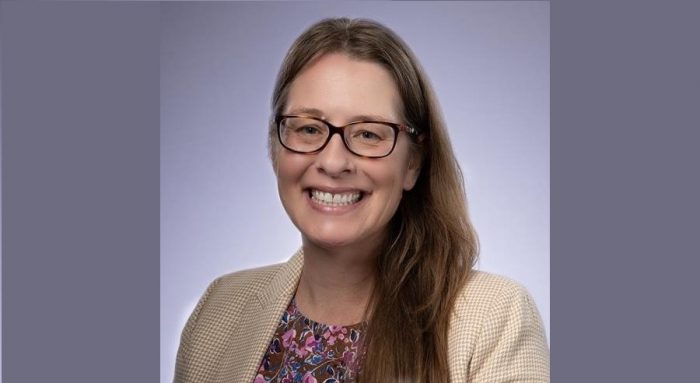
Pennsylvania’s Office of Medical Assistance Programs (OMAP) Deputy Secretary Sally Kozak has been featured in the Center for Health Care Strategies’ Lessons in Leadership series, which shares stories from public sector leaders from across the country. Deputy Secretary Kozak shares how she has prioritized mentorship in her career to ensure sustainability beyond any one person and offers a blueprint for how intentional, adaptive mentoring can create lasting change for individuals and the institutions they serve.

Read the full article here.

The field of health and human services is shifting at a rapid pace, and it is vital for providers, advocates, and legal experts to remain up-to-date on policy as well as involved in the advocacy process. Among the over sixty workshops available, the RCPA 2025 Annual Conference Strive to Thrive will be holding several workshops tackling the federal landscape. Register today and join us at the Hershey Lodge September 9 – 12, 2025, to gain access to these informative workshops, which include:

  • National Outlook: The Turbulent Landscape of 2025/26
  • How To Survive a Payer Billing Audit — Straight From an Auditor’s Mouth
  • Expanding Revenue Beyond Medicaid: New Funding Strategies for I/DD Providers
  • Building Sustainable Community Advisory Councils for Impactful Legislative Advocacy

At a local level, the RCPA Conference is working with the Department of Human Services to bring information straight to attendees, with workshops such as:

  • State of the State
  • Office of Developmental Programs Policy Updates and Forecast for 2026
  • PA Navigate: Connecting Pennsylvanians to Needed Social Services
  • Updates and Discussion With the Office of Long-Term Living
  • Behavioral Health Treatment in Pennsylvania: Where We Are, Where We Are Going

Early bird registration rates end this Friday, August 8, so don’t delay in reserving your spot for these workshops and more! View our Registration Brochure for complete details of the conference schedule and speakers, and be sure to check the RCPA Conference website regularly for details and updates to the schedule, registration, and sponsors/exhibitors. Register today!

Opportunities for sponsorships and advertising are still available, but EXHIBIT BOOTHS ARE OFFICIALLY SOLD OUT! We are grateful to all our sponsors and exhibitors who help make the conference happen. If your organization is interested in sponsoring or advertising at our conference, all information is available in our Sponsor, Exhibit, and Advertise Brochure. Contact Carol Ferenz, Conference Coordinator, for more details.

Thank you to our Sponsors and Exhibitors! We are grateful for your support!

H.R. 1 created a $50 billion fund called the Rural Health Transformation program in an attempt to offset the losses that rural health providers will experience associated with the other devastating cuts to health care in the legislation.

Each state must complete a one-time application for the five-year program to be reviewed by CMS. Many aspects of the application are still undecided, including the submission period, due date, state entity that must submit the application, and the form of the application. The RHTP application must include a plan to describe how the state would use the funds to:

  • Improve access to hospitals and other providers for rural residents;
  • Improve health care outcomes of rural residents;
  • Prioritize the use of new and emerging technologies that emphasize prevention and chronic disease management;
  • Initiate, foster, and strengthen local and regional strategic partnerships between rural hospitals and other providers to promote quality improvement, increase financial stability, maximize economies of scale, and share best practices;
  • Recruit and retain clinicians,
  • Prioritize data and technology driven solutions that help rural providers furnish health care services as close to the patient’s home as possible;
  • Outline strategies to manage long-term financial solvency and operating models of rural hospitals; and
  • Identify specific causes that are driving standalone rural hospitals to close, convert, or reduce service lines.

The funds will be distributed between 2026 and 2030, allotting $10 billion each year. $25 billion of this fund will be allocated equally among all states with an approved application by CMS. Assuming that all fifty states are approved, each state will receive a minimum of $100 million per year for five years. The other $25 billion will be distributed to states with an approved application in an amount determined by CMS based upon the state’s rural population, proportion of healthcare facilities in rural areas, and the situation of hospitals that serve a high proportion of low-income patients.

The bill lists several allowable uses of the PHTP funds:

  • Promoting evidence-based, measurable interventions to improve prevention and chronic disease management;
  • Providing payments to health care providers for the provision of health care items or services as specified by CMS;
  • Promoting consumer-facing, technology-driven solutions for the prevention and management of chronic diseases;
  • Providing training and technical assistance for the development and adoption of technology-enables solutions that improve care delivery in rural hospitals, including remote monitoring, robotics, artificial intelligence, and other advanced technologies;
  • Recruiting and retaining clinical workforce talent to rural areas, with commitments to serve rural communities for a minimum of five years;
  • Providing technical assistance, software, and hardware for significant information technology advances designed to improve efficiency, enhance cybersecurity capability development, and improve patient health outcomes;
  • Assisting rural communities to right-size their healthcare delivery systems by identifying needed preventative, ambulatory, pre-hospital, emergency, acute inpatient care, outpatient care, and post-acute care service lines;
  • Supporting access to opioid use disorder treatment services, other substance use disorder treatment services, and mental health services;
  • Developing projects that support innovative models of care that include value-based care arrangements and alternative payment models as appropriate; and
  • Additional uses designed to promote sustainable access to high quality rural health care services, as determined by the Administrator.

RCPA will continue to share information on the program and applications as it becomes available. Contact Emma Sharp with any questions.

September 9 will be here before you know it — don’t miss your opportunity to register for the RCPA 2025 Conference Strive to Thrive and claim your early bird discount! By registering today, you guarantee your spot for over sixty workshops, live updates from both state and national partners, and inspiring keynote and plenary speakers. View our Registration Brochure for complete details of the conference schedule and speakers.

Early bird registration ends August 8, and hotel room discounts end August 11, so reserve your seat and hotel room today!

A limited number of exhibit booths and sponsorship opportunities remain! Contact Carol Ferenz, Conference Coordinator, ASAP for details if your organization is interested in sponsoring or exhibiting at our conference. All information is available in our Sponsor, Exhibit, and Advertise Brochure. The deadline for being recognized in conference materials and onsite displays is August 10, so be sure to complete your contract as soon as possible!

View our sponsors and exhibitors at our Conference website!

The Pennsylvania Rural Health Association (PRHA) has released the 2025–2030 Pennsylvania Rural Health Plan, which is a comprehensive roadmap to improve the health and well-being of rural residents across the state.

The plan was developed with input from rural community leaders, health professionals, academic institutions, and policymakers to identify key priority and action steps to address the unique health challenges and opportunities in Pennsylvania’s 48 rural counties. Primary focuses include access to care, behavioral health, oral health, maternal health, workforce development, broadband connectivity, and health equity.

The 2025–2030 Pennsylvania Rural Health Plan can be found here.

Overview

The Byrne State Crisis Intervention Program (“Byrne SCIP”) is a grant administered by the Pennsylvania Commission on Crime and Delinquency (PCCD). These are federal funds that Pennsylvania receives from the Bureau of Justice Assistance (BJA). State governments may use these monies to fund “state, local, and tribal efforts to prevent or reduce crime and violence” in accordance with an approved Byrne SCIP Plan.

This AOPC announcement briefly highlights several funding opportunities in Pennsylvania’s approved plan that relate to the intersection of courts and behavioral health, specifically “Priority Area #1: Equip Pennsylvania communities with training and resources to respond holistically to behavioral health crises.”

Please see PCCD’s entire funding announcement here. Grant application and administrative guides can be accessed on PCCD’s website under the Funding section.

Priority Area #1 Objectives:

  • Support behavioral health responses in local jurisdictions across Pennsylvania.
  • Support efforts to embed advocates and peer navigators within the justice system.
  • Build capacity to offer free SIM workshops statewide, commencing in 2026.

The SCIP grant is an excellent opportunity for governmental agencies to obtain funding for specific behavioral health-related purposes that benefit citizens and criminal-legal system actors. Approved funding opportunities include:

  • Establishing the Crisis Intervention Team (CIT) Technical Assistance Center to provide law enforcement training opportunities.
  • A county SIM-Mapping initiative that trains in-house SIM facilitators to provide free workshops to counties. Facilitators will be trained in 2026 and allow counties to receive both adult and upstream SIM workshops at no cost.
  • Apply for local grants for virtually any project related to the Pennsylvania Courts’ Behavioral Health Initiative. Suggested projects include peer navigators; implementing pretrial programs; expanding the capacity of mental health courts; and developing or expanding the ability to connect individuals in crisis with services.

Eligibility & Deadlines:

  • Your recipient agency must be a local government office. Cities, counties, townships, and towns may apply for funding.
  • Subrecipients are eligible for support through primary recipient offices. For instance, a city funded through a SCIP grant may award part of their fund to their Police Department as a subgrant.
  • Your organization must be registered in the Pennsylvania eGrants system.
    • At least two organization members must have eGrants user roles. At least one individual must have an e-signature role within eGrants.

The deadline for applying is September 9, 2025.

  • For further information, see the funding announcement here. You may contact PCCD about the Byrne-SCIP Initiative by email. Emails must be sent by September 2, 2025, to receive assistance.
  • For difficulties with the eGrants system, you may contact the eGrants help desk by phone at (717) 787-5887 or (800) 692-7292 or by email.

Photo by Markus Winkler from Pexels

Kehinde “Kenny” Solanke, MSW, LSW, will become Commissioner of the City of Philadelphia Department of Behavioral Health and Intellectual disAbility Services (DBHIDS), effective September 2. Philadelphia Mayor Cherelle Parker announced the selection of Solanke for the role on July 30. Solanke succeeds Interim Commissioner Marquita Williams and former Commissioner Jill Bowen.

As Commissioner, Solanke sets the vision and direction for the entire department. She administers all six DBHIDS divisions and is responsible for aligning priorities, coordinating efforts, and ensuring that everything the 1,000-plus team members do reflects the DBHIDS mission, vision, and values.

Solanke oversees a vast network of providers offering treatment and services to address mental health challenges, substance misuse, and the impact of social determinants of health on behavioral health and wellness.

Solanke most recently served as Senior Director of Operations for Crisis Services at DBHIDS, where she led transformative citywide initiatives, including the implementation of the 988 Suicide and Crisis Lifeline, expansion of 24/7 mobile crisis teams, and the launch of Philadelphia’s first Behavioral Health Urgent Care Center. She has also overseen critical city responses, including DBHIDS’s behavioral health strategy during the COVID-19 pandemic, managed multi-million-dollar funding portfolios, and championed the department’s equity framework to align services with community needs.

Throughout her career, Solanke has been a respected thought leader and advocate for transforming public behavioral health systems. She has testified before City Council, chaired statewide policy work groups, and represented Philadelphia at national forums — including coordinating with the US Secretary of Health and Human Services to mark the national rollout of 988. Her work has positioned Philadelphia as a leader in crisis system transformation while deepening public trust and strengthening the behavioral health safety net for thousands of residents.

A licensed social worker, Solanke holds a Master of Social Work degree from Temple University and has spent her career within the city’s behavioral health ecosystem, serving previously as Director of Policy and Planning at DBHIDS and Director of Clinical Management at the DBHIDS Division of Community Behavioral Health (CBH).

On Tuesday, July 29, the Governor’s Office of the Budget provided an update on the status of the Fiscal Year (FY) 2025/26 state budget. The update outlines projected impacts across various departments within the Department of Human Services (DHS) over the next six weeks resulting from the ongoing budget impasse. Although the Governor, Senate, and House leadership have described ongoing negotiations as respectful, they have also been described as inching along. The letter from Secretary Monson cites funding for public schools and mass transit as top challenges in finalizing a budget.

Following is a summary of payments from Pennsylvania health and human services departments that will be delayed without a budget.

Department of Aging cannot distribute:

  • $12.88 million in payments to the Area Agencies on Aging, for July and August.

Department of Drug and Alcohol Programs cannot distribute:

  • $9.95 million quarterly payments to the Single County Authorities.
  • $187,000 quarterly payments for training of substance use disorder and problem gambling service professionals.
  • $21 million quarterly payments for State Opioid Response funding.

Department of Health cannot distribute:

  • $9.405 million in anticipated quarterly reimbursements to County Municipal Health Departments.
  • More than $4.7 million in quarterly funding to support operation and administration of EMS services.
  • $9.405 million in quarterly funding to school districts for health services.
  • More than $3.466 million in quarterly payments for the Prescription Drug Monitoring Program, beginning in July.
  • Payments for critical health services, including, but not limited to: Tuberculosis screening, Cystic Fibrosis, Lyme Disease and Cancer Screening, beginning in July.
  • More than $1 million in quarterly payments for Maternal and Child Health services and $1.8 million in quarterly for Newborn Screening.

Department of Human Services cannot distribute:

  • $15 million in quarterly advances for Behavioral Services, beginning in July.
  • Quarterly advances for Breast Cancer Screening services.
  • $390 million in County Child Welfare payments for July and August.
  • $8.5 million in payments for Domestic Violence for July and August.
  • $3.5 million in quarterly advances from the Human Services Development Fund.
  • An estimated $33 million in Child Support Enforcement payments, for July and August.
  • $3.4 million in payments for Rape Crisis for July and August.
  • Approximately $10 million for Community-Based Family Centers for July and August.
  • $5.6 million in quarterly advance payments for Homeless Assistance.

Read the letter from Secretary Monson here. If you have any questions, please contact your respective RCPA Policy Director.