


Pennsylvania Primary Results
The Pennsylvania Department of Human Services’ Office of Mental Health and Substance Abuse Services (OMHSAS) will be hosting a two-part Mental Health Awareness Event next Monday, May 23, 2022.
This two-part event will kick off with a press conference with Department of Human Services Acting Secretary Meg Snead and OMHSAS Deputy Secretary Kristen Houser in the Capitol Media Room at 10:00 am. Afterwards, the Dennis Marion Award Ceremony and State Hospital Staff Recognition will take place at Strawberry Square at 1:00 pm.
Please see the flyer for additional information. If you have any questions, please contact RCPA Policy Director Jim Sharp.
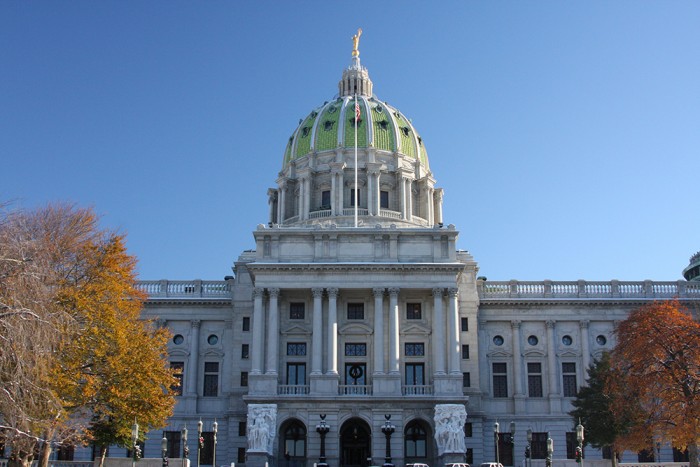
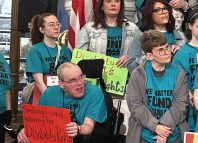
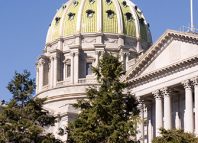
RCPA will be hosting our 2022 Capitol Day on Tuesday, May 24. We will have a press conference/rally on the steps of the Capitol outside the Main Rotunda between 12:30 pm – 1:30 pm. RCPA requests members schedule appointments with their Senate and House legislators to discuss the state budget, legislation, and regulations, and we have created a one-pager with talking points for members to utilize in their meetings.
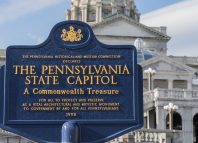
Parking and maps can be found on the Pennsylvania Capitol website. If you have questions regarding our 2022 Capitol Day, please contact Jack Phillips.
Beginning June 9, 2022, the Pennsylvania Department of Drug and Alcohol Programs (DDAP) will have the authority to impose fines on operators of unlicensed recovery houses that receive public funding.
View the Recovery House Licensure Information Bulletin here.
DDAP’s recovery house licensure program is live as of December 11, 2021. You can learn more about recovery house licensing and how to apply on the DDAP licensing web page. This message is to remind all recovery houses in Pennsylvania, as well as entities who refer individuals to recovery houses, of several requirements of the Recovery House Law (Act 59 of 2017), including the approaching June 9 deadline.
Requirements to Obtain a License:
Recovery houses must obtain a license from DDAP if:
*Recovery houses that are not required to obtain a license may still choose to do so.
Referral Requirements:
Names, locations, and additional details about each DDAP-licensed recovery house in Pennsylvania are regularly updated on DDAP’s Facility Locator. Select “Recovery House” under the Facility Type Search drop-down on the left-hand panel, and narrow your search by location if desired. A searchable map will also be made available on the DDAP website in the coming weeks.
Fines for Unlicensed Recovery Houses That Receive Public Funds:
Furthermore, the recovery house law requires that DDAP impose fines (up to $1,000 for each violation) on unlicensed recovery houses that are “funded, in whole or in part, by a department or a Federal, other State, or county agency.” This requirement was incorporated in the regulations at 28 Pa. Code § 717.14. As detailed in the Preamble to the regulations, this section will become effective 180 days after publication of the regulations in the Pennsylvania Code & Bulletin on December 11, 2021. Beginning June 9, 2022, DDAP will have the authority to impose fines up to $1,000 per day on operators of unlicensed recovery houses that receive public funding.
Training:
To further assist recovery home operators in the application process, the Bureau of Program Licensure offers a free one-day training workshop designed to answer the various questions associated with the application process. Participation in the workshop results in a decrease in the amount of time it takes to approve applications, resulting in the license being issued sooner to those applicants who participate. The workshop is offered a minimum of once every month. Additional sessions are scheduled based upon interest or need. Requests to register for the training should be sent via email. Call 717-783-8675 with questions.
Since 2017, Pennsylvania has taken several steps to increase naloxone access for people and communities across the commonwealth who need it the most. With a recent increase in drug overdose deaths (the majority of which are opioid- and fentanyl-related), Pennsylvania is anticipating a significant supply of naloxone in the coming months. The Department of Drug and Alcohol Programs is encouraging individuals, organizations, and agencies to learn how to access this naloxone at no cost.


The Centers for Medicare and Medicaid Services (CMS) has been sharing information and bringing awareness about the Affordable Connectivity Program (ACP), a Federal Communications Commission (FCC) program. This new long-term program can assist individuals who use telehealth services to help lower the cost of broadband service for eligible households struggling to afford internet service.
The ACP provides:
The ACP is limited to 1 monthly service discount and 1 device discount per household.
Who’s Eligible?
An individual’s household is eligible for the ACP if the household income is at or below 200 percent of the Federal Poverty Guidelines or if a member of the household meets at least 1 of the criteria outlined on the FCC’s website.
Individuals can enroll in two steps by:
Some ACP providers may request individuals to complete an alternative application. Eligible households must apply for the program and contact a participating provider to select a service plan.
For Additional Information:

The next RCPA Drug and Alcohol Committee meeting, originally scheduled for Tuesday, June 14, has been rescheduled to Tuesday, June 21, 2022. The meeting will held from 9:30 am – 12:00 pm and be composed of two parts:
The meeting will be hybrid, with attendees able to join virtually or in person. Please note that we require attendees to be fully vaccinated for COVID-19 to attend in person. In-person attendance will be closed after the first 25 in-person registrants. Masking and social distancing protocols will be followed per the CDC guidelines at the time of the meeting.
Register here for the meeting.
 Prev
Prev