




Pennsylvania Healthcare Summit to Be Held January 30, 2025



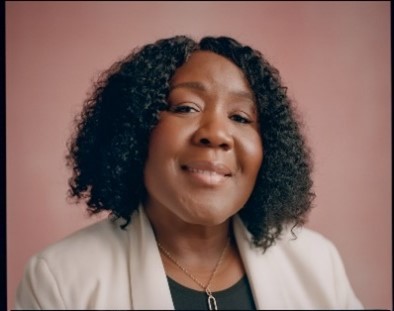 Philadelphia, PA – December 17, 2024 – COMHAR Inc. Board of Directors announced that Trapeta B. Mayson has been appointed as the new Chief Executive Office (CEO) of the agency. The Board held an Executive Session, in which they unanimously voted to remove the interim tag from Trapeta B. Mayson and make her the Chief Executive Officer, effective December 16, 2024. As an experienced human service leader, Trapeta’s career spans over 25 years across nonprofit, government, and civic sectors. Trapeta’s appointment is historic as the first woman and first African American to hold the role of CEO at COMHAR [read full release].
The Department of Human Services (Department) issued bulletin OMHSAS-16-03, “Revised Procedure for Waiver of Office of Mental Health and Substance Abuse Services (OMHSAS) Program Regulations and Standards,” on April 19, 2016, to update and clarify the procedure for submitting and processing of waiver requests to OMHSAS. OMHSAS has issued OMHSAS-24-04 to further update regulatory waiver language and the process to appeal a waiver determination. The issued bulletin can be found here. OMHSAS-16-03 is obsoleted by this bulletin.
OMHSAS licenses or approves community mental health facilities and agencies and other service providers operating in the Commonwealth of Pennsylvania. In accordance with this responsibility, the Department’s authorized agents periodically inspect mental health facilities and agencies. If regulatory requirements are met, certificates of compliance or approvals are granted under Article IX of the Human Services Code (62 P.S. §§ 901 – 922) or under Article X of the Human Services Code (62 P.S. §§ 1001 – 1080).
Pursuant to applicable regulations, a facility or agency may request a time limited waiver of regulations or program standards, or a portion of regulations or program standards. All regulatory waiver requests are subject to applicable waiver of standard requirements as outlined by each chapter or bulletin. In reviewing any such waiver request, OMHSAS will consider whether the facility or agency has demonstrated that substitute measures assure the health, safety, and welfare of all individuals who reside in the facility or who receive services from the agency.
Please contact RCPA COO and Mental Health Policy Director Jim Sharp with any questions.

RCPA is excited to host a Membership Benefits webinar on Wednesday, January 15, 2025, at 1:00 pm, as an opportunity for members to orient themselves with all that RCPA membership includes. This is not just for new and future members. For current members, there may be benefits associated with our membership that you may not be aware of, including targeted meetings and groups that occur throughout the year.
Registration is required; please register here to attend the webinar. Items we will review include the below and much more:
Visit the RCPA member benefits web page for more information, or contact Tieanna Lloyd for benefit details.

The Pennsylvania Department of Drug and Alcohol Programs (DDAP) announced the availability of $2.5 million in grant funding for community-based organizations and public health programs to help improve Pennsylvanians’ access to existing substance use disorder (SUD) recovery houses that are licensed through DDAP.
Funding for these grants is provided from opioid settlement funding that was appropriated to DDAP by the General Assembly, which was the result of a multistate investigation of opioid manufacturers and distributors spearheaded by then-Attorney General Josh Shapiro that led to settlement agreements worth billions of dollars. That money is to be invested in opioid remediation programs and initiatives.
Read the full press release here.
Please reach out to RCPA SUD Policy Director Jason Snyder with any questions.
PITTSBURGH (December 17, 2024) – Pittsburgh Mercy, one of the region’s largest social service nonprofit organizations serving more than 18,000 vulnerable individuals annually, a member of Trinity Health, and serving in the tradition of the Sisters of Mercy, today announced two appointments to its 2025 Board of Directors: Denise R. Hughes, director of Public Relations at UPMC Health Plan, and Paul K. Rudoy, a tax partner at H2R CPA.
Each will serve a three-year term, effective January 1, 2025, through December 31, 2027.
Rudoy served for over 20 years and Hughes served for three years on the Bethlehem Haven Board of Directors. Bethlehem Haven became part of Pittsburgh Mercy and its award-winning homeless services continuum of care in 2016.
“We are thrilled to have Denise and Paul join the Pittsburgh Mercy Board. Having a strong, deeply committed, and diverse group of trustees who have hearts for our Sisters of Mercy legacy and tradition of service to the most vulnerable is core to our mission and who we are as an organization,” stated Tony Beltran, president and CEO of Pittsburgh Mercy. “In addition to bringing their own unique talents and expertise, as legacy members of the Bethlehem Haven Board of Directors, Denise and Paul also will bring valuable perspectives to help our Board ensure the continued growth and success of our health ministry, our revered mission, and our renowned tradition of service to the most vulnerable in our community.”
 Hughes brings to the Pittsburgh Mercy Board more than 20 years of experience and expertise as an award-winning, senior-level marketing and public relations professional in nonprofit and for-profit corporate communications. She currently leads all facets of public relations strategy for UPMC Health Plan, one of the nation’s fastest growing health plans, including public and media relations, content creation, and crisis communications. Before joining UPMC Health Plan, Hughes previously held management-level marketing-communications positions at Westinghouse Electric Company and Peoples Natural Gas and served as a communications consultant to The McCreary Group.
In addition to her service to the Pittsburgh Mercy Board and her former service on the Bethlehem Haven Board, Hughes is a board member and treasurer of the Press Club of Western Pennsylvania and a member of the Public Relations Society of America.
Hughes is the recipient of numerous business and health care marketing communications industry awards, including PR Daily’s Nonprofit PR Awards (2021, 2024), a Ragan’s PR Daily’s Social Media & Digital Awardee (2023), and a graduate of The Advanced Leadership Institute’s Emerging Leaders Program (2023).
Hughes earned a Bachelor of Science degree in communications at Carlow University, founded by the Pittsburgh Sisters of Mercy, and a Master of Science degree in leadership with a concentration in business ethics at Duquesne University.
Hughes resides in Cranberry Township, Pa.
 Rudoy, who is a certified public accountant (CPA), a personal financial specialist (PFS), and a licensed life insurance and annuities agent, has more than 30 years of experience in tax, strategic consulting, and estate and succession planning for individuals and closely held businesses. He spends most of his professional time devoted to growth strategies, succession planning, tax and investment matters, and business consulting services.
Rudoy earned a Bachelor of Science degree in accounting at Pennsylvania State University.
He is a member of the American Institute of Certified Public Accountants (AICPA) and the Pennsylvania Institute of Certified Public Accountants (PICPA), where he served as past president and a member of the State Taxation Committee.
In addition to his past service as treasurer and a board member on the Bethlehem Haven Board of Directors, Rudoy is also past president of the Pittsburgh Glass Center Board of Directors.
He also serves as treasurer of the Jewish Residential Foundation Board and a board member of the North American Board – MGI Association.
Rudoy and his family reside in Mt. Lebanon, Pa.
With the appointments of Hughes and Rudoy, the 2025 Pittsburgh Mercy Board of Directors and officers are:
Mark D. Gibbons, CPA (Chairperson)
Audit Partner, Assurance Service Practice Leader
Urish Popeck & Co., LLC
Tony Beltran, MBA (Secretary)
President & CEO
Pittsburgh Mercy
Rhonda N. Curry
Vice President & Chief Human Resources Officer
Gateway Health Plan
Jaime C. Dircksen
Vice President, Community Health & Well-Being
Trinity Health
Denise R. Hughes
Director of Public Relations
UPMC Health Plan
Robert A. James, JD, MBA, MHA
Chief Diversity & Strategic Growth Officer
CGT Staffing
Sister Diane Matje, RSM, RN, MSN
Pittsburgh Sisters of Mercy
Manzoor Mohideen, PhD
Director of Clinical Trial Operations, Academic Research Center for Hematology, Section of Benign Hematology, Division of Hematology-Oncology, Department of Medicine
University of Pittsburgh School of Medicine
Visala S. Muluk, MD
Director of Medicine
Pittsburgh Veteran’s Affairs Medical Center
Suresh C. Ramanathan
President & CEO
KORYAK
Paul K. Rudoy, CPA/PFS
Partner
H2R CPA
Jared S. Weiner
Chief Financial Officer, Western PA Hospital Division
UPMC
Olga Ziegler
Vice President, Revenue Program Management
Highmark Health Inc.
Editor’s note: Color headshots of Denise R. Hughes and Paul K. Rudoy accompany this release. Kindly credit: Photos courtesy of Pittsburgh Mercy.
About Pittsburgh Mercy
Pittsburgh Mercy is one of the largest community health and social service providers and employers in Southwestern Pennsylvania. We offer help – and hope – to 18,000 of our community’s most vulnerable in 60+ locations:
We are the largest Integrated Community Wellness Center (ICWC) in Pennsylvania and the only one in Southwestern Pennsylvania. We are a five-time awardee of Substance Abuse & Mental Health Services Administration (SAMHSA) Certified Community Behavioral Health Center (CCBHC) expansion grants. Pittsburgh Mercy is a member of Trinity Health, serving in the tradition of the Sisters of Mercy. Our mission is to be a compassionate and transforming, healing presence within our communities. To learn more about Pittsburgh Mercy or to donate in support of its important work in the community, please visit www.pittsburghmercy.org. Follow Pittsburgh Mercy on Facebook, Instagram, LinkedIn, and X.
-###-

The Department of Drug and Alcohol Programs (DDAP) announced an investment of nearly $20 million for 12 Pennsylvania organizations to expand drop-in center services for individuals with substance use disorders (SUD) across Pennsylvania. Funding for these grants is provided, in part, from the portion of opioid settlement funding that was appropriated to DDAP by the General Assembly for the 2023/24 fiscal year.
All awardees have at least two years of experience providing SUD prevention, intervention, harm reduction, treatment, recovery support services, drop-in center services, and/or relevant services, and have the capacity to provide drop-in center services to individuals with opioid use disorder and other SUDs. In addition, these grants are also designed to support the delivery of services to address stimulant misuse and use disorders, including cocaine and methamphetamines. DDAP is awarding 12 grants of up to $1,875,000 each for a 29-month period from February 1, 2025 through June 30, 2027.
Read the full press release here.
Please reach out to RCPA SUD Policy Director Jason Snyder with any questions.

The Department of Drug and Alcohol Programs (DDAP) has published a survey titled “Family Members Training Needs” to hear about the training and educational needs of family members or significant others whose loved one may be struggling with drug or alcohol use, receiving substance use disorder (SUD) treatment, or in recovery. DDAP is also seeking to learn more about how to improve the navigation of the SUD services system. The survey should be completed no later than January 6, 2025.
DDAP encourages both those who have someone close to them struggling with SUD and those who do not have someone close to them but who are interested in learning more about educational opportunities to complete the survey.


The Pennsylvania Department of Drug and Alcohol Programs (DDAP), in partnership with Penn State Harrisburg’s Douglas W. Pollock Center for Addiction Outreach and Research, Shatterproof, and PGP, also known as The Public Good Projects, announced findings from the fourth year of the Life Unites Us campaign, an evidence-based approach to reducing the stigma of substance use disorder (SUD).
During its fourth year, the campaign served over nine million impressions to almost two million Pennsylvanians with information and messaging to encourage stigma reduction.Life Unites Us is a people-forward, research-driven campaign that DDAP launched in September 2020. The campaign utilizes social media to spread stories of individuals in recovery, their family members, and allies who support those with SUD. Additionally, the campaign gives local organizations an opportunity to learn through webinars, fosters community partnerships to promote recovery-focused support at the local level, and maintains an interactive data dashboard detailing the campaign’s progress.
Read the complete press release here.
For more information, contact RCPA Substance Use Disorder Treatment Services Director Jason Snyder.
 Prev
Prev