';
Intellectual & Developmental Disabilities

The Office of Developmental Programs (ODP) is happy to announce a new resource, Bridging the Gap From Classroom to Community: Transition Resources Related to Communication!

Transition planning helps students with disabilities and their families get ready for life after high school and helps bridge supports between youth and adult service systems. It includes planning and preparing for employment, further education or training, and living independently.

This resource provides information on how to ensure access to effective communication while supporting individuals during the transition process.

This resource bundle includes transition information on the following:

  • American Sign Language
  • Augmentative and Alternative Communication (AAC)
  • Limited English Proficiency (LEP)
  • Speech and Blind/Visual Impairment
  • Tactile Communication
  • Visual Gestural Communication

The Transition Planning for Communication Resource is also found on MyODP.

Please contact the ODP Special Populations Unit via email with any questions.

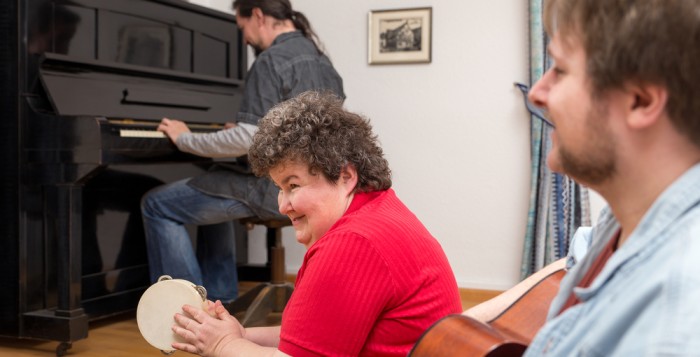
Photo by Glenn Carstens-Peters on Unsplash

The Office of Developmental Programs (ODP) has shared ODPANN 25-090. The Supports Coordination Organization (SCO) data submission portal for Performance-Based Contracting (PBC) is now available. All SCOs must complete their PBC submissions and, if desired, provide information to be considered for Pay-for-Performance (P4P) initiatives via the MyPBC Data Submission Portal. The Portal will be available until November 1, 2025, at 11:59 pm. Identified SCO Business Partner users will receive an email with directions for accessing the MyPBC Portal for their data submissions.

Please view the announcement for additional information and details.

The Office of Development Programs (ODP) has shared an update to ODPANN 25-086. Please note the addition of 4 columns to the Process Details Spreadsheet (Verification Type, Applicability, Composite Category, and Clinically Complex Category). Additional updates within this communication are in red.

View additional documents below:

The Rehabilitation and Community Providers Association (RCPA) is proud to announce a new strategic partnership with Clinically AI, a leading innovator in AI-powered clinical documentation, compliance, and governance solutions for behavioral health and intellectual/developmental disability (IDD) providers.

Clinically AI is a mission-driven technology company dedicated to transforming clinical documentation and compliance for behavioral health and IDD providers. Its ChartAware™ platform combines ambient listening, real-time compliance auditing, and organizational AI to help providers reduce administrative burden, strengthen compliance, and improve care delivery.

Through this partnership, RCPA and Clinically AI will work together to:

  • Educate members on emerging AI trends, compliance requirements, and workforce impacts through quarterly educational webinars and thought leadership resources.
  • Support safe and ethical adoption of AI in Pennsylvania’s behavioral health and IDD systems via the launch of the RCPA AI Consortium, a structured, member-driven learning community designed to help organizations move from education to responsible implementation.
  • Deliver economic benefits to members, including access to exclusive member discounts on Clinically AI’s solutions by using the discount code ClinicallyAIPartner.

“RCPA is committed to helping our members navigate the rapidly changing landscape of technology in a way that prioritizes compliance, quality, and ethical governance,” said RCPA President & CEO Richard Edley. “Our partnership with Clinically AI ensures that members receive both the education and tangible benefits they need to make informed decisions about AI adoption.”

Clinically AI’s CEO, Ross Young, added:

“We are honored to partner with RCPA to advance mission-driven adoption of AI. Together, we’re equipping providers with the knowledge, tools, and guardrails to ensure that clinical judgment remains at the center while technology helps reduce risk and strengthen quality.”

The partnership officially launches this fall, with the first joint webinar scheduled for October 2025. Details and registration information will be shared with RCPA members in the coming weeks.

Ready to see how Clinically AI can make documentation easier for your team? Contact us today to learn more.

Last week, the US House of Representatives passed a continuing resolution (CR) to keep the government funded through November 21, 2025. However, the CR legislation was not passed in the US Senate, failing with a vote of 44–48. The House and Senate have now adjourned for recess this week without finding a path forward to keep the government funded past September 30, 2025.

Although there are ongoing discussions among Republican and Democratic leaders, the Senate is not currently slated to return to Washington until September 29, and the House may not return until October. If an agreement on funding legislation is not reached by September 30, there will be a government shutdown.

To help prepare for what a government shutdown could mean, we are providing a helpful resource from McDermott+.

Below are key takeaways from how a shutdown could impact human services providers:

  • Depending on the length of a shutdown, Medicaid will continue to have sufficient funding and state payments so that providers should not be interrupted. A shutdown that extends beyond the quarter could potentially result in delayed payments to states, although that is unlikely.
  • It is likely that a percentage of HHS staff, including CMS, will be furloughed for the length of the shutdown, although the current administration has yet to release new guidance regarding agency procedures. With limited staff, CMS is unlikely to approve state plan amendments and waivers during a government shutdown, although review may occur in the background.
  • During a shutdown, the Administration for Community Living has historically continued activities funded through carryover funding.
  • SAMHSA has historically continued substance abuse and mental health programs during previous shutdowns, including those that provide critical behavioral health resources in the event of a natural or human-caused disaster, such as disaster behavioral health response teams, the disaster distress helpline that provides crisis counseling to people experiencing emotional distress after a disaster, and the 988 lifeline to connect people in crisis with life-saving resources.
  • The current Medicare telehealth flexibilities are extended via statute. However, the statutory provision expires on September 30, and needs to be extended by legislation (not regulation); these flexibilities would end if a government shutdown occurs. Pre-pandemic limitations for Medicare telehealth coverage and payment would return. These include waivers to geographic and originating site restrictions, expansions to the list of eligible practitioners, authorization of telehealth via audio-only telecommunications, use of telehealth for required face-to-face encounters prior to hospice care recertification, and the delayed in-person visit requirement for tele-mental health service.
  • A shutdown could impact the regulatory process. For example, if there were pending rulemaking, the Centers for Medicare and Medicaid Services (CMS) staff who work on these rules, along with the Office of Management and Budget (OMB) staff who review the regulations before they are released, could be furloughed in the event of a shutdown.
  • In the event of a government shutdown, Medicare and Medicaid payments to states do not immediately stop if the federal government shuts down. Both Medicaid and Medicare are mandatory spending programs, which means their funding is authorized permanently, and is not subject to the annual appropriations process that lapses.

These are all assumptions based on prior history, but shutdown operations under the new Trump administration could look quite different from how they have previously operated.

For additional information on other health care programs, please see this document.

Christine H. Koterba, PhD, ABPP
Kristen Koskinson, PhD
Aaron McAllister, MS MD

Monday, November 3, 2025
12:00 pm – 1:00 pm EST, 11:00 am – 12:00 pm CST, 10:00 am –11 am MST, 9-10 am PST

Register Here

Presenter Bios:

Christine H. Koterba, PhD, ABPP, is a Pediatric Neuropsychologist at Nationwide Children’s Hospital and a Clinical Associate Professor of Pediatrics at The Ohio State University. She is the attending inpatient neuropsychologist at NCH and provides neuropsychological consultation and assessment in inpatient and outpatient settings. She is also involved in the pre- and post-doctoral neuropsychological training programs. Her clinical interests include pediatric neuropsychology, acute recovery from brain injury, illnesses (COVID-19, long COVID), and other conditions that impact neurological functioning, and pediatric rehabilitation.

Kristen Hoskinson, PhD, a pediatric neuropsychologist, targets her research aims to improve understanding of the neuroanatomical and functional substrates that contribute to the constellation of cognitive, emotional, and behavioral sequelae of childhood neurologic injury, including pediatric brain tumor, traumatic brain injury, and complex congenital heart disease. She integrates neuroimaging methods with assessed and observable social and emotional functioning to improve early identification of those at elevated risk and at greatest need for intervention. Currently, her funded work focuses on integrating functional MRI and diffusion tensor imaging of white matter integrity, with a particular focus on social cognitive and executive functions networks.

Aaron McAllister, MS MD, is a pediatric neuroradiologist in the Department of Radiology at Nationwide Children’s Hospital, providing world class care to patients. He is trained in general radiology and has completed fellowships in both pediatric radiology and pediatric neuroradiology at Cincinnati Children’s Hospital. He is board certified in both diagnostic radiology and pediatric diagnostic radiology. Dr. McAllister serves as a clinical assistant professor in the Department of Radiology at The Ohio State University College of Medicine, as well as an adjunct assistant professor of Radiology at the School of Medicine at the University of Toledo Medical College.

Objectives
Following this course, participants will:

  • Be able to describe two common outcomes following diffuse axonal injury;
  • Be able to discuss areas of the brain involved in executive functions; and
  • Be able to define basic functions controlled by different areas of the brain.

Audience: This webinar is intended for all interested members of the rehabilitation team.

Level: Beginner–Intermediate

Certificate of Attendance: Certificates of attendance are available for all attendees. No CEs are provided for this course.

Register
Complimentary webinars are a benefit of membership in IPRC/RCPA. Registration fee for non-members is $179. Not a member yet? Consider joining today.

Attendees may wish to review Understanding the Basics of Neuro-imaging and Practical Applications for the Pediatric Rehabilitation Provider (6/8/2023) | IPRC prior to this session.