




Pennsylvania Providers Nervous as State Budget Impasse Drags On, RCPA President/CEO Richard Edley Quoted



The Pediatric Shift Care Initiative is hosting a stakeholder call on November 14, 2025, from 10:00 am – 11:30 am.
Leaders will review progress made on the Pediatric Shift Care Initiative. Guest speakers will include original and new collaborators who continue to bring the mission of the Pediatric Shift Care Initiative to reality.
Feedback from stakeholders regarding the Shift Care Initiative is requested by November 7. Please complete this survey; responses will be shared on the November 14 call.
Meeting information can be found below:
Microsoft Teams
Meeting ID: 389 339 493 158 2
Passcode: HM6wh7hd
Link to Meeting
Dial in by phone
+1 917-781-4388
Phone conference ID: 830 943 47#
83094347# United States, New York City
Find a local number

The Pennsylvania Department of Human Services is launching Human Services Helpers, a Substack that will cover updates on DHS programs, news from the agency, and how organizations and partners can help their communities. Specifically, as DHS implements changes required by the federal government under HR1, Human Services Helpers will share resources and tips to help Pennsylvanians affected by these changes understand what is happening and what they must do to keep their benefits. News on the federal government shutdown and its impact on programs like SNAP and LIHEAP will also be shared through this platform.
Sign up for updates today and be a helper for PA!
Please contact your respective RCPA Policy Director with any questions.


Monday, November 3, 2025
12:00 pm – 1:00 pm EST; 11:00 am – 12:00 pm CST;
10:00 am –11 am MST; 9:00 am – 10:00 am PST
Register Here
Presenter Bios:
Christine H. Koterba, PhD, ABPP, is a Pediatric Neuropsychologist at Nationwide Children’s Hospital and a Clinical Associate Professor of Pediatrics at The Ohio State University. She is the attending inpatient neuropsychologist at NCH and provides neuropsychological consultation and assessment in inpatient and outpatient settings. She is also involved in the pre- and post-doctoral neuropsychological training programs. Her clinical interests include pediatric neuropsychology, acute recovery from brain injury, illnesses (COVID-19, long COVID), and other conditions that impact neurological functioning, and pediatric rehabilitation.
Kristen Hoskinson, PhD, a pediatric neuropsychologist, targets her research aims to improve understanding of the neuroanatomical and functional substrates that contribute to the constellation of cognitive, emotional, and behavioral sequelae of childhood neurologic injury, including pediatric brain tumor, traumatic brain injury, and complex congenital heart disease. She integrates neuroimaging methods with assessed and observable social and emotional functioning to improve early identification of those at elevated risk and at greatest need for intervention. Currently, her funded work focuses on integrating functional MRI and diffusion tensor imaging of white matter integrity, with a particular focus on social cognitive and executive functions networks.
Aaron McAllister, MS MD, is a pediatric neuroradiologist in the Department of Radiology at Nationwide Children’s Hospital, providing world class care to patients. He is trained in general radiology and has completed fellowships in both pediatric radiology and pediatric neuroradiology at Cincinnati Children’s Hospital. He is board certified in both diagnostic radiology and pediatric diagnostic radiology. Dr. McAllister serves as a clinical assistant professor in the Department of Radiology at The Ohio State University College of Medicine, as well as an adjunct assistant professor of Radiology at the School of Medicine at the University of Toledo Medical College.
Objectives
Following this course, participants will:
Audience: This webinar is intended for all interested members of the rehabilitation team.
Level: Beginner–Intermediate
Certificate of Attendance: Certificates of attendance are available for all attendees. No CEs are provided for this course.
Register
Complimentary webinars are a benefit of membership in IPRC/RCPA. Registration fee for non-members is $179. Not a member yet? Consider joining today.
Attendees may wish to review Understanding the Basics of Neuro-imaging and Practical Applications for the Pediatric Rehabilitation Provider prior to this session.

Drexel University’s Division of Behavioral Healthcare Education has announced its 33rd Forensic Rights and Treatment Conference to held virtually on Wednesday and Thursday, December 10–11, 2025. The conference theme is “Contemporary Issues Impacting Forensic Services.” The conference will feature live and pre-recorded presentations addressing a wide variety of forensic topics pertinent to behavioral health. The virtual format allows participants to earn additional continuing education credits by accessing session recordings after the conference. More information is available online or by downloading the conference flyer.

The Office of Children, Youth and Families is offering no-cost continuing education opportunities for service professionals. The Department’s First Responder Addiction and Connection to Treatment program (FR-ACT) is a training program within the Office of Drug Surveillance and Misuse Prevention that was established to ensure first responders and public safety professionals, including CYS professionals, have the tools necessary to respond to the overdose epidemic. Training is offered at no cost and is available in all 67 counties across Pennsylvania. The Department works with an expert training vendor, St. Joseph’s University, to deliver live trainings.
FR-ACT trains and provides skills to first responders and public safety professionals on opioid use disorder, overdose response, and related information, including:
Continuing education credits are now available for Pennsylvania State Board of Social Workers, Marriage and Family Therapists, and Professional Counselors licensees who complete FR-ACT training. There are two ways to participate:
More information about FR-ACT may be found here. Please contact Emma Sharp with any questions.

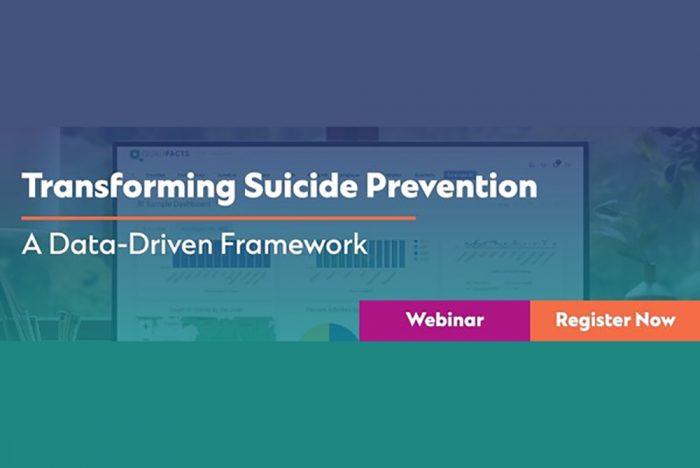
Transforming Suicide Prevention: A Data-Driven Framework
Date: Thursday, November 13, 2025
Time: 3:00pm EST / 2:00pm CST
Featuring: Qualifacts, CenterPointe & Zero Overdose
Every life lost to suicide is one too many. Behavioral health organizations have the unique opportunity to transform suicide prevention from a reactive approach into a proactive, system-wide commitment. Achieving this level of transformation requires vision, leadership, and the ability to harness data to drive meaningful action. The Zero Suicide framework offers a revolutionary pathway to make this vision a reality.
Join Qualifacts for this webinar, “Transforming Suicide Prevention: A Data-Driven Framework,” on November 13 at 3:00 pm ET. You’ll hear from the leaders of the Zero Suicide initiative about the efficacy and evidence-based results of the framework and discover how organizations like CenterPointe are leveraging data-driven strategies and Business Intelligence (BI) tools to deliver measurable change and improve care quality.
Featured Speakers

 Prev
Prev