




';
Tags Posts tagged with "budget"

budget

The Senate Appropriations Committee will meet for a budget hearing with the Department of Drug and Alcohol Programs (DDAP) at 2:30 pm today, March 16. The budget hearing will be livestreamed. Please note that RCPA provider members received an email from RCPA earlier this week that incorrectly stated the hearing was at 10:00 am today.

For Fiscal Year 2022/2023, the governor is budgeting a total of $317 million for DDAP, which is a 16 percent reduction over the current fiscal year’s budget of $379 million. The decrease is due to a $60 million reduction in federal State Opioid Response dollars.

More details of DDAP’s budget are available in DDAP’s Bluebook. In addition, a previous communication from RCPA about DDAP’s budget ahead of its House Appropriations Committee provides additional detail about the $317 million budget.

The Senate Appropriations Committee will meet for a budget hearing with the Department of Human Services (DHS) at 10:00 am on Tuesday, March 8. The budget hearing will be livestreamed. Then, at 10:00 am Wednesday, March 9, the House Appropriations Committee will hold its hearing with DHS. That hearing will also be livestreamed.

DHS is budgeting more than $6 billion in capitation to pay for behavioral health services in Fiscal Year (FY) 2022/2023. Based on the current fiscal year’s spending, approximately 22 percent, or $1.6 billion, is budgeted to be spent for drug and alcohol, including administration fees paid to behavioral health managed care organizations, according to DHS. The $6 billion is an increase of 11 percent over the $5.4 billion budgeted for FY 2022.

The details of the budget are available in DHS’ 2022/2023 Executive Budget.

The $6 billion behavioral health budget (p. 105 of 399 in the Executive Budget) is comprised of:

The FY 2022/2023 budget also includes $57 million in state dollars for the Behavioral Health Services Initiative (BHSI). BHSI includes state funds to provide treatment services to Pennsylvanians who are uninsured, do not have insurance that covers the service they need, or cannot obtain Medical Assistance benefits. Single County Authorities distribute those dollars per the Pennsylvania Department of Drug and Alcohol’s Fiscal Manual, according to DHS.

The DHS Executive Budget also breaks out an $80 million line item in both FY 2021/2022 and FY 2022/2023 for the American Society of Addiction Medicine transition (See p. 101 of 399). This $80 million, $16 million of which is state dollars, is included in $6 billion behavioral health capitation budget.

RCPA will continue to update the membership on the budget as it moves toward passage in the coming months.

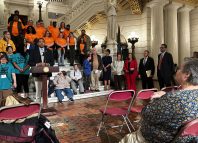
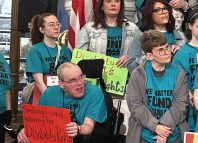
In the last month, more than 2,500 residents have contacted the administration and their local state senators and representatives urging them to address the workforce crisis affecting Pennsylvania’s human services sectors.

The outreach has been extraordinary! But we can’t stop now.

The House and Senate will be wrapping up their annual budget hearings over the next few days and turning their attention to crafting the commonwealth’s final spending plan before the end of the fiscal year on June 30.

If you haven’t done so already, please reach out and urge lawmakers to increase funding to support human services professionals so individuals and families in need get the support and care they deserve. Ask your networks to do the same.

Pennsylvania is sitting on billions of federal dollars and state “rainy day” funds that could increase wages to help us attract and retain human service professionals. Yet, even as this workforce crisis worsens, the money remains unspent as the needs of our most vulnerable residents go unmet.

The outpouring of support so far is evidence of how this crisis is affecting individuals and families, as well as the providers and professionals who want to serve them.

But we need to do more…and we need to sustain the effort.

Please VISIT HERE to learn how you can help. Follow us on Facebook and Twitter to stay informed of our progress. Most importantly, TAKE ACTION TODAY. Tell lawmakers to increase funding to address the workforce crisis facing Pennsylvania’s health and human services.

Thank you for your continued support.

The House Appropriations Committee will meet for a budget hearing with the Department of Drug and Alcohol Programs (DDAP) at 10:00 am on Thursday, March 3. The budget hearing will be livestreamed.

For Fiscal Year 2022/23, the governor is budgeting a total of $317 million for DDAP, which is a 16 percent reduction over the current fiscal year’s budget of $379 million. The decrease is due to a $60 million reduction in federal State Opioid Response dollars.

Of the total amount budgeted from the General Fund for the upcoming fiscal year, $270 million is budgeted for grants and subsidies to drug and alcohol programs. Of those funds, 75 percent ($220 million) comes from federal grants, including:

  • SAMHSA’s Substance Abuse Prevention and Treatment Block Grant (SABG) ($80 million);
  • State Opioid Response (SOR) Grant ($118 million); and
  • Substance Abuse Special Projects Grants ($22 million).

The remaining $50 million earmarked for drug and alcohol programs in the General Fund come from the McKinsey opioid settlement ($5 million) and $45 million in state funding.

Other funds in DDAP’s budget include the Compulsive and Problem Gambling Treatment Fund ($13 million), the Medical Marijuana Program Fund ($6 million), and the State Stores Fund ($5 million).

DDAP’s budget also includes $23 million ($3 million of which is state money) earmarked for operation and administration of the department and its various grant programs. The federal grants allow for a percentage of the funds to be used for operations and administration. Operations and administration also includes the department’s complement, or staffing, and their salaries.

While most of the SABG and state funding earmarked for drug and alcohol programs are distributed through the Single County Authorities, SOR and other special grant projects are delivered typically through a grant process. Details of initiatives that these grants have funded can be found on DDAP’s Department Funding web page.

As the regulator of the state’s addiction treatment system, DDAP’s funding of drug and alcohol programs pales in comparison to the Department of Human Services’ budget for drug and alcohol services. The governor has budgeted $6 billion for behavioral health services for Medicaid capitation rates, $1.6 billion of which is earmarked for drug and alcohol.

More details of DDAP’s budget are available in DDAP’s Bluebook.

DDAP’s Senate Appropriations Hearing is set for 2:30 pm, Wednesday, March 16.

Photo by Markus Winkler from Pexels

Today in a meeting with RCPA, Deputy Secretary Ahrens confirmed that even though the Department of Human Services’ (DHS) budget Blue Book indicates that Prudent Pay would be reinstated in Fiscal Year 2022/23, a decision has been made to continue the suspension. We anticipate a formal notification will be forthcoming. While we are grateful for the suspension for an additional year, RCPA will continue working with the legislature for a permanent solution.

Capitolwire: Wolf Budget Proposal Spurs Debate on Mental Health Funding
By Robert Swift

HARRISBURG (Feb. 14) — A budget proposal by Gov. Tom Wolf is spurring a new debate about providing more state mental health services during this time of pandemic-related stress.

The governor proposes spending $36.6 million from the taxpayer-supported General Fund in Fiscal Year 2022-23 to restore much of a decade-old cut in state aid to county-run mental health programs.

He would also direct $75 million in federal American Rescue Plan funds for support payments to help keep and hire new employees for qualifying home and community service providers.

A 21-member Mental Health Safety Net Coalition sent a letter Monday to lawmakers asking them to consider the proposed $36.6 million increase as a starting point in budget negotiations.

“The governor’s proposed increase will help offset the loss in purchasing power due to a decade of level funding,” wrote the coalition that includes service providers, hospitals, treatment centers and professional groups. “This money is critical to help counties get back to the effective level of resources they had 10 years ago, but it does not even begin to address all the gaps in our mental health system or surging demand for mental health services as we enter the third year of the global pandemic.”

Not only has the pandemic increased demand for services, it has also led to significant health staff shortages and increases in suicides and opioid deaths, the coalition said.

Also the County Commissioners Association of Pennsylvania issued a statement Monday calling on lawmakers to support Wolf’s proposal. It would restore two-thirds of a 10 percent cut to the budget line item in 2012 if enacted.

“If the funding continues to be uneven with the growing demand, counties will continue to struggle to in meeting the needs of their residents,” said CCAP President and Bradford County Commissioner Daryl Miller.

A key feature of county mental health programs is they are available to the entire community regardless of income, said Brinda Penyak, CCAP deputy executive director.

CCAP made rebuilding a “crumbling” mental health system its top priority this year. For the past six decades, counties have carried the responsibility to provide and contract for a range of community-based mental health services, including crisis intervention, treatment, education and prevention.

“We would strongly support advance planning and (mental health funding) increases that are practical and sustainable to ensure increased system availability for the long term,” said Dr. Kathy Quick, executive director of the Pennsylvania Mental Health Consumer Association while voicing concern that the proposed funding hikes for this year can’t be sustained in the future.

The issue of pandemic-related mental health challenges facing the general population and students as well has been the subject of several legislative hearings during the past two years.

The Senate Agriculture and Rural Affairs Committee held a hearing last month focusing on mental health issues facing agricultural workers. Pennsylvania has received a $500,000 grant from the U.S. Department of Agriculture to provide more resources to support mental health programs in rural areas by linking to national hotline networks and providing education and training, said state Agriculture Secretary Russell Redding at that hearing.