


';
Tags Posts tagged with "Funding"

Funding

The Substance Abuse and Mental Health Services Administration (SAMHSA) has announced $43 million in new supplemental funding available to State Opioid Response program grantees to expand recovery housing services for young adults, ages 18–24.

This one-year supplemental funding requires grant recipients to develop and/or expand recovery housing services for young adults with opioid or stimulant use disorders. States and territories that accept the supplemental funding will also be able to provide treatment, including family-based treatment, provide dedicated care coordinators to assist in navigating various service sectors, and provide individuals with a range of recovery support services, such as coaching, vocational training, employment support, transportation, childcare, and more.

The current SOR formula will be used to calculate the award amounts for all 50 states.

More information is available on SAMHSA’s website.

The FFY 2026/27 Community Mental Health Services Block Grant (CMHSBG) Draft Pennsylvania Application is now available for public comment. The CMHSBG is federal block grant funding that assists states in providing community-based services to adults with Serious Mental Illness and children with Severe Emotional Disturbance. This application provides a review of the current strengths and needs in the Pennsylvania mental health system and plans priority areas for improvement. The priorities were developed in consultation with representatives from the Pennsylvania Mental Health Planning Council. The CMHSBG Application public comment period will remain open until August 25, 2025.

Please access the application using the Webbgas Citizen’s login using the below credentials.

  • Login: citizenpa
  • Password: citizen

Submit any comments on this application to the CMHSBG Resource inbox.

RCPA is open to submitting members’ comments and feedback via our organization’s response to the public feedback process. If you would like to have RCPA submit comments on behalf of your agency, please contact RCPA Policy Associate Emma Sharp with any questions.

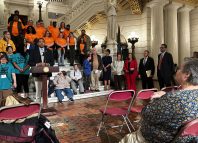
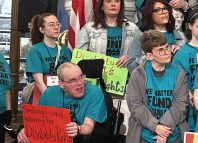
The Mental Health Safety Net Coalition (MHSN) is a group of stakeholders participating in a joint advocacy effort to protect and preserve our mental health service delivery system. This week’s communication urges the General Assembly to end the budget impasse to ensure the system’s ability to provide care. Without a budget, community mental health services will not receive any payment, putting vulnerable Pennsylvanians at risk.

The full letter can be read here.

Please contact Emma Sharp with any questions or if you are interested in joining the coalition.

H.R. 1 created a $50 billion fund called the Rural Health Transformation program in an attempt to offset the losses that rural health providers will experience associated with the other devastating cuts to health care in the legislation.

Each state must complete a one-time application for the five-year program to be reviewed by CMS. Many aspects of the application are still undecided, including the submission period, due date, state entity that must submit the application, and the form of the application. The RHTP application must include a plan to describe how the state would use the funds to:

  • Improve access to hospitals and other providers for rural residents;
  • Improve health care outcomes of rural residents;
  • Prioritize the use of new and emerging technologies that emphasize prevention and chronic disease management;
  • Initiate, foster, and strengthen local and regional strategic partnerships between rural hospitals and other providers to promote quality improvement, increase financial stability, maximize economies of scale, and share best practices;
  • Recruit and retain clinicians,
  • Prioritize data and technology driven solutions that help rural providers furnish health care services as close to the patient’s home as possible;
  • Outline strategies to manage long-term financial solvency and operating models of rural hospitals; and
  • Identify specific causes that are driving standalone rural hospitals to close, convert, or reduce service lines.

The funds will be distributed between 2026 and 2030, allotting $10 billion each year. $25 billion of this fund will be allocated equally among all states with an approved application by CMS. Assuming that all fifty states are approved, each state will receive a minimum of $100 million per year for five years. The other $25 billion will be distributed to states with an approved application in an amount determined by CMS based upon the state’s rural population, proportion of healthcare facilities in rural areas, and the situation of hospitals that serve a high proportion of low-income patients.

The bill lists several allowable uses of the PHTP funds:

  • Promoting evidence-based, measurable interventions to improve prevention and chronic disease management;
  • Providing payments to health care providers for the provision of health care items or services as specified by CMS;
  • Promoting consumer-facing, technology-driven solutions for the prevention and management of chronic diseases;
  • Providing training and technical assistance for the development and adoption of technology-enables solutions that improve care delivery in rural hospitals, including remote monitoring, robotics, artificial intelligence, and other advanced technologies;
  • Recruiting and retaining clinical workforce talent to rural areas, with commitments to serve rural communities for a minimum of five years;
  • Providing technical assistance, software, and hardware for significant information technology advances designed to improve efficiency, enhance cybersecurity capability development, and improve patient health outcomes;
  • Assisting rural communities to right-size their healthcare delivery systems by identifying needed preventative, ambulatory, pre-hospital, emergency, acute inpatient care, outpatient care, and post-acute care service lines;
  • Supporting access to opioid use disorder treatment services, other substance use disorder treatment services, and mental health services;
  • Developing projects that support innovative models of care that include value-based care arrangements and alternative payment models as appropriate; and
  • Additional uses designed to promote sustainable access to high quality rural health care services, as determined by the Administrator.

RCPA will continue to share information on the program and applications as it becomes available. Contact Emma Sharp with any questions.

Overview

The Byrne State Crisis Intervention Program (“Byrne SCIP”) is a grant administered by the Pennsylvania Commission on Crime and Delinquency (PCCD). These are federal funds that Pennsylvania receives from the Bureau of Justice Assistance (BJA). State governments may use these monies to fund “state, local, and tribal efforts to prevent or reduce crime and violence” in accordance with an approved Byrne SCIP Plan.

This AOPC announcement briefly highlights several funding opportunities in Pennsylvania’s approved plan that relate to the intersection of courts and behavioral health, specifically “Priority Area #1: Equip Pennsylvania communities with training and resources to respond holistically to behavioral health crises.”

Please see PCCD’s entire funding announcement here. Grant application and administrative guides can be accessed on PCCD’s website under the Funding section.

Priority Area #1 Objectives:

  • Support behavioral health responses in local jurisdictions across Pennsylvania.
  • Support efforts to embed advocates and peer navigators within the justice system.
  • Build capacity to offer free SIM workshops statewide, commencing in 2026.

The SCIP grant is an excellent opportunity for governmental agencies to obtain funding for specific behavioral health-related purposes that benefit citizens and criminal-legal system actors. Approved funding opportunities include:

  • Establishing the Crisis Intervention Team (CIT) Technical Assistance Center to provide law enforcement training opportunities.
  • A county SIM-Mapping initiative that trains in-house SIM facilitators to provide free workshops to counties. Facilitators will be trained in 2026 and allow counties to receive both adult and upstream SIM workshops at no cost.
  • Apply for local grants for virtually any project related to the Pennsylvania Courts’ Behavioral Health Initiative. Suggested projects include peer navigators; implementing pretrial programs; expanding the capacity of mental health courts; and developing or expanding the ability to connect individuals in crisis with services.

Eligibility & Deadlines:

  • Your recipient agency must be a local government office. Cities, counties, townships, and towns may apply for funding.
  • Subrecipients are eligible for support through primary recipient offices. For instance, a city funded through a SCIP grant may award part of their fund to their Police Department as a subgrant.
  • Your organization must be registered in the Pennsylvania eGrants system.
    • At least two organization members must have eGrants user roles. At least one individual must have an e-signature role within eGrants.

The deadline for applying is September 9, 2025.

  • For further information, see the funding announcement here. You may contact PCCD about the Byrne-SCIP Initiative by email. Emails must be sent by September 2, 2025, to receive assistance.
  • For difficulties with the eGrants system, you may contact the eGrants help desk by phone at (717) 787-5887 or (800) 692-7292 or by email.

Folders with the label Applications and Grants

The Department of Health and Human Services (HHS), through the Substance Abuse and Mental Health Services Administration (SAMHSA), is announcing the notice of a funding opportunity (NOFO) for a new Hepatitis C Elimination Initiative Pilot. SAMHSA estimates awarding between 13 to 40 grants. This grant will be up to three years, and the amount funded will be based on a tiered system explained in the NOFO. Applications are due no later than August 1, 2025.

The purpose of the Hepatitis C Elimination Initiative Pilot is to leverage existing health care institutions’ capacity to prevent, test for, treat, and cure Hepatitis C (HCV) in individuals with substance use disorder (SUD) and/or severe mental illness (SMI), particularly in communities severely affected by homelessness, as well as to gain insights on effective ways to identify patients, complete treatment, and reduce reinfection. Recipients of this program are expected to implement a holistic approach that integrates HCV and HIV testing, comprehensive prevention treatment, and recovery support services for SUD, SMI, hepatitis C, and HIV as needed. Through this initiative, SAMHSA aims to increase the number of individuals who are cured of HCV, reduce the incidence of HCV and HIV in grant-funded communities, and help address the intersection of SUD, SMI, infectious disease, and homelessness in high-need populations across the nation.

The NOFO and application details can be found at the following websites:

This is a unique opportunity for Certified Community Behavioral Health Centers (CCBHC), as many CCBHCs may have the infrastructure to support this grant and may find this pilot to be aligned with their CCBHC programming.

To prepare and submit an application for the Hepatitis C Elimination Initiative Pilot, it is essential to refer to the specific NOFO and the FY 2025 NOFO Application Guide. The Application Guide provides detailed instructions on the application process, including registration requirements, attachment completion, budget preparation, and adherence to federal policies and regulations.

SAMHSA requires applicants to download application forms from the Grants.gov website and may need additional forms from the SAMHSA website. It is crucial to ensure that all required forms are completed and included in the application. Incomplete applications without all the necessary forms may be deemed ineligible for review.