


';
The Health Resources and Services Administration (HRSA) is making more than $560 million in Provider Relief Fund (PRF) Phase 4 General Distribution payments to more than 4,100 providers across the country this week. Providers will receive an email notification by Thursday, February 24 if their application was among those processed in this latest batch. HRSA is working to review all remaining applications as quickly as possible.
With today’s announcement, a total of nearly $11.5 billion in PRF Phase 4 payments has now been distributed to more than 78,000 providers in all 50 states, Washington D.C., and five territories. This is in addition to HRSA’s distribution of American Rescue Plan (ARP) Rural payments, totaling nearly $7.5 billion in funding to more than 44,000 providers since November 2021.
Learn More
If you have any further questions, please contact your RCPA Policy Director.
The Pennsylvania Department of Drug and Alcohol Programs (DDAP) announced more than $15 million in grant funding for stabilization payments to substance use disorder (SUD) treatment providers to assist with pandemic-related expenses.
Through 108 grant agreements, 375 SUD treatment provider locations will receive funding. Grantees span across every Pennsylvania county, and all eligible applicants who applied were awarded funding. A list of grantees and awards are available on the DDAP website. However, funding amounts will not be finalized until all grant agreements are fully executed. This funding will aid in pandemic-related expenses, including but not limited to minimizing the spread of COVID-19 by ensuring the provision of testing and support of vaccines as appropriate and delivering quality, evidence-based treatment to individuals who are underinsured or uninsured.
The grants are part of $55 million in federal funding awarded to Pennsylvania through the Substance Abuse and Mental Health Services Administration (SAMHSA) Substance Abuse Prevention and Treatment Block Grant Program COVID-19 Supplemental Awards.
The sustained funding of community-based mental health services, such as community residential programs, family-based support, outpatient care, and crisis intervention, are critical to the wellbeing of our constituents and our communities. Funding levels for county mental health services have direct impacts on whether these important community and family supports will be available. Yet for too many years, state funding for mental health services has lagged far behind its needs. Counties find themselves advocating to prevent funds from being cut instead of achieving the increases that are needed to catch up from years of underfunding.
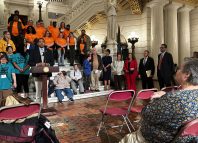
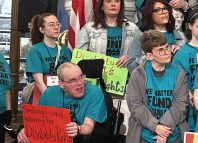
This year, RCPA and other system stakeholders have teamed with the County Commissioner Association of Pennsylvania (CCAP) through the Mental Health Safety Net Coalition. We join this campaign to bring awareness of the critical funding needs of mental health services for vulnerable Pennsylvanians. We ask our members, stakeholders, and partners to join us in this collaborative effort by engaging with your legislators. “County mental health services provide a critical piece to the public safety net for people in need,” notes Richard S. Edley, PhD, President and CEO of RCPA. “The system sustained cuts over a decade ago with little relief since then. It is time to restore those dollars and further enhance the system. Not only will it provide critical funding for the individuals receiving services, but there are positive benefits — both financially and clinically — to the entire community.”
The time to act is now for engaging with your representative, as local communities and providers have come together to sustain the safety net and serve those who need it most. The reality is that the demand for service far outweighs capacity and rate structures to serve this population. CCAP has created the following materials to assist in providing strategic talking points for our outreach:
If you have further thoughts or questions, please contact your RCPA Policy Director.
The Office of Long-Term Living (OLTL) has updated its guidance about payments to strengthen the home and community-based services (HCBS) workforce and assist Adult Day Service (ADS) providers. The updated Frequently Asked Questions (FAQ) document is available under the “Strengthening the Workforce” heading on the DHS Long-Term Care Providers page.
To maximize the use of federal funding under Section 9817 of the American Rescue Plan Act (ARPA) of 2021, OLTL has moved the date by which providers must spend “Strengthening the Workforce” and “Adult Day Services” funds from March 31, 2024, to October 1, 2023. This change allows sufficient time for providers to file an expenditure report and return unspent funds as applicable. OLTL will offer additional details about ARPA expenditure reporting in coming months.
Providers that have questions about this information should contact the OLTL Provider Helpline at 800-932-0939.
ODPANN 22-019 American Rescue Plan Act (ARPA) Funding for Respite and Family Driven Support Services (FDSS) informs stakeholders of ARPA funds that are available to AEs to disperse in order to meet respite and/or the Family Driven Support Services (FDSS) needs of individuals on the waiting list who do not currently receive waiver funded services. This communication is intended to:
You can also view the family supports funds tracker here.