';
Tags Posts tagged with "ODP"

ODP

The Office of Developmental Programs (ODP) has shared an important online training that is being offered through the Western Region Health Care Quality Unit (HCQU) called “Internet Safety for Self-Advocates.”

This online training was developed for both those we support and their supporters. An overview of internet safety is reviewed and discussed. Different topics each week range from social media to dating sites to pornography use and even scams. Various safety skills are reviewed, and tips are provided on using the internet more wisely and safely.

There will be six sessions.

Who is expected to attend?
Self-advocates can attend privately or can have a support person with them.

Training Dates:

  • Tuesday, January 7, 2025, 10:00 am – 11:00 am
  • Tuesday, January 21, 2025, 10:00 am – 11:00 am
  • Tuesday, February 4, 2025, 10:00 am – 11:00 am
  • Tuesday, February 18, 2025, 10:00 am – 11:00 am
  • Tuesday, March 4, 2025, 10:00 am – 11:00 am
  • Tuesday, March 18, 2025, 10:00 am – 11:00 am

To enroll, please call 724-283-0990.

Hands touching in a circle
Photo by Hannah Busing on Unsplash

The Office of Developmental Programs (ODP) and the Office of Mental Health and Substance Abuse Services (OMHSAS) are pleased to announce the latest edition of the Positive Approaches Journal.

This issue of the Positive Approaches Journal takes a deep dive into the importance of community safety and wellness for individuals and families. Topics include emergency preparedness, interventions and programs for youth, justice and community supports and services, and navigating crises situations. Remember, a community that prioritizes health, safety, and well-being is one that thrives and prospers.

This issue of Positive Approaches Journal is in digital form, available for viewing online or for downloading at MyODP’s website. To print a copy of the PDF, online journal, or a specific article, you will find these options within your left navigation bar on any Positive Approaches Journal page. A new window will open with your selected document. In your browser, you may click the Print button in the top left corner of the page, or by using the Print capability within your browser.

Please submit feedback regarding your experience with the Positive Approaches Journal on MyODP by selecting the feedback image on MyODP within your left navigation bar on any Positive Approaches Journal page.

The Positive Approaches Journal is published quarterly. For additional information, please contact ODP Training’s inbox.

The Office of Developmental Programs (ODP) has shared new American Sign Language (ASL)-English Interpreter services available to individuals in the Consolidated, P/FDS, Community Living, and Adult Autism Waivers starting January 1, 2025. It is excluded from the waiver limits for P/FDS and Community Living waivers.

ASL-English Interpreter is a vendor service that can be provided by an agency or an individual through an Organized Health Care Delivery System, participant direction (both Employer Authority and Budget Authority), or provider. This service must be entered in the Individual Support Plan (ISP) and billed as a 15-minute unit of service. There is an error in the waivers that indicates the ASL-English Interpreter service may be billed as an hour unit of service. The ASL-English Interpreter 15-minute procedure codes listed in the table, ODPANN 24-126, are set up as outcome-based services with an individualized rate. This means HCSIS allows this service to have a different rate per service, per individual, and per provider.

Supports Coordinators should refer to ODP Communication Number 100-16 for guidance on vendor rates and Administrative Fee Services related to the delivery of vendor services. This guidance outlines how SCs should properly enter and follow the instructions for these services.

Providers who wish to enroll directly with ODP to provide this service (not through an Organized Health Care Delivery System or participant-direction) must enroll as Provider Type 58, Specialty 580.

See the announcement for new procedure codes and descriptions for clarity and consistency.

Questions can be sent electronically to ODP’s Deaf Services inbox.

The Office of Developmental Programs (ODP) has shared ODPANN 24-127 to notify trainers and learners of the following information:

  1. Reach out to the MA Help desk if the student does not pass their second attempt at the Post Test for account reset.
  2. If a student earns a Post Test total of 89.5 points, it will be rounded up to 90 and considered a passing score.
  3. 3 additional Observation checks are now available in the 2024 online student courses for those that did not complete the initial 4 observations within 30 days of passing the exams.
  4. A link is now available on the student course page for students to view their User Report.
  5. Reminder: The “Trainer Attestation of Qualification” and the “Complete to access Acknowledgement of Qualification” activities serve as the ‘online’ signatures, replacing the physical signatures.
  6. Reminder: The 2022 student courses should no longer be used after January 31, 2025. Activities will no longer be available to students after this date. Please complete the 2022 student courses before this date and start new classes with the 2024 student courses.

The announcement contains a Proof of Qualification guide for Qualified Medication Administrators, Certified Trainers, and Qualified Practicum Observers.

Guidance is also available to trainers on how to do the following in the online Medication Administration system:

  1. Enter the grade and date of the medication observations;
  2. Enter the trainer attestation grade; and
  3. Print the user report.

The Schedule from January – March 2025 is available for Train-the-Trainer Face-to-Face.

Please view the announcement for additional information and details.

Message From ODP:

With shorter days and colder temperatures, many people struggle to maintain their motivation for physical activity. Yet, staying active is important in spring, summer, fall, and yes, winter. This time of year also presents an opportunity to participate in activities that are unique to the season.

Seasonal Physical and Mental Benefits

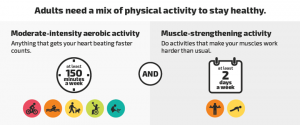
Adults should aim for at least 150 minutes of moderate-intensity aerobic activity and at least 2 days of muscle-strengthening activity each week. Regular physical activity during the week and throughout your lifetime can help lower the risk of chronic conditions, such as Type 2 diabetes, while also sharpening your focus and reducing stress. Regular physical activity also provides many benefits that are especially helpful this time of year such as: reduced risk of heart disease, improved sleep and immune function, reduced symptoms of depression, and strengthened social connections.

Outdoor Activity Options

If snow or prolonged periods of below-freezing temperatures are part of the local weather, embrace the elements! Try activities such as skiing, snowboarding, snowshoeing, and ice skating. On snowy days, shoveling snow, sledding, and playing in the snow are easy ways to get outside and get moving. Even if your winters lean toward milder conditions, walks and hikes in the colder months offer a chance to enjoy the seasonal scenery and experience your region in a new way.

Tips for Staying Active Outdoors in the Cold

Feel confident being active outdoors with these tips:

  • Wear layers: Pants, jacket, gloves, and headwear are all important for staying protected from the cold and wind. Multiple layers of clothes can keep your warmer than a single thick layer – and you can shed layers as the body warms up.
  • Stay hydrated: In cold conditions, you may not feel as thirsty. Drink water before heading out and take water with you for longer activities.
  • Pace yourself: Some activities, like shoveling snow, can be more strenuous than they seem. Start at a comfortable intensity and gradually increase over time. Use the talk test to assess your intensity level.
  • Watch out for ice: Ice can be difficult to spot, especially under fresh snow. Consider shoes with rubber soles and grooved treads to help prevent falls.
  • Stay visible: With fewer daylight hours, you may choose to be active when it’s dark outside. Carry a flashlight and wear reflective attire to stay safe.

*If you have questions about how you or someone you support can get active safely during cold weather, you can contact a healthcare provider to discuss.

Indoor Activity Options

For days when hazardous conditions don’t allow for outdoor activities, check out the full range of indoor opportunities in your area. You can visit fitness facilities to find indoor exercise equipment or try exercise classes to stay motivated and connect with others. See if your local recreation center offers seasonal sports leagues like basketball or indoor pickleball. You can even stay active without leaving your house. Free online resources, such as live or recorded group fitness classes are great for those who enjoy traditional exercise. Cleaning the house, having a dance party, or even creating an indoor obstacle course are also great ways to stay active if you’re stuck inside due to winter weather.

If you’re ready to get active this winter, making a plan is a great place to start!

Eat Healthy

Eating well supports muscles and bones, boosts immunity, helps the digestive system, and aids in weight management, among other health benefits for children and adults. Good nutrition involves eating a variety of healthy foods. Try these tips to make healthy choices during the holidays:

  • If you eat foods that are high in calories, saturated fat, or added sugars, choose small portions and only eat them once in a while, opt for healthier foods most of the time.
  • At parties and other gatherings, fill your plate with your favorite fruits and vegetables first, then add small portions of less healthy items.
  • If you are taking food to a party, make it your favorite healthy dish. Then you’ll be sure that at least one item at the party will be a healthy choice that you enjoy.
  • Make healthier versions of your traditional recipes by using ingredients with less fat and salt. Try cooking with olive oil instead of butter or adding flavor with herbs and spices instead of salt.
  • Spice up baked fish or chicken by adding salsa or black bean sauce.
  • Consider beans in place of higher-fat meats.
  • Fill your plate with vegetables and lean protein.

In order to accommodate guest speakers Deputy Secretary Ahrens and Jenn Newell from the Office of Developmental Programs (ODP), RCPA is adjusting the start time of the IDD Committee meeting scheduled for Thursday, January 9, 2025, to 12:00 pm (instead of 12:30 pm). The meeting will conclude by 3:00 pm.

Our agenda for the meeting will include updates from ODP, RCPA updates, and Provider members sharing their use of technology in delivery of services.

If you have already registered for this meeting, you do not need to re-register. If you have not yet registered, please register here.

The Office of Developmental Programs (ODP) has shared communication ODPANN 24-125. This announcement notifies stakeholders of an upcoming change to the Communication Specialist procedure code. Effective January 1, 2025, the current procedure code T1013 (Communication Specialist) will be replaced with W1748. The new code will retain the same provider types, specialties, and edits.

Please view the announcement for information and details.

The Office of Developmental Programs (ODP) has issued ODPANN 24-124 to provide notice that the Federal Supplemental Security Income (SSI) payment will be increasing.

Effective January 2025, the Social Security Administration (SSA) increased the SSI allotment by 2.5 percent to reflect an increase in the cost of living. This raises the maximum monthly income to $967 for an eligible individual, $1,450 for an eligible individual with an eligible spouse, and $484 for an essential person.

There is no anticipated increase in the State Supplementary Payment (SSP) for 2025.

Please see the announcement for further information. If you have any questions, please reach out to your Office of Developmental Programs (ODP) Regional Office.