';
Tags Posts tagged with "ASL"

ASL

The Office of Developmental Programs (ODP) is happy to announce a new resource, Bridging the Gap From Classroom to Community: Transition Resources Related to Communication!

Transition planning helps students with disabilities and their families get ready for life after high school and helps bridge supports between youth and adult service systems. It includes planning and preparing for employment, further education or training, and living independently.

This resource provides information on how to ensure access to effective communication while supporting individuals during the transition process.

This resource bundle includes transition information on the following:

  • American Sign Language
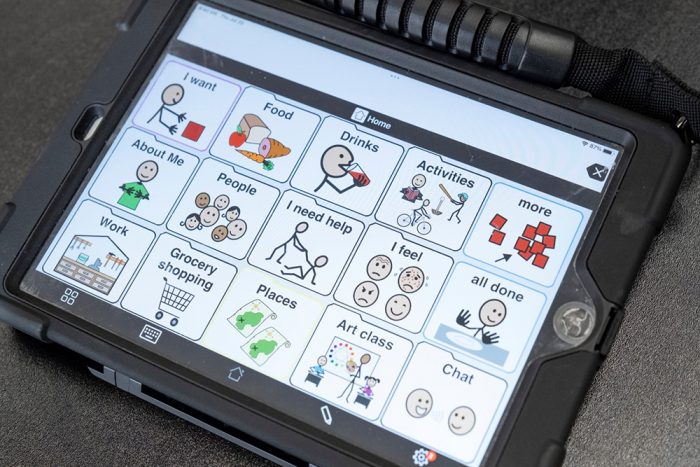
  • Augmentative and Alternative Communication (AAC)
  • Limited English Proficiency (LEP)
  • Speech and Blind/Visual Impairment
  • Tactile Communication
  • Visual Gestural Communication

The Transition Planning for Communication Resource is also found on MyODP.

Please contact the ODP Special Populations Unit via email with any questions.

The Office of Developmental Programs (ODP) has updated the AAW Provider Information Table to reflect the following updates:

  • The addition of the American Sign Language (ASL)-English Interpreter Service. This new service has been added to ensure effective communication for those participants that utilize ASL.
  • Residential Habilitation Provider Qualifications have been updated to reflect additions designed to ensure all residential providers are financially prepared, new providers have prior experience before delivering residential services, and services will continue without interruption when organizational changes occur at the executive level.
  • Assistive Technology devices that cost less than $750 do not require an independent evaluation by a professional certified by SHIFT, an online education and accreditation platform, but may be completed if the service plan team believes it to be beneficial.
  • Transportation service limit has been increased to $10,000 per participant’s service plan year, which includes both Transportation-Trip and Transportation-Public.
  • The Transportation service section has also been updated to include guidance previously released in ODP Announcement 24-005: Adding the Transportation Service to an Individual Support Plan (ISP) in the Adult Autism Waiver (AAW). The information also includes a change to how Transportation-Public is added to the ISP.
  • The Community Transition service has been updated to allow for non-recurring set-up expenses for individuals who are transitioning from another provider-operated living arrangement to a living arrangement in a private residence where the person is directly responsible for their living expenses.
  • The Career Planning and Supported Employment services sections have been updated to include information previously released in ODP Announcement 20-004: Clarifications and Training Requirements for Adult Autism Waiver (AAW) Employment Services.
  • Other updates and changes to AAW services due to the January 1, 2025, Waiver Amendment.

Please view the announcement and table for additional information and details. New services, updated language, and changes to services are highlighted in gray in the table.

The Office of Developmental Programs (ODP) has shared ODPANN 24-128, which serves as a guide for American Sign Language (ASL) — English Interpreter services available starting January 1, 2025.

The American Sign Language (ASL) — English Interpreter Service is for individuals in an ODP waiver who utilize ASL. Interpreting is the process of conveying English in grammatically correct American Sign Language and the process of conveying American Sign Language in English.

This service is available to individuals in the:

  • Consolidated Waiver;
  • Person/Family Directed Support (P/FDS) Waiver;
  • Community Living Waiver; and
  • Adult Autism Waiver.

This guide provides information on the service and its requirements. It can be found under the Deaf, Hard of Hearing, DeafBlind section on MyODP.

Questions can be sent to the ODP Deaf Services inbox.

The Office of Developmental Programs (ODP) met with stakeholders today, October 30, 2024, to discuss waiver amendments and to provide an overview of Performance-Based Contracting.

Waiver Amendments included:

Waiver Capacity:

  • When an individual is in an acute care hospital and receiving waiver services, ODP will not need to reserve (hold) the individual’s waiver. They will maintain enrollment in the waiver.
  • Language was updated for waiver capacity for high school graduates in the P/FDS waiver. AEs can reserve the waiver capacity for 180 days prior to when services are needed. Students can remain in service until their 22nd birthday.

Assistive Technology:

  • Updated language to explain when an independent evaluation is required and when it is optional:
    • REQUIRED: A device will cost $750 or more.
    • OPTIONAL: A device will cost less than $750.
  • An independent evaluation can be done if the team decides it would be beneficial.
  • Evaluations are included in the $10,000 lifetime limit.

Community Participation Support:

  • The Community Participation Support provider must complete and update an analysis of the following at least yearly to support individuals to experience meaningful community inclusion:
    • Strongest interests and personal preferences for community activities;
    • Skills, strengths, and other contributions likely to be valuable to employers or the community; and
    • Conditions necessary for successful community inclusion and/or competitive integrated employment.

American Sign Language (ASL) – English Interpreter Service:

  • English Interpreter service will be added to ODP’s waivers effective January 1, 2025.

Music, Art, & Equine Assisted Therapy:

  • The cumulative maximum limit of any combination of Music Therapy, Art Therapy, or Equine Assisted Therapy has increased from 26 to 52 hours per fiscal year.

STAT Overview:

  • The Specialty Telehealth and Assessment Team service was implemented in March 2024. This service may also be delivered to the participant during temporary travel, per ODP’s travel policy.

Waiver Corrections:
Life Sharing:

  • The following may not be authorized for participants who receive Life Sharing services: Residential Habilitation; Supported Living; Respite (15-minute or Day) (has been removed).

Supported Living Corrections:

  • The following services may not be authorized for participants who receive Supported Living services: Life Sharing; Residential Habilitation; Respite (15-minute or Day); Homemaker/Chore; In-Home and Community Supports; Behavioral Supports; Therapies; Shift Nursing; Consultative Nutritional Services; Communication Specialist and Specialize.

Benefits Counseling:

  • New billable indirect activities are added. The limit has increased from 15 hours per fiscal year to 24 hours per fiscal year.

The Performance-Based Contracting Review Included:

  • Effective January 1, 2025, Performance-Based Contracting will be implemented for the following services funded through the Consolidated and Community Living Waivers:
    •  Residential Habilitation;
    •  Life Sharing; and
    •  Supported Living.
  • Changes to Enrollment of New Providers.
  • What are Performance Standards?
  • What are Provider Tiers?
  • What Do These Changes Mean to Individuals and Families?

All performance-based contracting questions can be sent electronically.

Please see the distributed PowerPoint for additional information.

The Pennsylvania Office for the Deaf & Hard of Hearing (ODHH) is pleased to offer the following webinar on August 28, 2024, from 3:00 pm – 4:30 pm entitled “Interpreting vs. SSP: What’s the Difference?” When working with people who are Deaf and use American Sign Language (ASL), non-Deaf professionals can confuse the role of the interpreter and Support Service Provider (SSP). An experienced ASL interpreter and an experienced SSP will discuss their roles and responsibilities. View the flyer for more info!

Please contact ODHH for additional accommodations or info:
ODHH’s email
717-783-4912 v/tty
717-831-1928 videophone


In addition to the webinar, the Advisory Council for the Deaf and Hard of Hearing (ACDHH) has issued a community survey to gather feedback from Pennsylvanians who are D/deaf, Hard of Hearing or DeafBlind. ACDHH is seeking feedback about the services individuals are getting from their communities, with the goal of developing a strategic plan for future ACDHH advocacy efforts. Each question on the survey is written in English and signed in American Sign Language. If you need help filling out this survey, please contact the Office for the Deaf and Hard of Hearing via email. Don’t delay! The deadline is Friday, September 6, 2024.

Complete the survey here.

ODP Announcement 22-099 provides a revision to the rate for the Office of Developmental Programs (ODP) services for enhanced communication. The enhanced communication rate is available for services from providers who have proficient signing staff to serve signing d/Deaf individuals or utilize PA registered, certified Sign Language Interpreters during service provision.

Attachment A is available to explain the differences between having staff who are fluent in American Sign Language (ASL) versus using an ASL Interpreter.

Providers who wish to request an enhanced communication rate must complete either the: Enhanced Communication Rate Request Form (Signing Staff) — Attachment B, or Enhanced Communication Rate Request Form (Sign Language Interpreting Services) — Attachment C.

Questions about the contents of this announcement may be directed to the ODP Deaf Services inbox. This communication obsoletes ODP Announcement 20-011, Revision to the Enhanced Communication Rate for Services.

The purpose of this guide is to offer resources in one central location for those who support or care for someone who is Deaf, Hard of Hearing, or DeafBlind and receives supports from the Office of Developmental Programs (ODP). The guide provides some of the most frequently accessed resources to assist in addressing the unique needs of these populations, such as information about American Sign Language (ASL) courses, apps, home modifications, assistive technology, a foundational organizations directory, and so much more!

Development of this guide included input from individuals within the Deaf, DeafBlind, hard of hearing, and hearing communities and will be revised annually by ODP’s Deaf, DeafBlind, and Hard of Hearing Advisory Committee.

This guide can be found here. For questions, email ODP Deaf Services.