







Reminder: RCPA Member Webinar on Enhancing Staff Wellbeing to Be Held Sept. 12


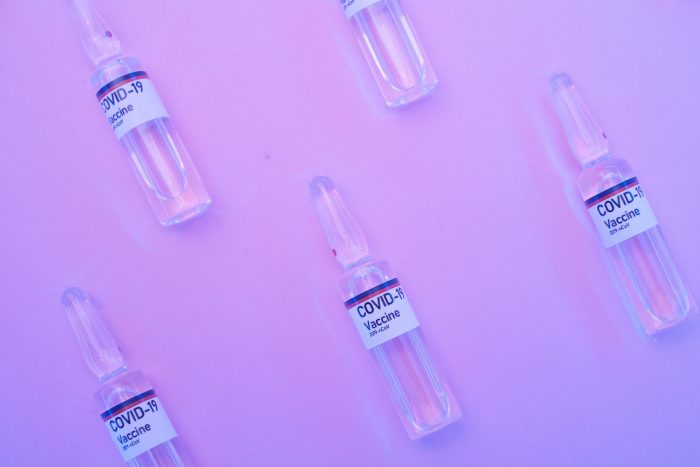
The FDA has approved and authorized for emergency use updated COVID-19 vaccines (2024-2025 formula) that include a monovalent (single) component that corresponds to the omicron variant KP.2 strain of SARS-CoV-2. These vaccines were updated to provide better protection against COVID-19 caused by circulating variants. Two vaccines are available for use in the United States: 2024–2025 Moderna COVID-19 Vaccine and 2024–2025 Pfizer-BioNTech COVID-19 Vaccine. There is no preference for one vaccine over the other when more than one vaccine is recommended for an age group
Who should get the vaccine?
Everyone ages 6 months and older should get the 2024–2025 COVID-19 vaccine. This includes people who have received a COVID-19 vaccine before and people who have had COVID-19. The COVID-19 vaccine helps protect you from severe disease, hospitalization, and death.
It is especially important to get your 2024–2025 COVID-19 vaccine if you are:
People who recently had COVID-19:
Certain factors could be reasons to get a vaccine sooner rather than later, such as:
Keep in mind:

ANCOR is working in partnership with the State of the States in Intellectual and Developmental Disabilities Project of National Significance at the University of Kansas to evaluate promising practices and strategies to enhance technology use by people with I/DD across the US and the landscape of access resulting from flexibilities provided during the COVID-19 pandemic.
It is essential that ANCOR drives a high response rate to ensure they capture a full picture of what providers are doing and experiencing in the field. Please help them not only get the word out, but also encourage your members to participate! Take the survey here.
But wait! There’s more… ANCOR will also be offering a sneak peek at the results during their upcoming Tech Summit on October 29! After that, the full report will be released by the University of Kansas, which they will share, as well.



The Information Sharing and Advisory Committee (ISAC) met today and discussed several items of interest. Deputy Secretary Ahrens provided an update on the budget and Performance-Based Contracting, including changes made to the program based on public comment. The Deputy Secretary reported that more than 95% of current residential providers have signed a new contract, and a small number have submitted their data to be evaluated for a tier assignment in the first submission period. The majority of providers appear to be waiting until February 2025 to submit data for tier assignments.
UPDATE: The PowerPoint presentation is now available and can be viewed here.
ODP is still in the procurement process of finding a Performance Analysis Service (PAS) provider. Madeline Wagner has joined the ODP staff as the PBC Measure Coordinator and began in July. The Supports Coordinator Strategic Thinking Group is planning to reconvene on September 11, 2024.
ODP staff provided updates on the strategies that are being utilized to work toward ISAC recommendations. Recommendation #2, Promote Self-Direction, Choice & Control, and Recommendation #14, Racial Equity were reviewed.
Recommendation #1, Assure Effective Communication, and also Recommendation #8, Simplify the System, were also discussed.

The Quality Management (QM) Data Collection Tool for CPS and Day Habilitation now has a short tutorial video available on the CPS resource page on the MyODP website. You can view it here.
In addition, an unprotected version of the tool is available due to multiple requests. Please be aware that using the unprotected version could inadvertently change the formulas when editing other cells, meaning the formulas could display incorrect calculations or an error.

The Office of Developmental Programs (ODP) has shared ODPANN 24-082. The announcement advises providers of the availability of the Incident Management (IM) Overview Dashboard to Assess Performance-Based Contracting (PBC) Measures RM-IM.01.2, .01.3, and .01.4 Guide on MyODP. Please view the announcement for information on the guide and how to access it.

The Office of Developmental Programs (ODP) has shared an update to bulletin ODPANN 24-025. ODP has received accreditation for designated MyODP trainings that meet requirements towards the National Association of Direct Support Professionals (NADSP) E-Badge Academy. Changes to the original announcement have been made in red. You can view the accredited training list here.

The office of Medical Assistance has issued an update on EVV compliance to advise providers of changes to the manual edit thresholds for Electronic Visit Verification (EVV) records in both personal care services (PCS) and home health care services (HHCS), effective with dates of service on and after January 1, 2025.
This bulletin applies to providers enrolled in the MA Program who render PCS and HHCS to beneficiaries or participants in the MA fee-for-service (FFS) delivery system, including through home and community-based services waivers and the managed care delivery system via Physical HealthChoices or Community HealthChoices. Beneficiaries may receive services in the following programs:
Read the full bulletin here. This bulletin will be a key topic at the RCPA PD&A meeting on September 11, for which you can register here.
If you have any questions, please contact Fady Sahhar or Melissa Dehoff.
 Prev
Prev